Industrial sales rarely happen in a straight line.
A new enquiry may arrive from a manufacturer asking for a quotation. Another customer may need a site visit before confirming specifications. A distributor might ask for revised pricing, while an older customer may be waiting for a follow-up regarding a repeat order.
When a business is small, these activities are often managed through Excel sheets, WhatsApp messages, emails, notebooks, and individual salespeople's memory. That system can work for a while. But as the number of customers, enquiries, quotations, and sales representatives grows, keeping everything organized becomes much harder.
This is where choosing the right CRM for industrial suppliers India can make a practical difference.
For industrial suppliers, CRM software should do more than store customer names and phone numbers. It should help the team manage the entire sales journey, from the first enquiry to quotation, negotiation, follow-up, order, and ongoing customer relationship.
Why Industrial Suppliers Need a Different Kind of CRM
Industrial selling is different from many consumer sales processes.
Customers usually do not see a product and make an immediate purchase. They may need technical information, product specifications, pricing discussions, samples, site visits, multiple approvals, or revised quotations before making a decision.
Sales cycles can last for weeks or even months.
During that time, a salesperson may speak with several people from the same company, including procurement managers, engineers, plant managers, business owners, or finance teams.
Without a structured system, it becomes easy to lose track of who said what, when the next follow-up is due, or why a deal has stopped moving.
A good CRM gives the sales team one place to see the complete history of a customer relationship.
1. Centralized Lead and Customer Management
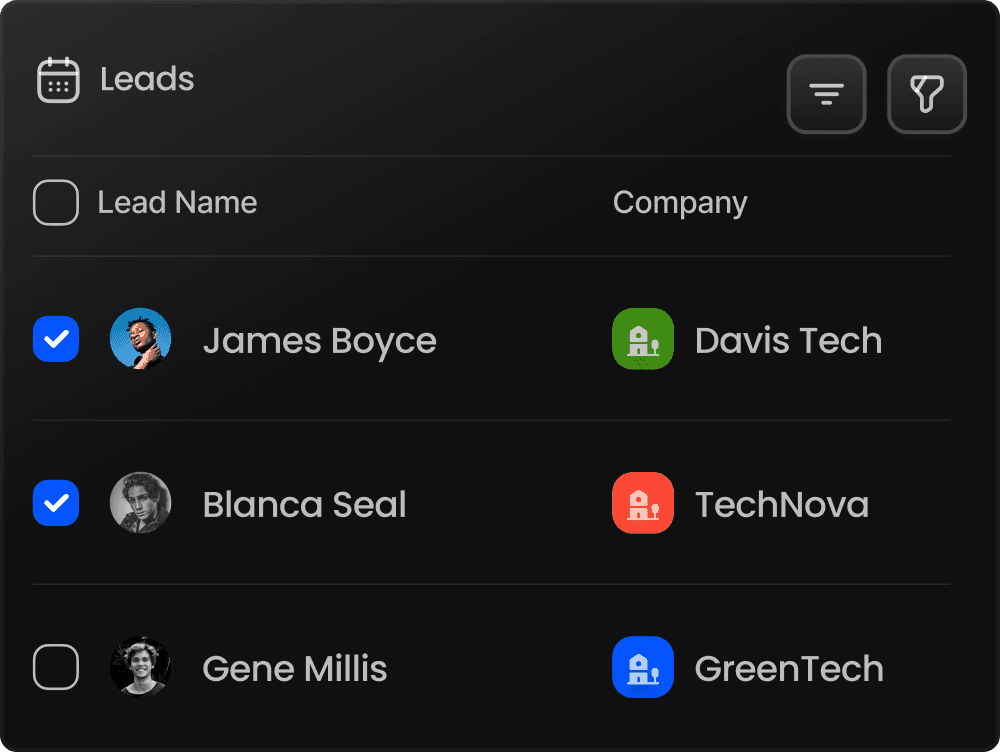
The first feature to look for is a central database for your leads and customers.
Suppose your company supplies industrial hoses, machinery parts, electrical components, packaging equipment, raw materials, or engineering products.
A customer enquiry may include several important details: company name, contact person, product requirement, expected quantity, location, budget, quotation history, previous discussions, and next follow-up date.
If these details are spread across different spreadsheets and WhatsApp conversations, another salesperson may not know the full story when they take over the account.
A CRM should allow your team to open a customer record and immediately understand the relationship.
That includes previous calls, meetings, visits, opportunities, follow-ups, and the current status of the deal.
2. A Clear B2B Sales Pipeline
A well-designed B2B sales process is especially important for industrial businesses.
Not every enquiry has the same probability of becoming an order.
One customer may only be gathering prices. Another may have already approved your technical specification. A third may be negotiating the final commercial terms.
Your CRM should let you move opportunities through clearly defined stages.
For example:
New Enquiry → Qualified → Requirement Discussion → Quotation Sent → Follow-Up → Negotiation → Order Expected → Won/Lost
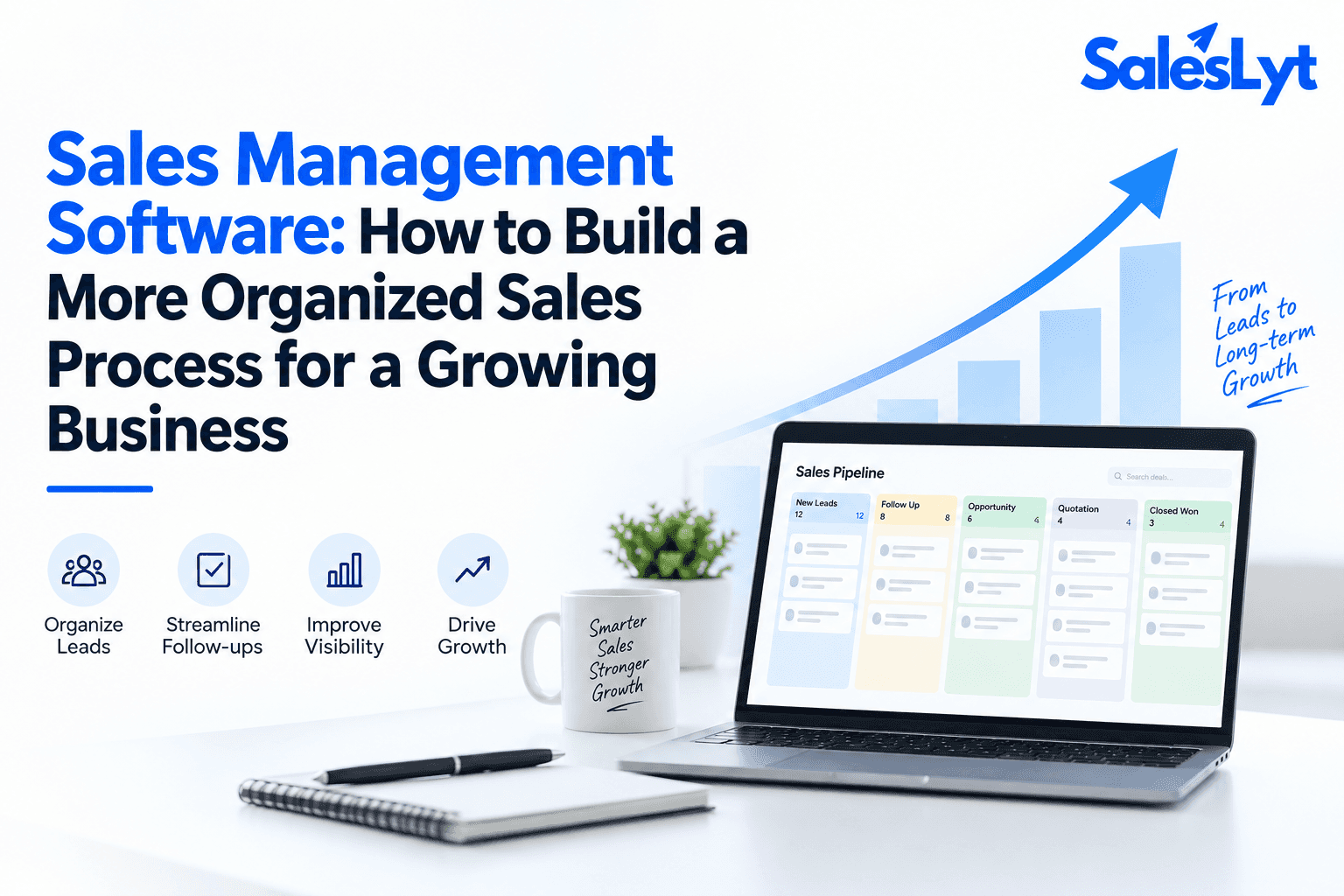
A visual pipeline makes it much easier for salespeople and managers to understand what is happening.
Instead of asking every salesperson for an update, management can review the pipeline and quickly identify which deals are progressing and which ones need attention.
3. Follow-Up and Activity Management
Follow-up is one of the biggest challenges in industrial sales.
A customer may not respond today, but that does not mean the opportunity is lost.
They may be waiting for management approval, comparing multiple suppliers, finalizing technical requirements, or delaying a project.
The real problem starts when the salesperson forgets to follow up.
A CRM should help your team schedule calls, meetings, visits, and follow-up activities while clearly showing what is due today and what is overdue.
For businesses trying to understand how to improve sales process performance, better follow-up discipline is often one of the simplest and most effective places to begin.
Even a strong enquiry can disappear if nobody contacts the customer at the right time.
4. Quotation Tracking
Quotations are a major part of industrial selling.
Sending a quotation is not the end of the sales process. In many cases, it is where the real sales process begins.
After a quotation is sent, the customer may ask for different quantities, additional products, revised payment terms, discounts, delivery commitments, or technical changes.
Your CRM should help the team understand the status of every important quotation.
Sales managers should be able to answer questions such as: Which quotations were sent this week? Which quoted customers need follow-up? Which deals are being negotiated? Which quotations have been inactive for too long?
This level of visibility can help teams focus their attention on opportunities that have a realistic chance of converting.
5. Company and Contact Management
Industrial suppliers frequently sell to organizations rather than individual consumers.
One company may have several people involved in the purchase.
The procurement manager may negotiate pricing. An engineer may approve specifications. A factory manager may discuss installation requirements. The finance department may handle payment.
That is why your CRM should allow you to connect multiple contacts with the same company.
When your sales team knows who is involved in a deal and what role each person plays, it becomes much easier to understand how to manage customer deals properly.
6. Field Sales and Visit Tracking
Many industrial sales representatives spend a significant amount of time outside the office.
They visit factories, industrial areas, dealers, distributors, project sites, and existing customers.
A CRM designed for industrial suppliers should therefore support field-sales activities.
Salespeople should be able to record what happened during a visit, what the customer requested, and what action needs to happen next.
For managers, this creates better visibility into field activity without requiring constant calls asking representatives where they went or what happened during a meeting.
7. Sales Dashboard and Performance Visibility
As an industrial business grows, managers need more than a list of customers.
They need answers.
How many new enquiries came in this month? How many quotations are active? Which opportunities are stuck? Which salesperson has the strongest pipeline? How many follow-ups are overdue? Which deals are close to conversion?
A CRM dashboard should make these questions easier to answer.
The goal is not to create more reports for the sake of reporting. It is to help management understand where the sales team should focus its attention.
8. Automation and AI Support
Sales automation can also reduce repetitive administrative work.
For example, reminders can help ensure important follow-ups are not forgotten, while AI-powered analysis can help teams understand patterns across leads and sales activities.
Businesses exploring CRM software for MSME businesses in India should look for technology that supports salespeople rather than making their everyday work more complicated.
AI is most useful when it helps the team prioritize opportunities, understand activity, and make better decisions using the information already available in the CRM.
It should complement the salesperson's judgment, not replace the relationship-building that industrial sales depend on.
9. Simple Adoption for the Sales Team
A CRM with hundreds of features is not automatically the best CRM.
If your employees find the platform too complicated, they may stop updating it.
Then the business ends up with another incomplete system.
For small and growing industrial suppliers, usability matters.
Salespeople should be able to add a lead, update an opportunity, schedule a follow-up, record a call, log a visit, and check their activities without spending unnecessary time learning the software.
The best system is usually the one your team will use consistently.
How SalesLyt Can Support Industrial Sales Teams
SalesLyt is designed for growing B2B sales teams that want to bring their everyday sales activities into one connected system.
Industrial suppliers can use SalesLyt to manage leads, companies, contacts, calls, visits, follow-ups, sales opportunities, quotations, invoices, payment-related activities, pipeline movement, and sales performance.
For example, an industrial enquiry can enter SalesLyt as a lead. The salesperson can record the requirement, schedule the next follow-up, add calls and visits, move the opportunity through the pipeline, prepare a quotation, and continue tracking the relationship as discussions progress.
Managers can meanwhile get better visibility into team activities, opportunities, and sales performance.
SalesLyt also includes AI-powered capabilities designed to help sales teams analyze leads, calls, visits, and sales activities so that important opportunities can be easier to identify and manage.
CRM vs Spreadsheets for Industrial Suppliers
Excel is still useful.
It is excellent for calculations, product lists, reporting, and many operational tasks.
But it becomes difficult to use as the central system for a growing sales team.
A spreadsheet may show that ABC Industries is a customer.
A CRM can show who your team spoke with, what they need, which quotation was sent, when the last visit happened, where the opportunity currently stands, and what the salesperson should do next.
That difference becomes increasingly important as your business handles more customers and more sales activity.
Choosing the Right CRM for Industrial Suppliers India
Before selecting a CRM, think about how your sales team actually works.
Do not begin by comparing hundreds of software features.
Start with your real sales journey.
How does an enquiry enter your company? Who qualifies it? When is a quotation created? How many follow-ups normally happen? Do representatives visit customers? Who monitors negotiations? What happens after an order is confirmed?
Once you understand that process, it becomes much easier to identify the CRM features that actually matter.
For most industrial suppliers, the priorities should be straightforward: centralized customer information, structured pipelines, reliable follow-ups, quotation visibility, field-sales tracking, activity management, reporting, and easy adoption.
Conclusion
Choosing the right CRM for industrial suppliers India is not simply about replacing spreadsheets with new software.
It is about giving your sales team a clearer way to manage customer relationships from enquiry to order.
Industrial sales involve repeated conversations, quotations, visits, negotiations, and follow-ups. When those activities are scattered across different tools, important opportunities can easily be overlooked.
A structured CRM brings those activities together.
For businesses looking for CRM software for MSME businesses in India, the priority should be a system that fits naturally into the existing B2B sales process, helps teams understand how to manage customer deals, and provides a practical answer to how to improve sales process consistency as the business grows.
SalesLyt brings lead management, customer relationships, pipeline tracking, follow-ups, field activities, quotations, invoices, payment tracking, analytics, and AI-powered sales insights into one connected environment.
If your industrial supply business is growing beyond spreadsheets and manual follow-up systems, explore SalesLyt at saleslyt.com and see how a more structured sales process can help your team stay organized and focus on the opportunities that matter.

Conclusion
Choosing the right CRM for industrial suppliers India is about more than storing customer information. Industrial sales usually involve enquiries, quotations, repeated follow-ups, field visits, negotiations, and long B2B buying cycles. A structured CRM helps bring all these activities into one place so sales teams can stay organized and managers can get better visibility into opportunities.
For businesses looking for CRM software for MSME businesses in India, the right platform should support a clear B2B sales process, make it easier to understand how to manage customer deals, and help teams improve follow-up consistency and overall sales performance.
SalesLyt brings lead management, customer tracking, pipeline management, follow-ups, quotations, field-sales activities, analytics, invoices, payment tracking, and AI-powered sales insights into one connected platform.