A new enquiry comes in. Someone from sales calls the prospect, shares some information, promises a follow-up—and then another ten leads arrive.
A week later, the sales manager asks a simple question: “What happened to that opportunity?”
Nobody has a clear answer.
This is a common problem for growing B2B businesses. Leads may come from websites, referrals, social media, exhibitions, outbound calls, WhatsApp, or existing networks. But generating leads is only the beginning. What happens after a lead enters your business determines whether it eventually becomes revenue.
A structured B2B sales process gives your team a repeatable path for moving prospects from initial interest to paying customers.
For MSMEs, startups, and growing sales teams in India, that structure becomes increasingly important as lead volume and team size increase.
What Is a B2B Sales Process?
A B2B sales process is a series of defined stages a business follows to convert another business from a prospect into a customer.
Unlike many simple consumer purchases, B2B sales can involve multiple conversations, decision-makers, product demonstrations, site visits, quotations, negotiations, approvals, and follow-ups.
The exact workflow varies by industry.
A manufacturing supplier may need technical discussions and site visits. A SaaS company may conduct product demonstrations. A consulting company may need discovery meetings before preparing a proposal.
Despite these differences, most B2B sales journeys can be organised around seven core stages.
The 7 Stages of a B2B Sales Process
Stage 1: Lead Generation
Every sales journey starts with finding a potential customer.
B2B leads may come from:
Website enquiries
Referrals
LinkedIn and social media
Digital advertising
Trade exhibitions
Outbound prospecting
Channel partners
Existing customer networks
The objective at this stage isn't simply to collect as many contacts as possible. You need enough information to understand where the lead came from, what company it represents, and why it may be relevant.
Recording lead sources also helps managers understand which marketing and sales channels are creating useful opportunities.
Stage 2: Lead Qualification
Not every lead should receive the same amount of sales attention.
Imagine an industrial supplier receives two enquiries.
The first is from a company actively looking for a specific product and planning to purchase soon. The second is from someone researching possible suppliers for an undefined future requirement.
Both are leads, but their priorities are different.
Qualification helps determine whether there is a genuine business opportunity.
Your salesperson might evaluate:
What does the prospect need?
Is your solution relevant?
Who makes the purchasing decision?
Is there a realistic budget?
What is the expected timeline?
How urgent is the requirement?
A structured qualification process prevents salespeople from spending too much time on low-potential enquiries while stronger opportunities receive insufficient attention.
Stage 3: Discovery and Understanding the Requirement
Once a lead is qualified, the salesperson needs to understand the business problem behind the enquiry.
This may happen through a call, meeting, online demonstration, or site visit.
Instead of immediately pushing a product, ask questions.
What problem is the customer trying to solve? What are they using today? Why are they considering a change? Who else is involved in the decision? What matters most—price, reliability, delivery, functionality, support, or something else?
Documenting this information is important.
If valuable customer information remains only in a salesperson's notebook, WhatsApp messages, or memory, the business loses visibility into the opportunity.
Stage 4: Proposal or Quotation
Once the requirement is understood, the opportunity moves toward a commercial proposal.
Depending on the business, this could be a formal quotation, proposal, scope of work, product configuration, or pricing presentation.
The proposal should clearly connect what you are selling with what the prospect actually needs.
At this stage, teams should record:
Proposed products or services
Deal value
Quotation or proposal date
Relevant commercial terms
Decision-makers
Expected closing timeline
Next follow-up date
This is where understanding how to manage customer deals becomes especially important. Sending a quotation isn't the end of the selling process. Every active proposal should have a clear status, owner, and next action.
Stage 5: Follow-Up and Deal Management
This is where many promising B2B opportunities slow down.
The quotation has been sent, but the customer hasn't replied.
Should the salesperson call tomorrow? Next week? Has somebody already spoken to the customer? Is the prospect reviewing another supplier? Has the requirement been delayed?
Without a structured process, the answer may depend entirely on individual memory.
Every active deal should ideally answer three questions:
Where is the opportunity now?
What needs to happen next?
Who is responsible for doing it?
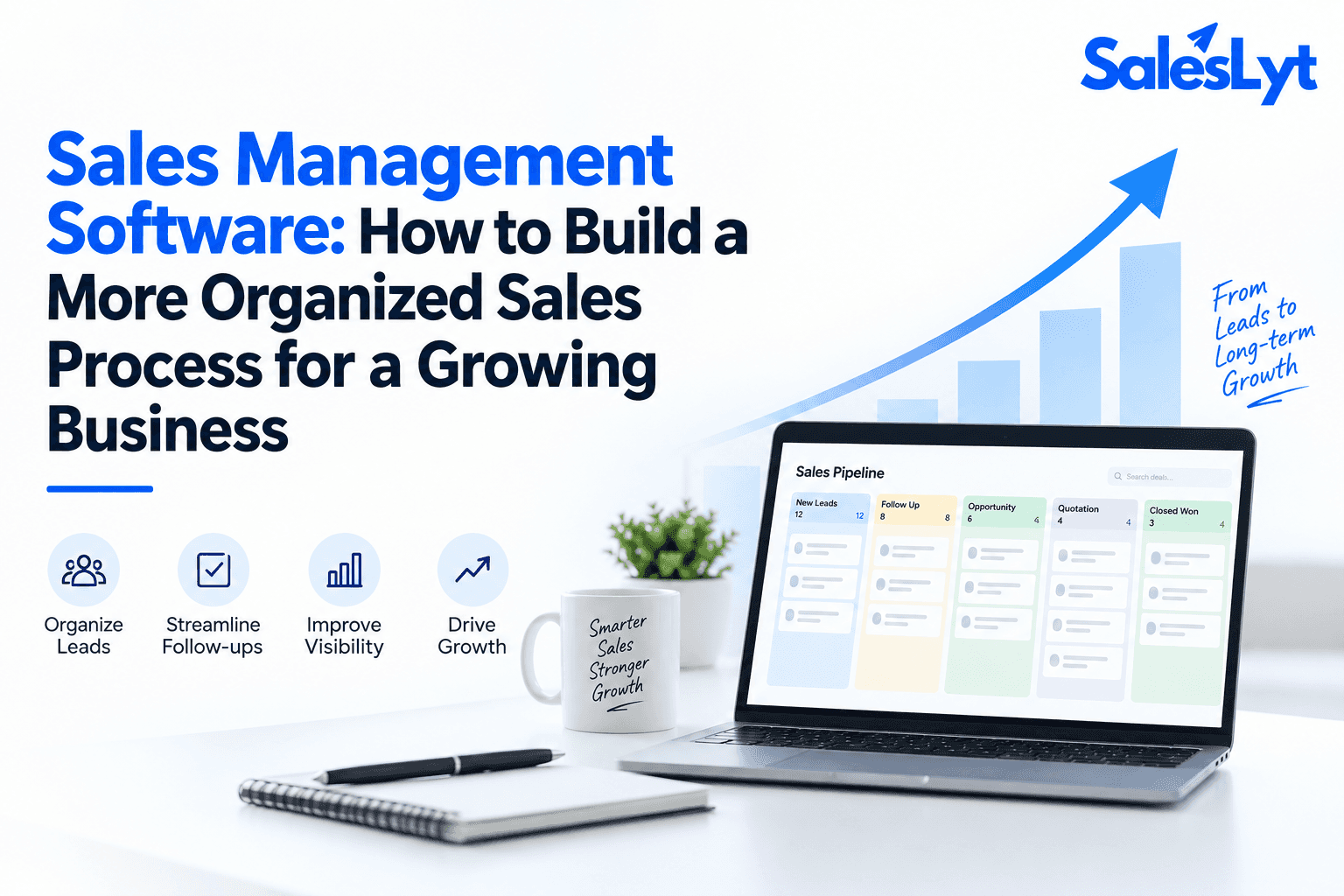
A CRM or sales pipeline can make this easier by keeping deal stages, customer activity, follow-ups, and next actions visible.
SalesLyt, for example, currently provides sales pipeline management designed to help teams track leads, automate follow-ups, and move deals through a more organised sales flow.
For a deeper explanation of pipeline management, internally link this section to your existing article on how sales pipeline management helps convert leads into customers.
Stage 6: Negotiation and Closing
As the prospect moves closer to a decision, questions and objections usually become more specific.
They may negotiate:
Pricing
Payment terms
Delivery schedules
Product specifications
Scope of work
Implementation timelines
Commercial conditions
The salesperson's job is not simply to discount until the customer agrees.
Good negotiation requires understanding which concerns are genuinely preventing the decision and which are simply part of the buyer's purchasing process.
Once both sides agree, record the final terms and mark the opportunity accurately as won or lost.
Lost opportunities are useful too. Recording why deals were lost can reveal patterns in pricing, competition, qualification, product fit, or sales execution.
Stage 7: Customer Onboarding and Relationship Management
Closing the deal should not mean losing visibility of the customer.
The sales-to-customer transition needs to be clear.
Depending on the business, the next steps could include order confirmation, onboarding, invoicing, payment tracking, implementation, delivery, account management, or future follow-ups.
This matters particularly in B2B markets, where repeat purchases, renewals, referrals, and long-term relationships can be valuable.
SalesLyt connects CRM activities with quotation, invoice, and payment management, allowing teams to maintain visibility across more of the sales lifecycle rather than stopping at lead conversion.
How to Improve Your B2B Sales Process
If you're considering how to improve sales process performance, don't begin by adding more stages or complicated rules.
Start by making the existing process measurable and consistent.
Define what each stage means. Make sure every opportunity has an owner. Require a next action for active deals. Keep customer information in one place. Review stalled opportunities regularly. Record why deals are won or lost.
Managers should also examine movement rather than simply counting leads.
A pipeline containing 100 opportunities isn't necessarily healthier than one containing 30. If most of those 100 deals haven't progressed for months, the number creates a misleading picture.
The goal is a pipeline where your team knows what is happening and what needs to happen next.
How AI Can Support the Sales Process
Businesses exploring how to use AI in sales process workflows should focus on practical applications rather than adding AI simply because it is popular.
AI can potentially help sales teams analyse information, prioritise opportunities, identify patterns, evaluate activity, and make more informed decisions.
SalesLyt currently combines AI-powered insights and predictions with AI Performance Scoring for sales visits, customer calls, and leads. It also supports automation for repetitive activities such as reminders, follow-ups, email sends, and task assignments.
The objective isn't to replace the salesperson.
AI should help the salesperson understand where attention is needed while automation reduces routine administrative work.
How SalesLyt Fits into a Structured B2B Sales Process
SalesLyt is designed as an AI-powered CRM and sales management platform for small businesses, startups, agencies, and growing B2B sales teams.
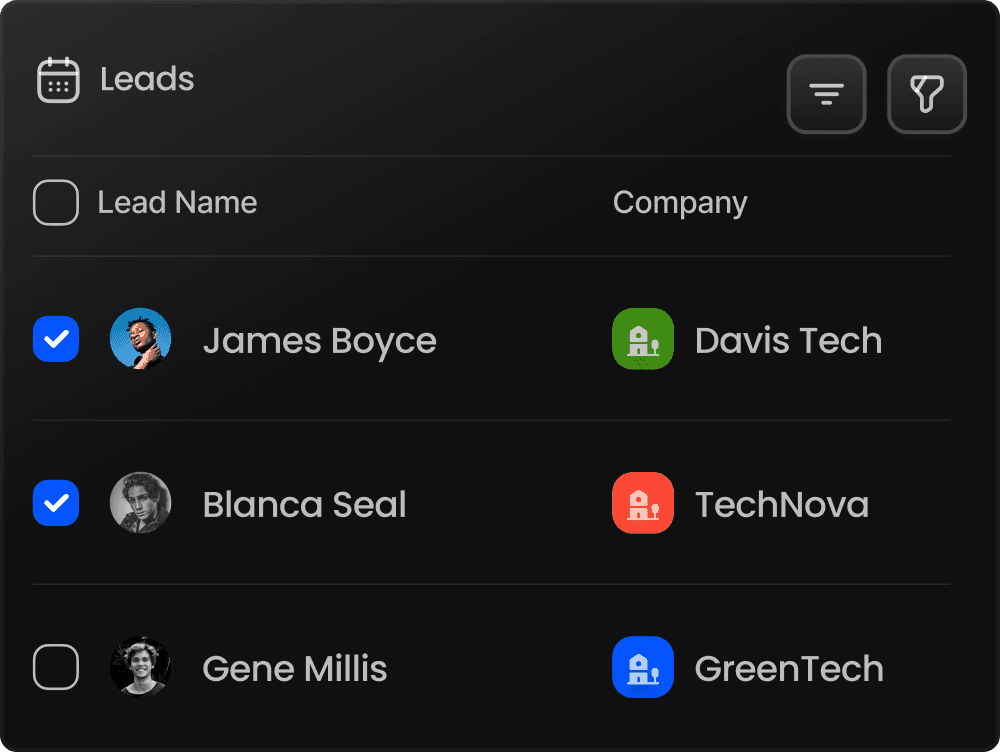
Its current platform brings together lead management, sales pipeline tracking, automated follow-ups, AI-powered insights and predictions, AI performance scoring, dashboards, task automation, quotations, invoices, and payment tracking.
For an MSME or growing sales organisation, bringing these activities together can make it easier to see where each opportunity stands and what the team needs to do next.
The technology, however, works best when the underlying sales process is clear.
FAQs About the B2B Sales Process
What are the 7 stages of a B2B sales process?
A practical seven-stage process consists of lead generation, lead qualification, discovery, proposal or quotation, follow-up and deal management, negotiation and closing, and customer onboarding or relationship management.
How can a small business improve its B2B sales process?
Start by defining clear sales stages, assigning ownership to every opportunity, recording customer requirements, setting next actions, tracking follow-ups, and regularly reviewing stalled deals.
How can CRM software help with B2B sales?
CRM software can centralise lead and customer information, provide pipeline visibility, track activities and follow-ups, and help managers understand the status of active opportunities.
Where can AI be used in B2B sales?
AI can support areas such as lead prioritisation, sales activity analysis, deal insights, performance scoring, forecasting, and recommendations. It works best when the business already maintains accurate, structured sales information.
Conclusion: Build a B2B Sales Process Your Team Can Actually Follow
A strong B2B sales process creates a clear path from first contact to customer conversion.
The seven stages—lead generation, qualification, discovery, proposal, follow-up, negotiation, and customer management—give sales teams a practical framework for keeping opportunities moving.
For Indian MSMEs, startups, and growing B2B businesses, the biggest improvement often comes from consistency: knowing where every deal stands, who owns it, what happened last, and what needs to happen next.
SalesLyt can support this structure by bringing lead management, pipelines, automated follow-ups, AI-powered insights, performance scoring, quotations, invoices, and other sales activities into one environment.
If your sales team is currently managing opportunities across spreadsheets, messages, notebooks, and disconnected tools, explore SalesLyt to see how a more organised sales process could work for your business.

Conclusion
Build a B2B Sales Process That Converts Leads into Customers
A well-defined B2B sales process gives your team a clear path from generating a lead to building a long-term customer relationship. The seven stages—lead generation, qualification, discovery, proposal, follow-up, negotiation, and customer management—help ensure that opportunities don't get lost between conversations and follow-ups.
For Indian MSMEs, startups, and growing B2B teams, the key is consistency. Every deal should have a clear stage, owner, next action, and follow-up plan. As your sales operation grows, CRM, automation, and AI can make this process easier to manage and give managers better visibility into the pipeline.
SalesLyt helps businesses bring lead management, sales pipelines, follow-ups, AI-powered insights, performance tracking, quotations, invoices, and other sales activities into a more structured workflow.
Want to build a smarter and more organized B2B sales process? Explore SalesLyt and see how your team can manage leads, follow-ups, and customer deals more effectively.