A sales team can have good products, experienced people, and plenty of enquiries and still struggle to convert opportunities.
The problem is often not the effort being made. It is the process behind that effort.
Leads may be stored in different spreadsheets. Follow-ups depend on individual salespeople remembering them. Managers struggle to understand which opportunities are genuinely progressing. Customer conversations happen, but the next action is not always clear.
For small businesses, MSMEs, startups, and growing B2B teams in India, these gaps become increasingly difficult to manage as sales activity grows.
If you're wondering how to improve sales process performance without making your workflow unnecessarily complicated, start by improving how your team qualifies, tracks, follows up, and reviews opportunities.
Here are 10 practical steps.
1. Map Your Existing B2B Sales Process
Before changing your sales process, understand what actually happens today.
Map the journey from the first enquiry to conversion. A typical B2B sales process might include:
Lead generation
Initial qualification
Discovery call or meeting
Requirement assessment
Product demonstration or proposal
Quotation
Negotiation
Follow-up
Closing
Post-sale relationship management
Your actual process may be shorter or longer.
The important question is whether your salespeople follow approximately the same journey or everyone works differently.
Once the process is visible, bottlenecks become easier to identify.
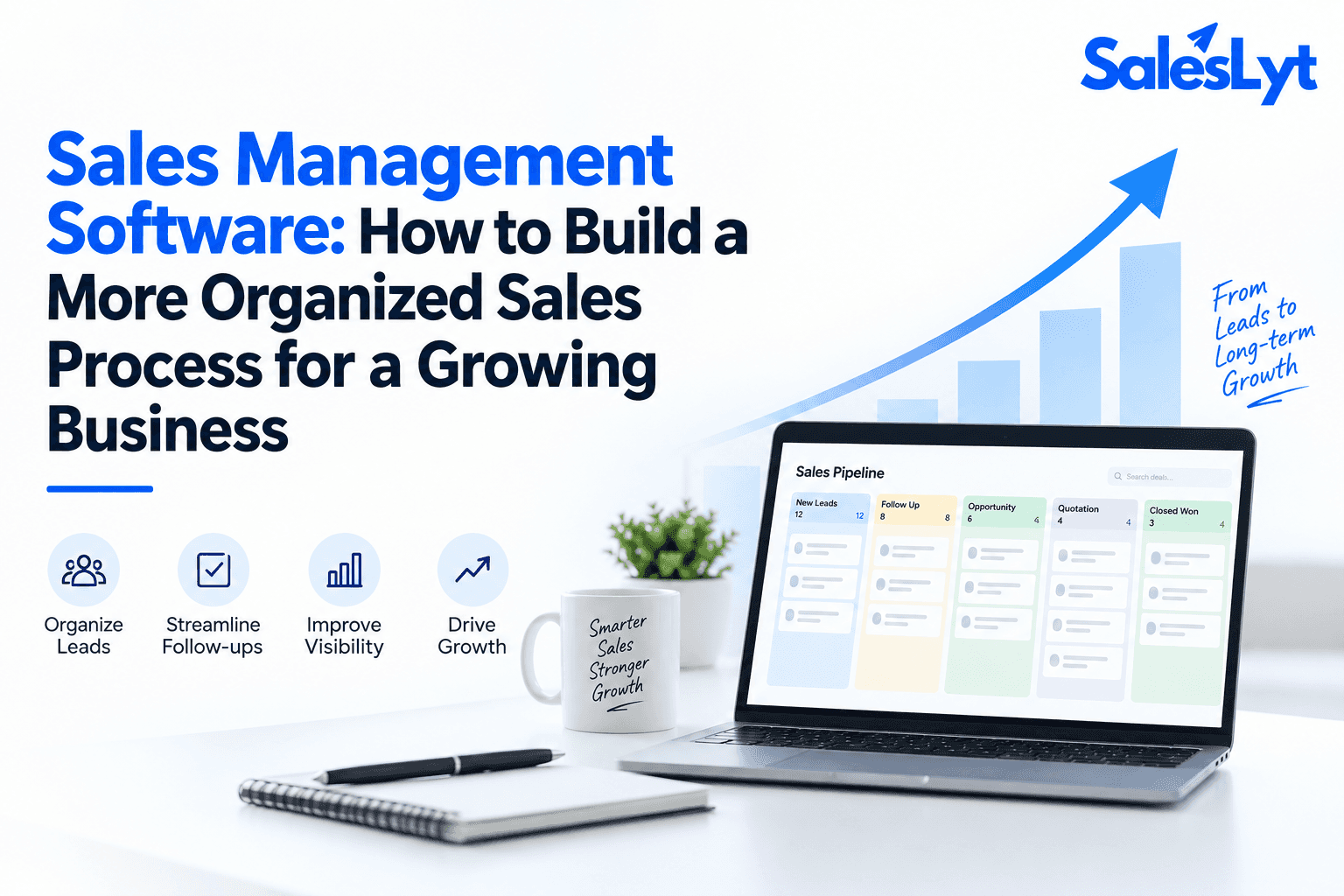
2. Define Clear Sales Pipeline Stages
Terms such as "interested", "hot lead" and "follow up later" can mean different things to different salespeople.
Replace vague descriptions with defined pipeline stages.
For example:
New Lead → Qualified → Meeting Completed → Proposal/Quotation → Negotiation → Won/Lost
Then define what must happen before a deal moves from one stage to another.
A deal should not enter "Proposal Sent" simply because the salesperson intends to send a proposal. Move it only after the proposal has actually been shared.
Clear stages make your pipeline more reliable and give managers a better view of potential business.
3. Qualify Leads Before Spending Too Much Time on Them
Not every enquiry deserves the same amount of attention.
Your team should identify whether a prospect has a genuine requirement, appropriate budget, decision-making authority, realistic timeline, and fit with your product or service.
Create a simple qualification framework.
Ask questions such as:
What problem is the customer trying to solve?
What is their expected timeline?
Who makes the final decision?
Is there an approved or expected budget?
What alternatives are they considering?
Better qualification helps salespeople spend more time on opportunities that have realistic potential.
4. Give Every Lead and Deal a Clear Owner
One of the easiest ways to lose an opportunity is unclear ownership.
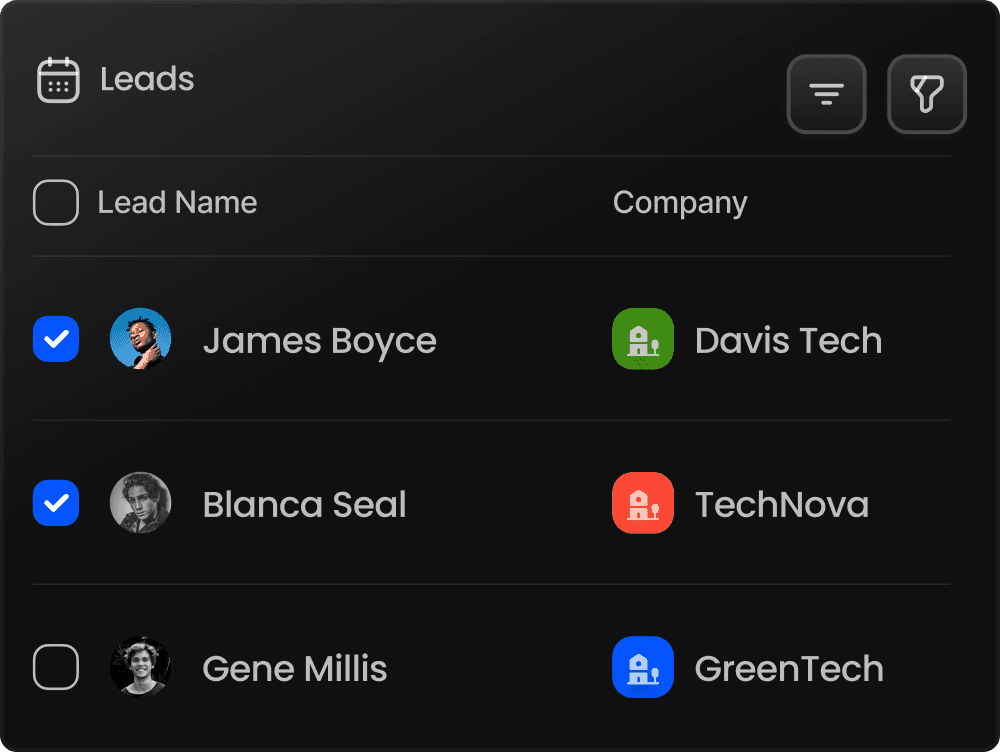
Every active lead should have a salesperson responsible for moving it forward.
Ownership should include more than a name. The salesperson should know the current status, previous interaction, next action, and expected follow-up date.
This becomes particularly important when several employees communicate with the same customer.
A centralized CRM can help maintain this information so customer history does not remain scattered across individual spreadsheets, notebooks, inboxes, or personal records.
5. Create a Consistent Follow-Up System
Many B2B deals require multiple conversations before a decision is made.
That means follow-up cannot depend entirely on memory.
After every meaningful interaction, record a specific next action:
"Call next week" is vague.
"Call purchasing manager on 15 September to discuss revised quotation" is actionable.
Create reminders and prioritize overdue follow-ups. Managers should also review opportunities that have had no activity for an unusual amount of time.
SalesLyt, for example, currently provides automated follow-ups, task automation, and organized sales pipelines to help teams maintain a more structured sales flow.
6. Learn How to Manage Customer Deals Systematically
Understanding how to manage customer deals becomes increasingly important as your pipeline grows.
For each active opportunity, your team should be able to answer five questions:
Where is the deal now?
What does the customer need?
What happened during the last interaction?
What is the next action?
Who is responsible for it?
Also track quotations, negotiations, expected value, decision timelines, and reasons for lost opportunities where appropriate.
This creates continuity. Even if another manager needs to review the opportunity, they can quickly understand what is happening.
7. Measure Sales Activities and Outcomes
Sales improvement requires more than checking monthly revenue.
Track indicators that explain what is happening before the final result.
Useful metrics can include:
Number of new qualified leads
Meetings or sales calls completed
Follow-ups due and completed
Opportunities by pipeline stage
Proposal-to-win rate
Average sales cycle
Won and lost deals
Pipeline value
Avoid measuring activity simply for the sake of activity.
Ten customer calls that move opportunities forward may be more valuable than fifty calls without meaningful outcomes.
8. Use AI to Support Sales Decisions
Businesses exploring how to use AI in sales process should start with specific problems rather than adding AI simply because it is popular.
AI can potentially help teams prioritize opportunities, analyse sales activity, identify patterns, score leads or interactions, and provide recommendations.
For example, SalesLyt currently provides AI-powered insights and predictions along with AI performance scoring for leads, customer calls, and sales visits.
The objective should not be to remove human judgement from B2B selling. Salespeople still need to understand customer requirements, build trust, negotiate, and manage relationships.
AI is more useful when it helps them decide where attention may be needed.
9. Hold Short, Data-Based Pipeline Reviews
Sales meetings often become lengthy status-reporting sessions.
Instead, review the pipeline around decisions.
Ask:
Which high-value opportunities need action?
Which deals have stopped moving?
Which follow-ups are overdue?
Which opportunities are likely to close?
Where does a salesperson need manager support?
A shared pipeline makes these conversations more productive because managers and salespeople can discuss the same information instead of reconstructing updates from memory.
SalesLyt includes dashboards, manager performance monitoring, pipeline tracking, and sales activity visibility designed to support this type of structured review.
10. Improve the Process Continuously
There is no perfect sales process that can be designed once and left unchanged.
Review your process periodically.
Look at where opportunities are getting stuck, why deals are being lost, whether follow-ups happen consistently, which lead sources produce better opportunities, and whether unnecessary steps are slowing your team down.
For an MSME or growing B2B company, the goal is not to create a complicated enterprise sales methodology.
The goal is to create a repeatable system that makes selling easier to manage as the business grows.
Frequently Asked Questions
How can a small business improve its sales process?
Start by defining clear pipeline stages, qualifying leads, assigning ownership, scheduling every follow-up, recording customer interactions, and regularly reviewing active opportunities. Introduce automation where repetitive administrative work is slowing the team down.
What are the main stages of a B2B sales process?
Common stages include lead generation, qualification, discovery, proposal or quotation, negotiation, follow-up, and closing. The exact stages should reflect how customers actually buy from your business.
How can AI improve the sales process?
AI can support sales teams through lead and activity scoring, pattern analysis, recommendations, predictions, and sales insights. It should support human decision-making rather than replace customer relationships and sales judgement.
How do you manage multiple customer deals effectively?
Keep each opportunity in a centralized pipeline with a clear owner, stage, customer requirement, interaction history, next action, and follow-up date. Regular pipeline reviews can then identify stalled or high-priority opportunities.
Conclusion: Build a Sales Process Your Team Can Actually Follow
Learning how to improve sales process performance does not require adding more complexity.
Start with the fundamentals: define your pipeline, qualify opportunities properly, assign ownership, make follow-ups consistent, track meaningful metrics, review deals regularly, and use automation or AI where it genuinely helps.
For growing Indian businesses, a structured process becomes increasingly valuable as the number of leads, customers, salespeople, quotations, and follow-ups increases.
SalesLyt brings lead management, sales pipeline tracking, automated follow-ups, AI-powered insights and performance scoring, task automation, dashboards, quotations, invoices, and payment tracking into one sales environment.
If your team is ready to move from scattered sales activities toward a more organized process, explore SalesLyt and see how it can support your sales workflow.

Conclusion
Improving your sales process is not about adding more complexity. It is about creating a clear, repeatable system that helps your team qualify leads, manage customer deals, follow up consistently, and move opportunities through the pipeline more effectively.
For growing B2B teams, startups, and MSMEs, the best approach is to start with the fundamentals: define your sales stages, assign clear ownership, track meaningful activities, review deals regularly, and use automation or AI where it genuinely adds value.
SalesLyt helps businesses bring lead management, sales pipeline tracking, follow-ups, sales activities, AI-powered insights, and performance visibility into a more organized sales workflow.
If you're looking for how to improve sales process performance while giving your team better visibility and control, explore SalesLyt and build a smarter, more structured approach to B2B sales.