Running an MSME is often about doing more with less.
Your sales team may be small. One person could be handling new enquiries, another may be visiting customers, while the business owner is simultaneously checking quotations, payments, follow-ups and monthly targets.
This approach can work when the business has a limited number of customers. But as enquiries increase, things become harder to manage.
A promising lead gets buried in WhatsApp. Someone forgets to make a follow-up call. A quotation is sent but nobody checks what happened afterwards. Customer information lives in different spreadsheets, phones and email inboxes.
This is usually the stage when businesses start searching for the best CRM for MSME in India.
But choosing a CRM shouldn't simply be about buying software with the longest feature list. For an MSME, the right CRM needs to solve practical sales problems without making the team's daily work more complicated.
Here are eight features that growing businesses should genuinely look for.
Why MSMEs Need More Than a Customer Database
A basic customer database can tell you a company's name, phone number and email address.
A useful CRM should tell you much more:
Which leads need attention?
When should the next follow-up happen?
Which salesperson owns the opportunity?
What stage is the deal currently in?
Which opportunities are progressing?
Which leads have become inactive?
How is the sales team performing?
What revenue may come from the current pipeline?
That is why modern CRM software for MSME businesses in India needs to go beyond simply storing contacts.
The CRM should become part of the company's everyday sales process.
1. Simple Lead and Customer Management
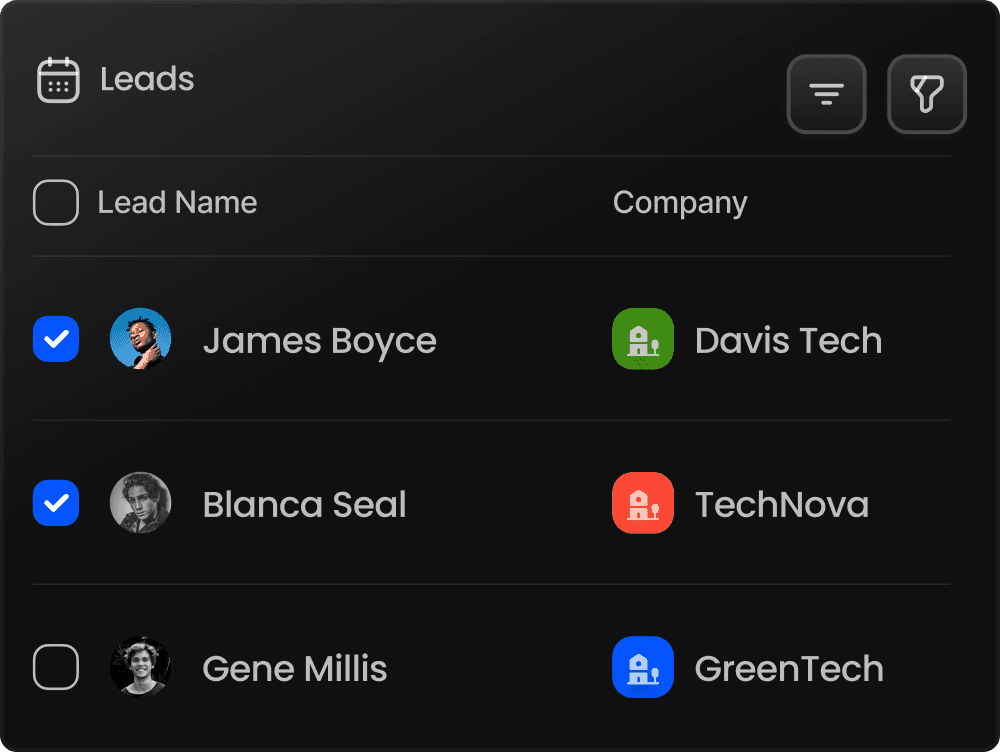
The first requirement is straightforward: all lead and customer information should be organized in one place.
When customer details are scattered across spreadsheets, notebooks, personal phones and messaging apps, salespeople spend unnecessary time searching for information.
More importantly, valuable context can disappear when a salesperson is absent or leaves the organisation.
A CRM should allow teams to maintain information such as:
Lead and company details
Contact persons
Previous conversations
Sales activities
Follow-up dates
Deal status
Notes
Quotations
Customer interactions
This creates a shared record of the relationship.
For an MSME, that shared visibility is important because customer relationships should belong to the business—not remain locked inside one salesperson's phone.
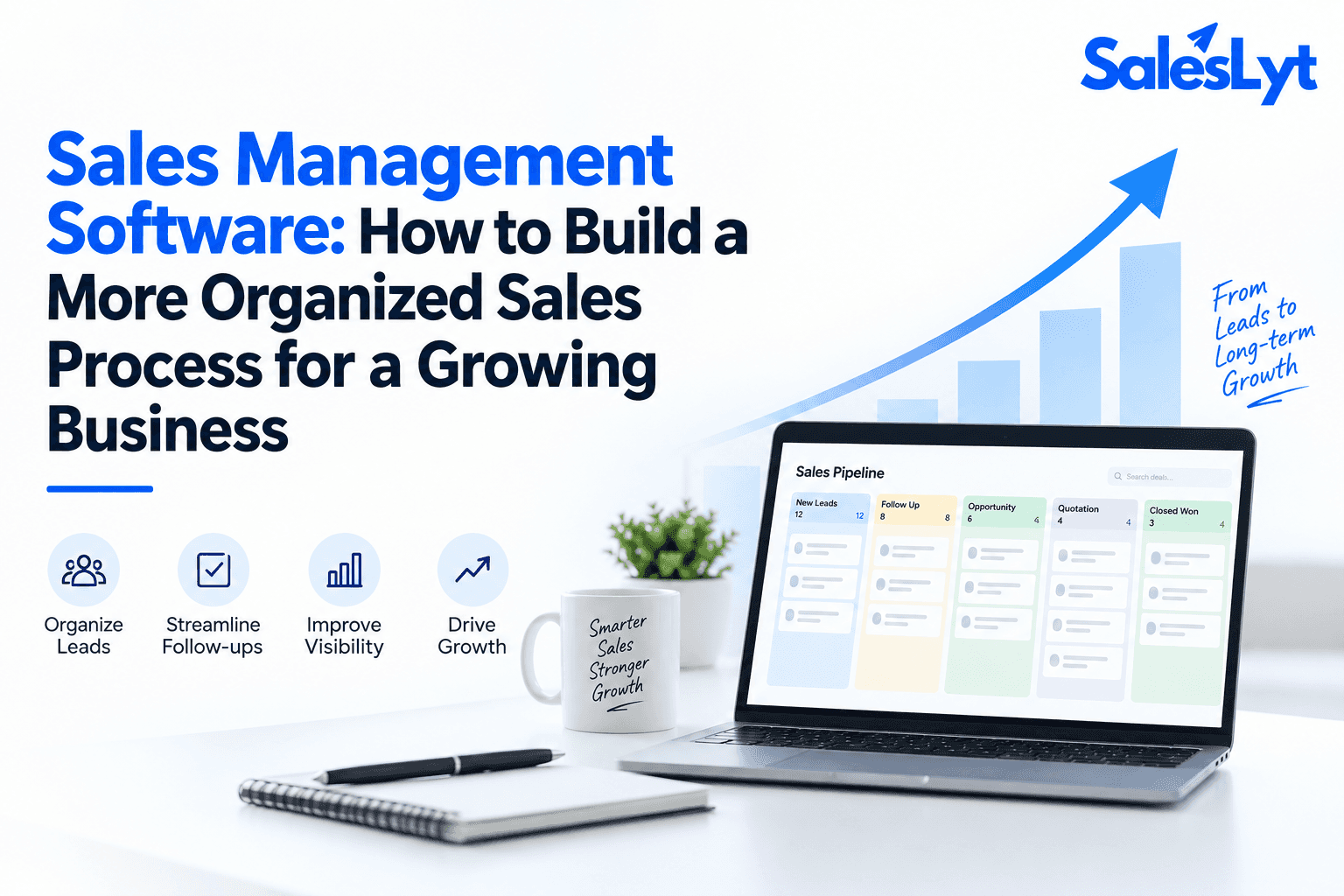
2. A Clear Sales Pipeline
Every opportunity does not have the same probability of becoming a customer.
One prospect may have made an initial enquiry. Another has already received a quotation. A third may be negotiating pricing.
Without a structured pipeline, all three may simply appear as "leads."
A good CRM should allow the team to move opportunities through clearly defined stages, for example:
New Lead → Contacted → Qualified → Meeting → Quotation → Negotiation → Won/Lost
This makes the B2B sales process easier to understand.
Instead of asking every salesperson, "What is happening with this customer?", a manager can look at the pipeline and understand where different opportunities stand.
Pipeline visibility can also expose problems. If too many deals remain stuck at the quotation stage, the business can investigate why. If leads are entering the pipeline but very few are reaching meetings, the qualification or follow-up process may need improvement.
A CRM therefore shouldn't only record sales—it should help teams see how sales are progressing.
3. Follow-Up Management That Is Difficult to Ignore
Many businesses don't lose opportunities because their product is poor.
They lose them because follow-ups happen too late—or don't happen at all.
A buyer may say:
"Call me next Tuesday."
"Send the revised quotation."
"Contact us after the financial year."
"Let's discuss this again next month."
If those conversations depend entirely on memory, missed opportunities are almost inevitable as the number of leads increases.
One of the most important features to look for in the best CRM for MSME in India is therefore structured follow-up management.
Salespeople should be able to see what requires attention today, while managers should have visibility into overdue or pending activities.
This is especially useful when learning how to manage customer deals more effectively. Every active opportunity should ideally have a clear next action rather than sitting inside the pipeline with no defined follow-up.
4. Sales Automation Without Unnecessary Complexity
Automation sounds attractive, but MSMEs rarely need complicated automation simply for the sake of having it.
They need automation that removes repetitive work.
For example, a CRM may help teams create reminders, schedule tasks, maintain follow-up workflows and reduce manual tracking.
The purpose is simple: allow salespeople to spend more time speaking with customers and less time maintaining administrative records.
This is also one answer to the question of how to improve sales process efficiency.
Before adding more salespeople, businesses should examine whether their existing team is wasting time on activities that could be organized or automated.
A well-designed CRM can create consistency without requiring managers to constantly remind everyone what to do next.
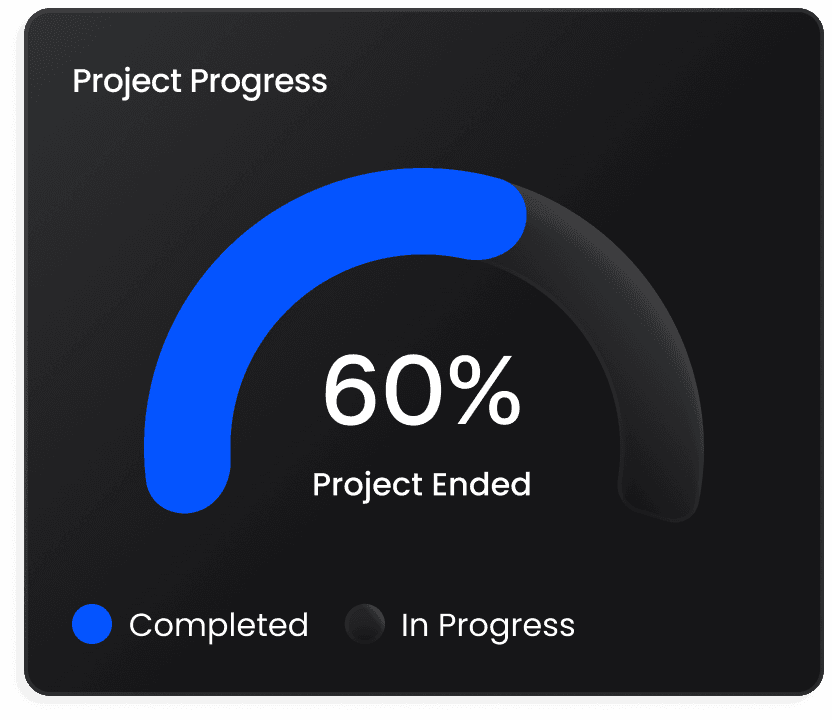
5. Useful Sales Analytics
Reports should answer questions—not simply make the dashboard look impressive.
For a growing MSME, useful sales analytics might include:
Number of active opportunities
Lead conversion trends
Pipeline value
Won and lost deals
Sales activities completed
Follow-up performance
Individual salesperson performance
Sales progress over time
This visibility helps business owners move away from decisions based entirely on instinct.
For example, imagine that one salesperson is handling 80 leads while another has only 25. Or perhaps your team is generating plenty of quotations but very few deals are closing.
Without data, these problems may remain hidden.
With the right CRM dashboard, managers can identify patterns earlier and decide where attention is required.
6. AI That Helps Teams Make Better Decisions
AI is becoming common in sales software, but MSMEs should be careful about choosing a CRM simply because the word "AI" appears on the website.
The better question is:
Does the AI actually help the sales team make a decision or take action?
Useful AI capabilities may help teams understand deal potential, prioritize opportunities, analyse performance or identify areas that require attention.
SalesLyt, for example, combines CRM functionality with AI-powered insights and predictions, AI performance scoring and sales analytics. Its current platform positioning also includes lead management, automated follow-ups and pipeline management.
The objective should not be to replace salespeople.
It should be to give them better information.
For an MSME with limited management bandwidth, that can be particularly valuable. Instead of reviewing every opportunity manually, the business can use technology to highlight where human attention may be needed most.
7. Support for Field Sales Activities
Many Indian MSMEs don't operate with purely desk-based sales teams.
Manufacturers, distributors, industrial suppliers and B2B trading businesses often have salespeople travelling to:
Customer offices
Dealer locations
Factories
Industrial areas
Distributor premises
Project sites
For these businesses, the CRM needs to reflect what actually happens in the field.
SalesLyt includes geo-tagging among its sales-management capabilities, alongside lead tracking, pipeline management and sales-performance tools.
This kind of functionality can give managers better visibility into field activities and make sales reporting more structured.
The exact feature requirement will depend on the business model, but companies with field-sales operations should consider this when comparing CRM platforms.
8. A Connected Journey From Lead to Revenue
Sales management doesn't necessarily end when a deal is marked "won."
For many MSMEs, the workflow continues:
Lead → Follow-Up → Opportunity → Quotation → Order → Invoice → Payment
If each stage operates through a different disconnected system, employees may repeatedly enter the same information and managers may lose visibility after the sale.
A more connected approach can make the sales lifecycle easier to manage.
SalesLyt currently brings CRM activities together with quotation, invoice and payment-management capabilities, helping businesses manage more of that journey within the same sales environment.
For an MSME, this can be more practical than maintaining separate systems for every small part of the customer journey.
What Should You Check Before Choosing a CRM?
Before subscribing to any platform, involve the people who will actually use it.
Ask your sales team where they currently lose time.
Do leads get forgotten?
Are follow-ups missed?
Does management lack pipeline visibility?
Are customer records scattered?
Is field activity difficult to monitor?
Does preparing quotations require too much manual work?
The answers will tell you far more than a generic "Top CRM Features" checklist.
The best CRM for MSME in India is ultimately the one that solves the problems your team faces every day.
You should also consider whether the platform is easy enough for employees to adopt, whether access can be controlled according to user roles, whether customer information is adequately protected, and whether the software can continue supporting the business as the team grows.
Where SalesLyt Fits for Growing MSMEs
SalesLyt is designed as an AI-powered CRM and sales-management platform for small businesses, startups and growing B2B sales teams.
Instead of treating lead management, follow-ups, pipelines and sales performance as separate activities, the platform brings them together within one sales workflow.
Current SalesLyt capabilities highlighted on the platform include:
Lead and customer management
Automated follow-ups
Sales pipeline management
AI-powered insights and predictions
AI performance scoring
Sales analytics
Geo-tagging
Task and workflow support
Quotation management
Invoice management
Payment tracking
The idea is simple: give growing teams a clearer view of what has happened, what is happening now and what needs to happen next.
That can be especially useful for businesses moving away from spreadsheets and informal sales tracking.
Final Thoughts
Choosing CRM software is not really about finding the platform with the highest number of features.
It is about finding a system your team will actually use.
For growing businesses, the best CRM for MSME in India should make everyday sales work easier: organize leads, prevent missed follow-ups, provide a clear pipeline, help managers understand performance and give every opportunity a defined next step.
Good CRM software for MSME businesses in India should also help create a repeatable sales process as the company grows.
That is where SalesLyt is positioned to help.
By bringing lead management, follow-ups, pipeline tracking, AI-powered insights, analytics and broader sales-lifecycle management together, SalesLyt gives growing teams a more structured way to manage sales without relying on scattered spreadsheets, messages and memory.
Because ultimately, improving sales isn't always about generating more leads.
Sometimes, it's about managing the opportunities you already have much better.

Conclusion
Choosing the best CRM for MSME in India is not about selecting the software with the longest feature list. It is about choosing a system your sales team can actually use every day to manage leads, follow-ups, deals and customer relationships more effectively.
For a growing MSME, the right CRM should provide a clear sales pipeline, reduce missed follow-ups, improve visibility into team performance and create a more structured B2B sales process. It should also help the business move away from scattered spreadsheets, personal messages and manual tracking.
SalesLyt brings lead management, automated follow-ups, pipeline management, AI-powered insights, analytics, quotations, invoices and payment tracking into one connected sales environment. This gives growing teams a clearer picture of what has happened, what is happening now and what action needs to happen next.
Ultimately, improving sales is not always about generating more leads. Sometimes the biggest opportunity is simply managing the leads and customer deals you already have more effectively.