For many Indian MSMEs, choosing a CRM starts with a familiar name.
Zoho CRM is often one of the first platforms businesses consider because it is widely known, offers a broad feature set, and sits inside a larger business software ecosystem.
But that does not automatically mean it is the right fit for every growing sales team.
Some businesses need a simpler setup. Others want better visibility into follow-ups, field activity, quotations, payments, team performance, or day-to-day sales execution.
That is why searches for a Zoho CRM alternative are often less about finding something “better” in every way and more about finding something that fits the business more closely.
For Indian MSMEs, the right CRM should help organize sales without adding unnecessary complexity.
So before choosing a platform, it is worth comparing the features that actually affect your team every day.
Why Indian MSMEs Look for a Zoho CRM Alternative
A CRM decision usually becomes important when spreadsheets, calls, messages, and personal reminders stop being enough.
Imagine a growing sales team handling enquiries from multiple sources.
One salesperson maintains customer data in Excel. Another keeps follow-up dates in a notebook. Quotations are stored separately. Managers have to ask team members for updates just to understand which opportunities are active.
This becomes harder as the business grows.
Companies searching for a Zoho CRM alternative may therefore be looking for:
Simpler sales workflows
Better follow-up visibility
Easier pipeline management
More practical automation
Better visibility for managers
AI-supported sales insights
Field-sales tracking
Connected quotation and payment management
A CRM that is easier for a smaller team to adopt
The important point is that the best CRM is not always the one with the most features.
It is the one your team can actually use consistently.
1. Start With Lead and Customer Management
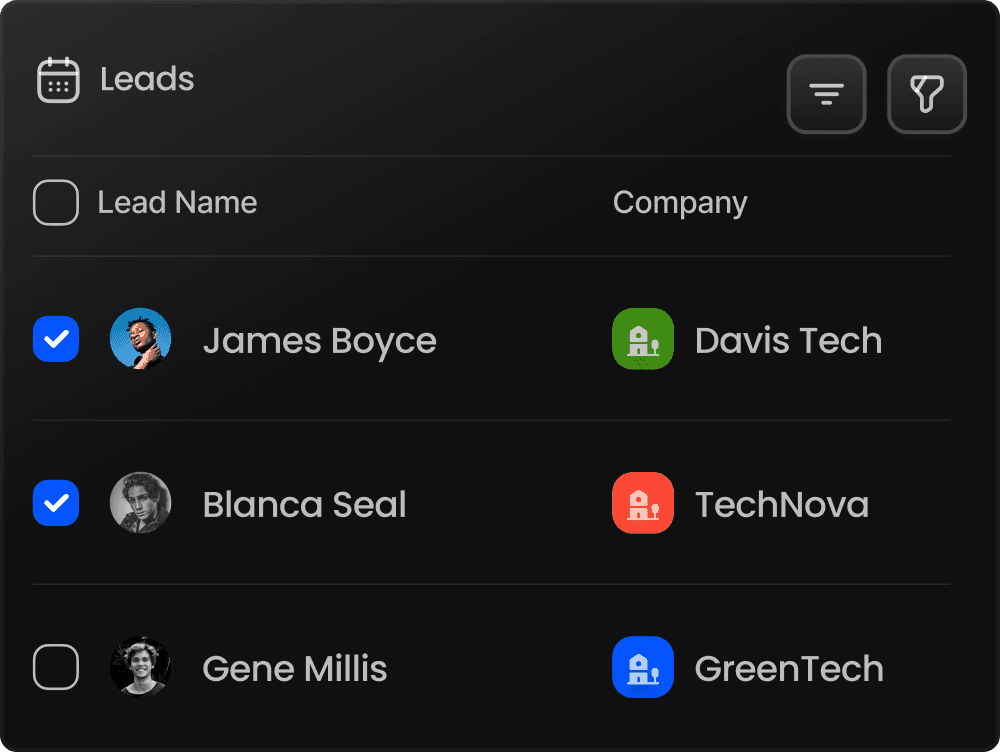
The first thing to compare is how each CRM handles leads and customer information.
A growing business needs one place where the sales team can quickly understand:
Who is the customer?
Where did the lead come from?
Who is handling it?
What was discussed?
When is the next follow-up?
What stage is the opportunity in?
This sounds basic, but it is the foundation of good CRM adoption.
If employees still need to search across spreadsheets, emails, WhatsApp chats, and personal notes after implementing a CRM, the system is not solving the real problem.
For businesses looking for CRM software for MSME businesses in India, centralized lead and customer management should be one of the first requirements.
2. Compare Follow-Up Management Carefully
Follow-ups are one of the easiest places for revenue opportunities to disappear.
A prospect may ask for a callback next week.
A quotation may need to be discussed after five days.
A customer may want a revised proposal.
If those activities depend entirely on memory, some will eventually be missed.
That is why businesses learning how to improve sales process performance should look closely at reminders, scheduled activities, task management, and follow-up automation.
A good CRM should make it easy to answer one question:
What does my sales team need to do today?
SalesLyt currently emphasizes automated follow-ups and task automation as part of its sales workflow, helping teams organize upcoming activities and reduce repetitive work.
3. Check How the CRM Handles Your Sales Pipeline
A CRM should do more than store contacts.
It should help your team understand how opportunities move through your B2B sales process.
For example:
Lead → Qualified → Meeting → Follow-Up → Quotation → Negotiation → Won
Every business may use slightly different stages, but the idea is the same.
Managers should be able to see:
How many opportunities are active
Where deals are getting stuck
Which salesperson owns each deal
Which opportunities have gone cold
What may close soon
Without this visibility, pipeline reviews often become based on memory and verbal updates.
SalesLyt highlights smoother sales pipelines with lead tracking and automated follow-ups designed to keep deals moving through the process.
4. Look at How Easy It Is to Manage Customer Deals
Understanding how to manage customer deals becomes more important as sales volume grows.
Suppose your team has 50 open opportunities.
Some may need a quotation.
Some may be waiting for customer approval.
Others may not have received any follow-up for weeks.
A CRM should make those differences visible.
Managers should not have to ask every salesperson for a manual update before understanding the health of the pipeline.
The system should help the team identify:
Which deals need attention?
Which opportunities are progressing?
Which ones are delayed?
What should happen next?
That visibility makes sales management more proactive.
5. Compare AI Features Based on Practical Value
Zoho CRM includes Zia, its AI assistant, with capabilities across areas including data management, productivity, analytics, intelligent alerts, customer engagement, recommendations, and automation.
That makes AI an important part of the comparison.
But businesses should not choose software simply because it says “AI-powered.”
The better question is:
What will the AI actually help my sales team do?
Useful AI capabilities may include:
Identifying high-priority opportunities
Predicting deal outcomes
Suggesting next actions
Highlighting sales risks
Scoring leads or activities
Analysing salesperson performance
Reducing repetitive work
For businesses exploring how to use AI in sales process management, practical usefulness matters more than the number of AI features listed on a website.
SalesLyt includes AI-powered insights and predictions as well as AI performance scoring for sales visits, customer calls, and leads.
6. Check Manager Visibility and Team Performance
Salespeople need a system to work from.
Managers need visibility.
A CRM should allow managers to understand what is happening without constantly interrupting the team.
Useful areas to compare include:
KPI dashboards
Salesperson activity
Follow-up completion
Pipeline movement
Task monitoring
Deal progress
Team productivity
Manager review workflows
SalesLyt currently highlights manager review, KPI dashboards, task monitoring, approvals, and productivity insights as part of its sales management capabilities.
For an MSME with a growing sales team, that visibility can be particularly valuable.
7. Do You Have a Field Sales Team?
This question matters for manufacturers, distributors, industrial suppliers, and other businesses with employees regularly meeting customers outside the office.
A traditional CRM may manage customer records effectively but provide limited visibility into field activity.
If field sales is important to your business, compare:
Geo-tagging
Visit tracking
Field activities
Salesperson movement
Visit outcomes
Manager visibility
SalesLyt currently includes geo-tagging and positions it as a way to track and optimize sales activity.
For many Indian MSMEs, especially industrial and B2B companies, this may be more important than having hundreds of rarely used features.
8. Compare What Happens After the Deal Progresses
Many CRM comparisons focus only on leads and pipelines.
But an MSME sales process often continues beyond that point.
After a customer shows interest, the team may still need to:
Create a quotation.
Revise the quotation.
Send an invoice.
Track payment.
Follow up for outstanding amounts.
If these activities are spread across multiple tools, the sales process becomes fragmented.
SalesLyt combines CRM with quotation, invoice, and payment tracking, allowing businesses to manage more of the sales lifecycle within one system.
This is an important area to compare when evaluating a Zoho CRM alternative.
9. Compare Ease of Use, Not Just Feature Lists
A CRM may look impressive during a product demonstration.
But the real test starts after the team begins using it.
Ask:
Can a salesperson understand the system quickly?
Can they update a lead without unnecessary steps?
Can they see today's follow-ups easily?
Can managers understand the pipeline without building complicated reports?
Can new employees learn the system quickly?
This matters because CRM adoption is often less about technology and more about behaviour.
If your employees find the system difficult, they may stop updating it.
Then the data becomes incomplete, and management loses trust in the CRM.
For businesses choosing the best CRM for MSME in India, ease of use should be treated as a major selection criterion.
10. Consider Configuration and Scalability
Your business may have five salespeople today.
It may have 15 next year.
Your CRM should be able to support growth without forcing you to rebuild your process every few months.
Compare:
User management
Role permissions
Workflow flexibility
Dashboard customization
Automation
Reporting
Pipeline customization
Data security
SalesLyt currently provides customizable dashboards alongside sales automation and role-based sales management capabilities.
The objective should be to choose something simple enough for today but structured enough for tomorrow.
Zoho CRM vs SalesLyt: What Should an MSME Think About?
Zoho CRM is a mature CRM platform with a broad ecosystem and extensive AI capabilities through Zia. For companies already using multiple Zoho applications, that ecosystem can be a major advantage.
SalesLyt approaches the problem from a more focused sales-management perspective.
Its current feature set includes:
Lead and customer management
Automated follow-ups
Sales pipeline management
AI-powered insight and prediction
AI performance scoring
Geo-tagging
Analytics and KPI dashboards
Task automation
Manager review and performance tracking
Quotation management
Invoice management
Payment tracking
Customizable dashboards
For an Indian MSME, the choice should therefore depend on the business workflow rather than brand recognition alone.
If you need a broad business application ecosystem, Zoho may remain relevant.
If your priority is organizing day-to-day sales execution, follow-ups, field activities, pipelines, team performance, quotations, and payments within a connected sales environment, SalesLyt is worth comparing closely.
Is SalesLyt a Good Zoho CRM Alternative for Indian MSMEs?
SalesLyt is designed for small businesses, startups, agencies, and growing B2B sales teams, with features centered around practical sales execution.
That makes it particularly relevant for MSMEs that want to move away from scattered spreadsheets and manual follow-up systems.
Rather than simply storing customer data, SalesLyt aims to create a clearer flow:
Lead → Follow-Up → Opportunity → Pipeline → Quotation → Invoice → Payment
For businesses that want one system around this journey, that approach can simplify sales operations.
What About Businesses Comparing Salesforce Too?
Some MSMEs researching a Zoho CRM alternative may also be evaluating a Salesforce alternative.
Salesforce serves a different part of the market particularly well, especially organizations that require deep customization and large-scale CRM infrastructure.
However, smaller businesses do not always need that level of complexity.
The decision should therefore be based on what your business genuinely requires.
Do not choose a CRM because it is the biggest platform.
Choose it because it makes your sales process easier to manage.
A Simple CRM Comparison Checklist
Before making a final decision, compare each platform against these questions:
Can we manage leads easily?
Can salespeople see today's follow-ups?
Can managers see pipeline activity clearly?
Can we track stalled opportunities?
Does AI provide useful sales insights?
Can we monitor salesperson performance?
Does it support field-sales activity if needed?
Can it manage quotations and invoices?
Can it help track payments?
Is it simple enough for our team to use every day?
If a CRM cannot solve your everyday sales problems, additional features will not compensate for that.
Conclusion
Finding the right Zoho CRM alternative does not mean looking for a platform that copies every Zoho feature.
It means identifying what your business actually needs.
For Indian MSMEs, those needs often include lead management, consistent follow-ups, clear pipeline visibility, easier deal management, AI-supported sales insights, team performance tracking, and a better connection between sales activities and revenue.
Businesses searching for the best CRM for MSME in India should therefore compare usability and workflow fit just as carefully as features and pricing.
SalesLyt brings lead management, follow-up automation, AI-powered insights, pipeline tracking, geo-tagging, performance management, quotations, invoices, payment tracking, and dashboards into one connected sales platform.
If your current sales process depends heavily on spreadsheets, personal reminders, scattered customer information, or repeated manual updates, moving to a structured CRM can help you improve your sales process and give your team clearer direction.
The best CRM is ultimately the one that answers three simple questions every day:
Which customer needs attention?
What should we do next?
How close are we to closing the deal?
For growing Indian MSMEs looking for a practical Zoho CRM alternative, SalesLyt is built around answering those questions and helping sales teams turn everyday activity into more organized, measurable growth.

Conclusion
Choosing the right Zoho CRM alternative is not about finding a platform with the longest feature list. It is about finding a CRM that fits the way your sales team actually works.
For Indian MSMEs, the most important areas to compare are usually lead management, follow-up tracking, pipeline visibility, ease of use, AI capabilities, field-sales management, quotations, invoices, payments, and manager visibility.
Businesses looking for the best CRM for MSME in India should also consider how easily their team can adopt the platform. A powerful CRM is only valuable when salespeople use it consistently.
SalesLyt is designed to help growing B2B teams manage leads, follow-ups, customer deals, pipeline activity, sales performance, quotations, invoices, and payments in one connected system. Its AI-powered capabilities can also help teams gain better visibility and make more informed sales decisions.
If your current process depends heavily on spreadsheets, personal reminders, or scattered customer information, moving to structured CRM software for MSME businesses in India can help you improve your sales process and manage opportunities more efficiently.
The right CRM should make three things clearer every day: who needs attention, what needs to happen next, and which deals are moving closer to conversion.
For growing Indian MSMEs looking for a practical Zoho CRM alternative, SalesLyt is built around making that sales process simpler, more organized, and easier to scale.