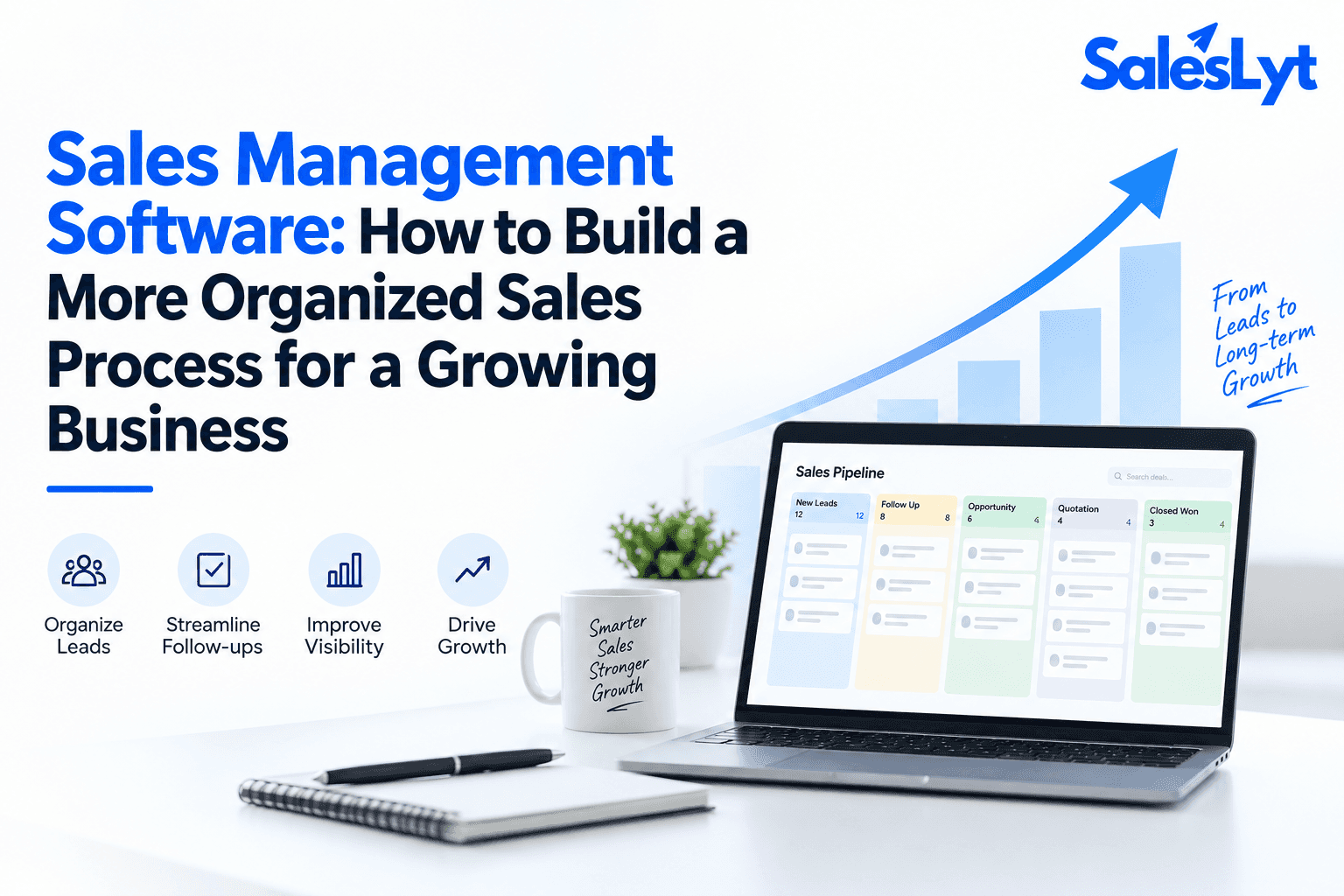
If your sales team is still managing leads through spreadsheets, WhatsApp messages, emails, and personal notes, you've probably reached the point where things are becoming difficult to track.
You know there are opportunities in the pipeline, but simple questions become surprisingly difficult to answer. Which deals are close to closing? Which prospects haven't been contacted recently? How much potential revenue is sitting in negotiation? And who is responsible for the next follow-up?
This is usually when businesses start looking for a sales pipeline tool or CRM.
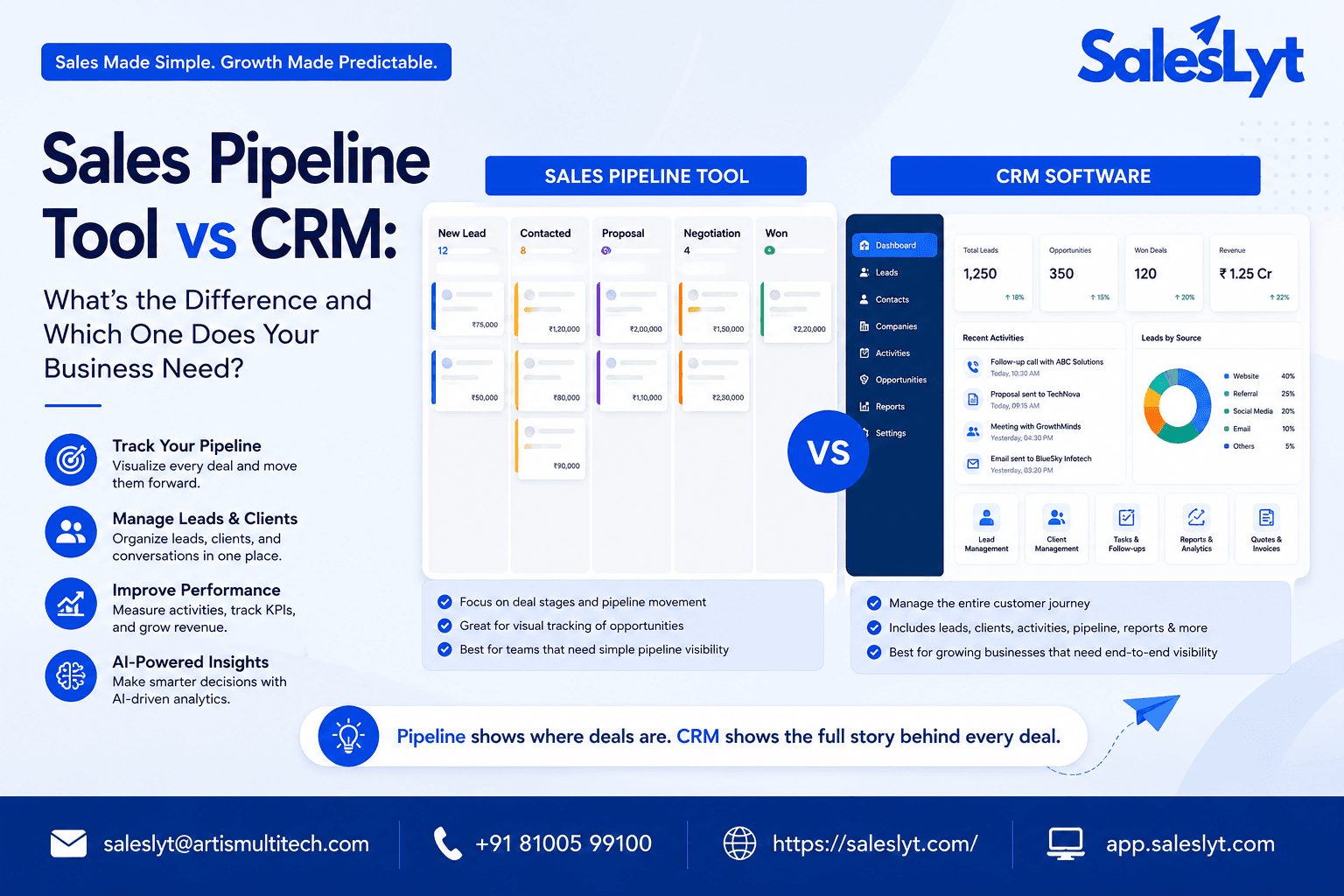
The two are closely related, but they aren't exactly the same. A pipeline tool focuses primarily on moving opportunities through the sales process, while CRM software for businesses provides a broader system for managing leads, customers, conversations, activities, relationships, and sales opportunities.
Understanding that difference can help you choose the right solution for your team.
What Is a Sales Pipeline Tool?
A sales pipeline tool gives your team a visual way to track opportunities as they move from one sales stage to another.
For example, a B2B company's pipeline might look like this:
New Lead → Contacted → Qualified → Proposal Sent → Negotiation → Won/Lost
Instead of checking multiple spreadsheets to understand the status of each opportunity, salespeople can see where every deal currently stands.
This makes sales pipeline management much easier.
A manager can quickly identify how many opportunities are active, where deals are getting delayed, which prospects require follow-ups, and what potential revenue may be available.
A good sales pipeline tracker essentially answers one important question:
Where does every sales opportunity currently stand?
For teams primarily concerned with deal visibility, that alone can be extremely valuable.
What Is CRM Software?
CRM stands for Customer Relationship Management.
While a pipeline tool focuses heavily on opportunities and deal stages, CRM usually covers a much wider part of the customer lifecycle.
Modern CRM software for businesses may help teams manage:
Leads and prospects
Customer and company information
Calls and meetings
Follow-up activities
Sales opportunities
Deal pipelines
Quotations
Sales activities
Customer history
Team performance
Reports and dashboards
In other words, the pipeline is usually one component of a CRM.
This broader approach becomes valuable because sales isn't simply about moving cards from one pipeline stage to another. Every opportunity is connected to people, conversations, activities, requirements, proposals, and follow-ups.
Sales Pipeline Tool vs CRM: The Main Difference
The easiest way to understand the difference is to think about scope.
A sales pipeline tool is mainly focused on the journey of a deal.
A CRM is focused on the wider relationship surrounding that deal.
Suppose a prospect named Rahul contacts your company about a ₹3 lakh project.
A pipeline tracker might show:
Rahul's Company → Proposal Sent → ₹3,00,000
That's useful because your team immediately knows where the opportunity stands.
A CRM can provide more context. It may show Rahul's contact information, company details, previous calls, meeting notes, lead source, scheduled follow-up, quotation, assigned salesperson, opportunity value, and previous interactions.
The pipeline tells you where the deal is.
The CRM helps explain what is happening around the deal.
Where Lead Management Fits In
Before an opportunity reaches the pipeline, there is usually a lead.
That's why lead management software is another important part of a structured sales process.
Imagine generating leads from your website, Facebook campaigns, LinkedIn, referrals, exhibitions, calls, and field sales representatives.
Without a central system, those leads can easily become scattered.
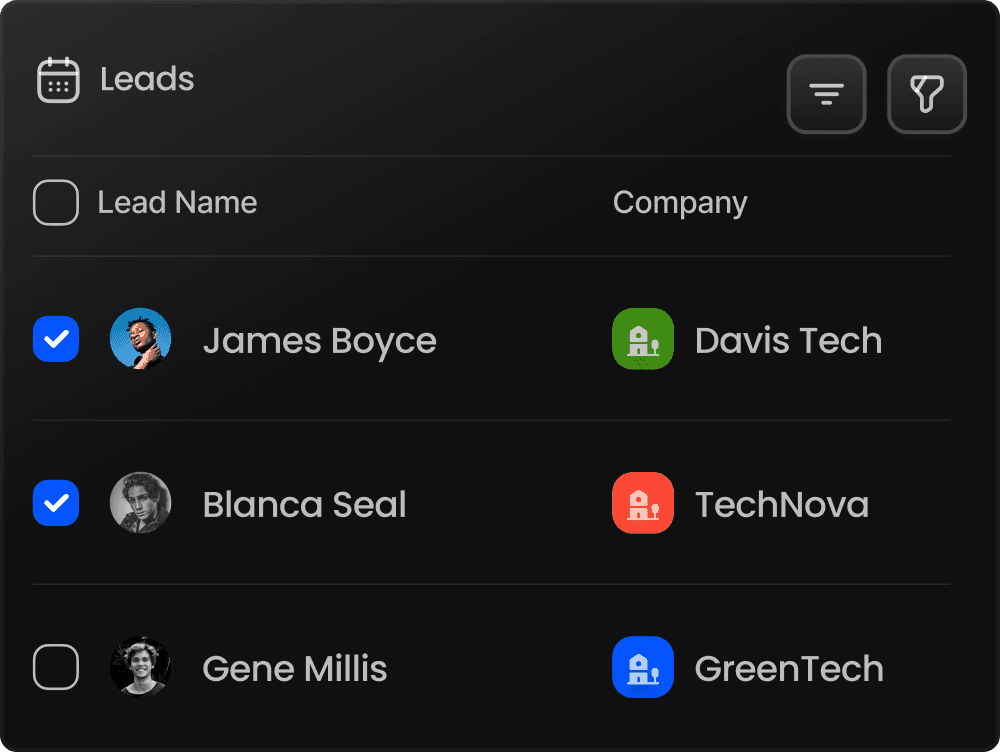
Using sales lead management software, businesses can organize incoming prospects, record their requirements, assign ownership, schedule activities, and determine which leads are worth pursuing.
For smaller teams, lead management software for small business can be especially useful because one employee may be handling many prospects simultaneously.
A structured process reduces dependence on memory.
Why Follow-Ups Matter as Much as Pipeline Visibility
Knowing that a deal is in the “Proposal Sent” stage isn't enough.
Someone still needs to follow up.
This is one area where businesses should look beyond basic pipeline visualization.
If a salesperson sends a quotation on Monday and the prospect asks for a call on Friday, the system should help the salesperson remember that commitment.
Modern sales platforms can make those activities easier to manage through reminders, task planning, and automation.
SalesLyt, for example, currently highlights automated follow-ups and an intelligent automated task planner alongside its pipeline functionality.
The objective is simple: fewer promising opportunities should disappear because someone forgot the next action.
When Is a Sales Pipeline Tool Enough?
A standalone pipeline solution can make sense when your sales process is relatively simple.
Perhaps you have a very small team, limited customer information, short sales cycles, and only need to know which stage each opportunity has reached.
In that situation, a straightforward pipeline view may provide enough structure.
But requirements usually increase as a company grows.
Salespeople start managing more prospects. Managers want performance reports. Customer histories become longer. Follow-ups increase. More employees interact with the same accounts.
At that stage, simply seeing the deal stage may no longer be enough.
When Does Your Business Need a CRM?
A CRM becomes more useful when you need to connect the entire sales process.
For example, you may want to know:
Where did this lead come from?
Who owns the relationship?
When was the last conversation?
What needs to happen next?
Has a quotation been shared?
How valuable is the opportunity?
How is the salesperson performing?
These are broader questions that require more than a sales pipeline tracker.
For a growing company searching for the best CRM for small business, the goal shouldn't necessarily be finding the software with the largest number of features.
The better question is:
Will our team actually use this system every day?
An easy CRM for small business that supports your real sales workflow may deliver more value than an unnecessarily complicated platform.
What About Startups and Agencies?
Startups face a similar challenge.
Early on, founders may personally manage every prospect. As lead volume grows and new salespeople join, information becomes fragmented.
The best CRM for startups should therefore help create structure without adding unnecessary administrative work.
A practical sales CRM for startups can centralize lead information, opportunities, follow-ups, and customer conversations so the sales process doesn't depend entirely on the founder.
Agencies have slightly different requirements.
A sales CRM for agencies needs to handle multiple enquiries, discovery calls, proposals, follow-ups, negotiations, and ongoing client relationships.
In both situations, visibility and simplicity matter.
Where AI Is Changing Sales Management
Traditional sales software primarily records information.
Modern AI sales management software can go further by helping teams interpret that information.
For example, AI can assist with lead scoring, performance analysis, deal predictions, recommendations, and prioritization.
This doesn't mean AI replaces salespeople.
Instead, AI-powered sales software can help salespeople and managers make better use of the information already being generated through daily sales activities.
SalesLyt currently includes AI-powered insights and predictions and AI performance scoring for leads, customer calls, and sales visits.
For growing teams, this creates a shift from simply recording sales data toward using that data to support decisions.
Don't Forget Sales Performance
Another limitation of relying only on pipeline stages is that they don't always explain why results are improving or declining.
This is where sales performance management software becomes important.
Managers need visibility into activities as well as outcomes.
How consistently are salespeople following up? How are opportunities progressing? Which employees are completing their activities? Where are deals slowing down?
SalesLyt currently includes KPI dashboards, task monitoring, review workflows, productivity insights, and AI performance scoring as part of its sales-management capabilities.
This wider view is particularly useful when a business moves from a founder-led sales process to a larger sales team.
Pipeline Tool or CRM: Which Should You Choose?
If your only requirement is seeing opportunities move through sales stages, a dedicated sales pipeline tool may be sufficient.
But if you need to manage leads, customer relationships, follow-ups, opportunities, quotations, sales activities, team performance, and reporting together, a CRM is likely the better long-term choice.
For many growing companies, the strongest option isn't really “pipeline tool versus CRM.”
It's a CRM that already includes strong pipeline management.
That's also the direction SalesLyt takes. Its current platform combines lead management, smoother sales pipelines, automated follow-ups, AI-powered insights, analytics, performance management, quotations, invoices, and payment tracking within a broader CRM environment.
Final Thoughts
A sales pipeline tool gives you visibility into where deals are moving. A CRM gives you the wider context needed to manage the relationships, activities, follow-ups, and information behind those deals.
Both can improve sales organization, but the right choice depends on how complex your sales process has become.
For a very small team, a simple pipeline may be enough. As lead volume increases, more salespeople join, and customer relationships become harder to manage, combining sales pipeline management, lead management software, performance tracking, automation, and CRM capabilities becomes much more valuable.
That's ultimately what good sales management software for small business should accomplish: not simply store more data, but help the team understand what's happening, what needs attention, and what should happen next.
For businesses that want those capabilities in one system, SalesLyt is designed to bring lead management, pipeline tracking, follow-ups, AI insights, performance monitoring, and broader CRM activities together—helping sales teams stay organized and move more opportunities toward revenue.
Conclusion
A sales pipeline tool helps businesses visualize deals and understand where each opportunity stands, while a CRM provides a broader view of leads, customers, follow-ups, activities, and relationships. The right choice ultimately depends on how much visibility and control your sales team needs.
For growing businesses, combining sales pipeline management with CRM software for businesses can provide the best of both worlds. SalesLyt brings lead management, pipeline tracking, follow-ups, performance monitoring, and AI-powered sales software capabilities into one system—helping teams stay organized, make smarter decisions, and move more opportunities toward revenue.