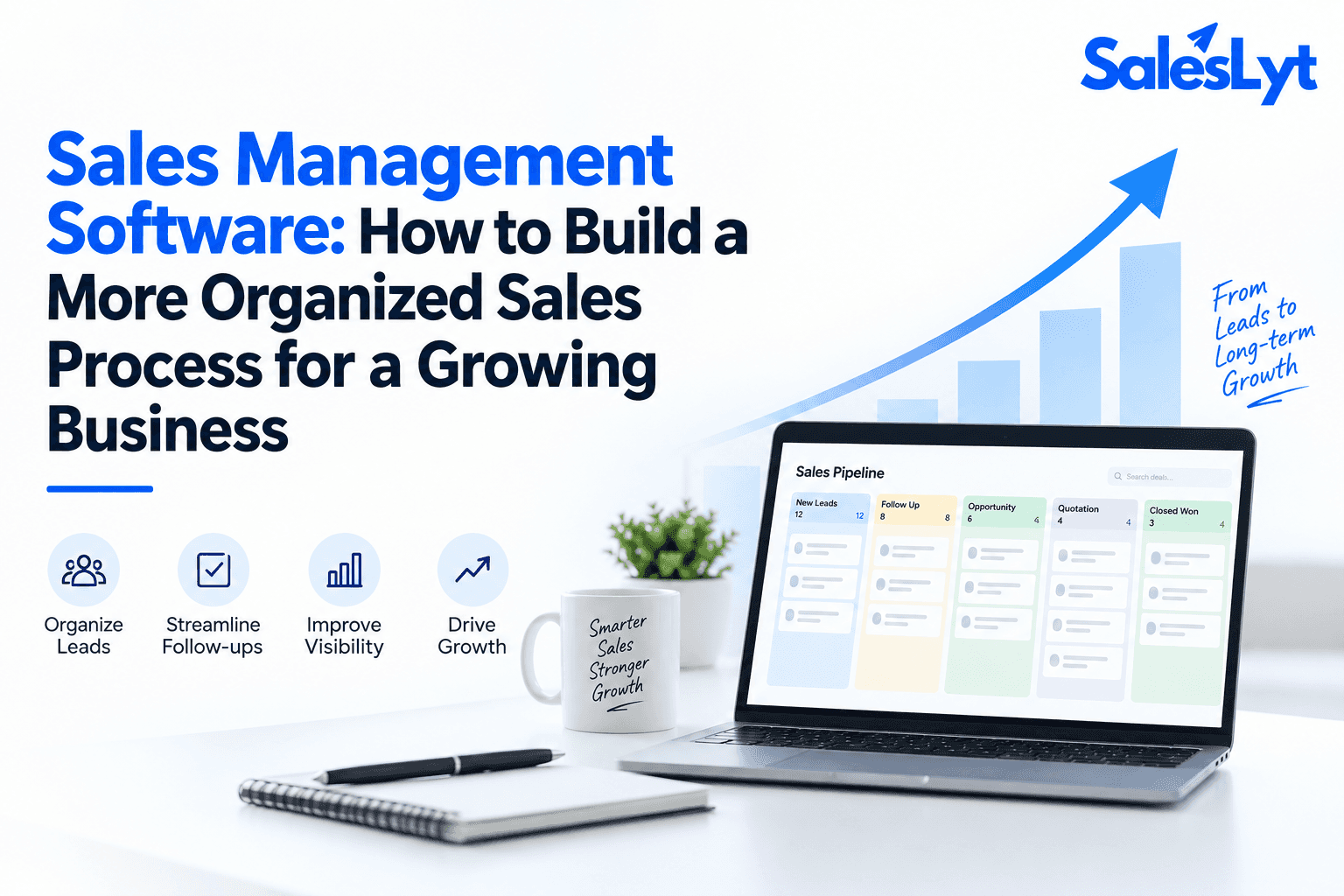
Managing sales becomes more complicated as a business grows. A small team may be able to manage customer details through spreadsheets, emails, WhatsApp messages, and basic CRM tools. But once the number of leads, customers, salespeople, and opportunities increases, keeping the sales process organized becomes much harder.
For years, traditional CRM software for businesses has helped companies solve part of this problem by keeping customer information in one place. Today, however, businesses expect more than organized records. Sales teams also want software that can identify priorities, automate routine work, highlight opportunities, and help them make better decisions.
This is where AI sales management software is changing the way modern sales teams operate.
So, what is the actual difference between a traditional CRM and AI-powered sales software? More importantly, which one makes sense for a growing business?
What Is a Traditional CRM?
A traditional Customer Relationship Management system primarily acts as a central database for sales and customer information.
Instead of storing contacts in spreadsheets and tracking conversations through individual inboxes, businesses can use a CRM to maintain customer details, leads, notes, activities, deals, and communication history in one system.
For example, a salesperson can open a customer record and check previous conversations, current opportunities, scheduled follow-ups, and other important information.
This is a major improvement over disconnected spreadsheets.
Traditional CRM systems can also function as lead management software, allowing teams to organize incoming leads and move them through different stages of the sales process.
The limitation is that many traditional systems still depend heavily on users. Salespeople need to enter information, update deal stages, schedule activities, review opportunities, and decide what deserves attention.
The CRM stores the information, but the salesperson or manager still has to interpret much of it.
What Is AI Sales Management Software?
AI sales management software takes the CRM concept further by adding intelligence, automation, predictions, and recommendations to sales data.
Rather than simply showing what has already happened, an AI-powered system can help teams understand what may require attention next.
For example, AI may help identify promising opportunities, analyze sales activities, prioritize leads, highlight patterns, or provide insights that would otherwise require managers to manually review large amounts of data.
This turns AI-powered sales software into more than a customer database. It can become part of the day-to-day sales decision-making process.
SalesLyt, for example, combines CRM capabilities with AI-powered insights and predictions, AI performance scoring, pipeline management, automated follow-ups, analytics, manager reviews, and sales lifecycle management.
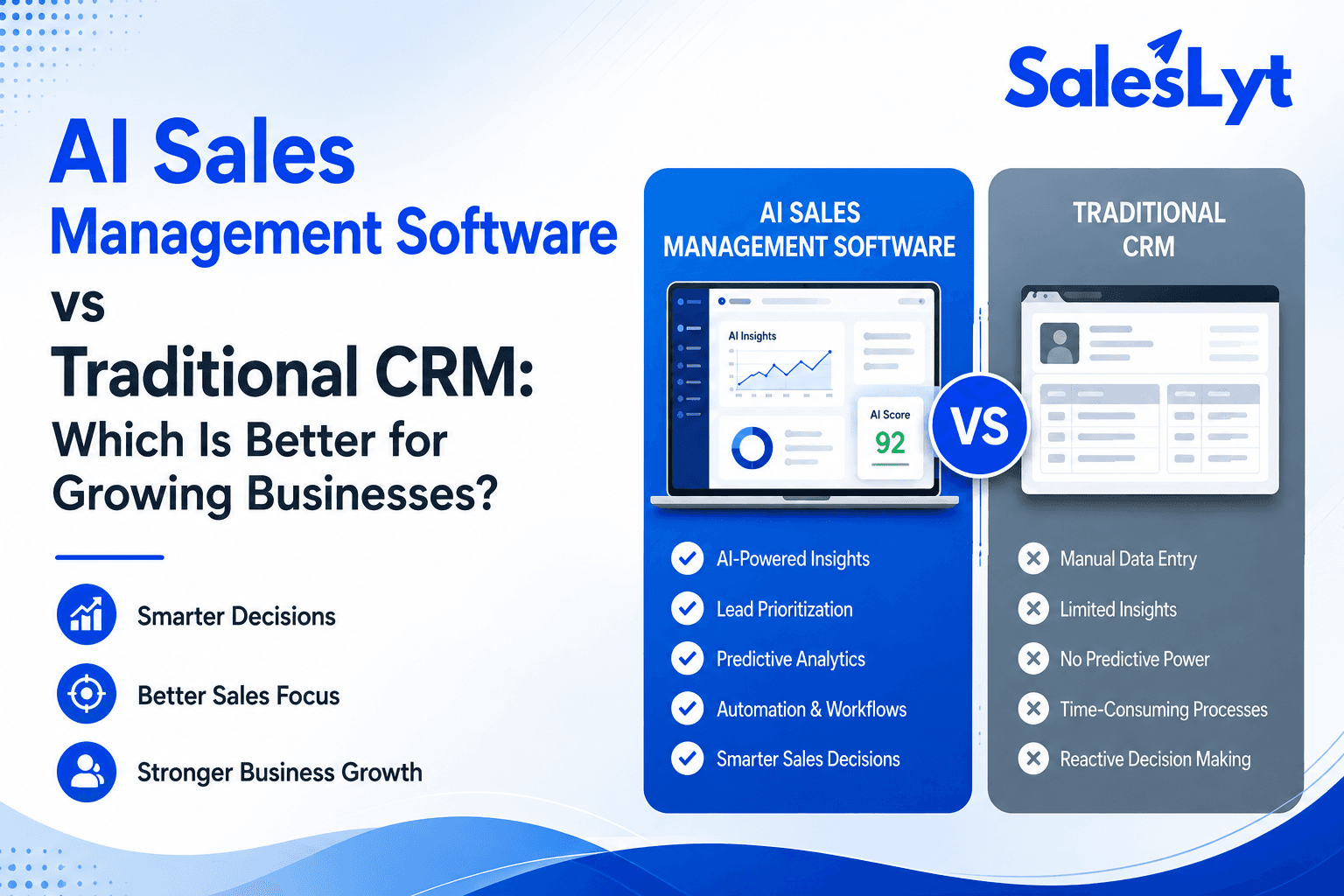
Traditional CRM vs AI Sales Management Software
The biggest difference can be summarized simply:
Traditional CRM helps you organize sales information. AI sales software helps you organize information and use it more intelligently.
Consider a business with 500 active leads.
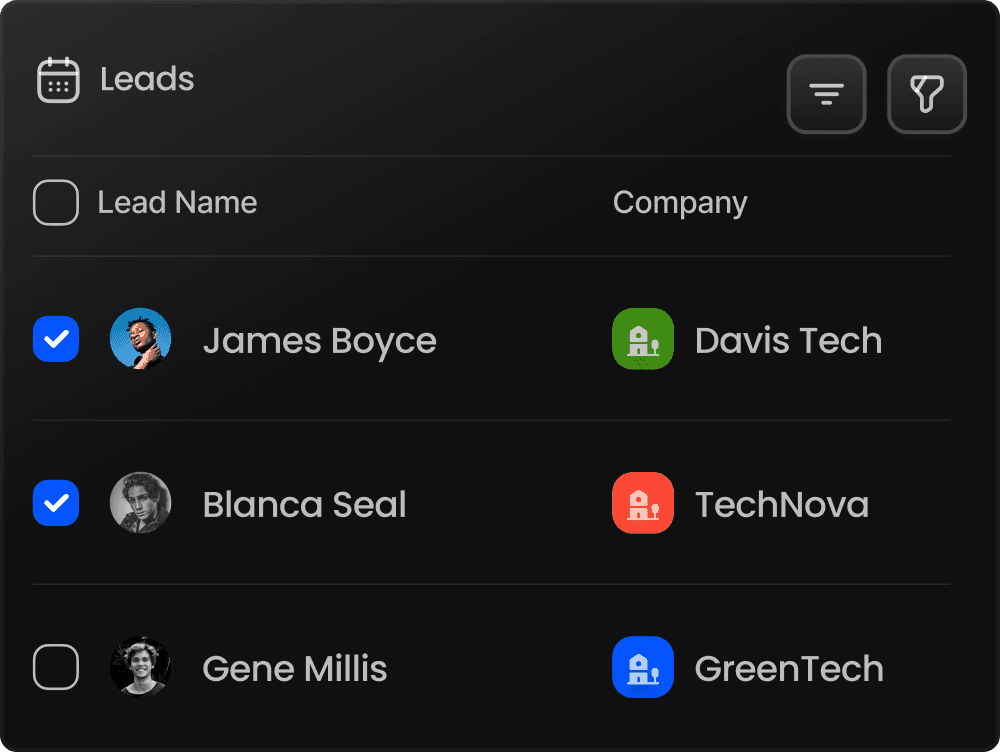
A traditional sales lead management software solution might allow the team to filter those leads by status, salesperson, source, or date.
That is useful.
But the salesperson still needs to decide which leads deserve immediate attention.
With AI capabilities, the system can potentially analyze available information and help surface higher-priority opportunities. Instead of treating every lead equally, the team can spend more time where it is likely to matter.
This difference becomes increasingly important as the sales database grows.
1. Lead Management and Prioritization
Good lead management is essential because generating more leads does not automatically produce more sales.
Traditional lead management software for small business can help capture leads, assign them to salespeople, and track their status. However, teams may still struggle to determine which leads should be contacted first.
AI can add another layer by analyzing lead information and sales activity to help teams prioritize their attention.
This is especially valuable when sales representatives manage dozens or hundreds of prospects simultaneously.
Rather than asking, “Who should I call today?” every morning, the goal is to create a system that makes the answer easier to find.
2. Sales Pipeline Management
A pipeline gives managers a visual picture of potential revenue and the stages opportunities are moving through.
Traditional sales pipeline management generally depends on salespeople keeping every opportunity updated. Managers then review the pipeline and decide which deals are healthy, delayed, or unlikely to close.
A sales pipeline tool can certainly make this process easier, but AI can make pipeline information more actionable.
For example, teams can combine pipeline information with activity data and intelligent insights to understand where attention may be required.
A good sales pipeline tracker therefore should not merely display deals. It should help salespeople and managers understand what is happening inside the pipeline.
For a growing company, that distinction matters.
3. Follow-Ups and Sales Activities
One of the simplest reasons businesses lose opportunities is inconsistent follow-up.
A salesperson speaks with a prospect, promises to call again next week, gets busy with other work, and forgets.
Traditional CRM systems can store the follow-up date, but modern systems can go further by automating reminders, task assignments, and other repetitive activities.
This is particularly useful for businesses searching for an easy CRM for small business. Ease of use should not only mean a simple interface. It should also mean reducing unnecessary manual work.
The less time salespeople spend managing the CRM, the more time they can spend selling.
4. Sales Performance Management
Managers need more than a final monthly revenue figure to understand whether their team is performing well.
They need visibility into activities, opportunities, follow-ups, targets, productivity, and overall execution.
Traditional reporting can provide dashboards and historical numbers. Modern sales performance management software, however, can combine those metrics with deeper analysis and AI-driven insights.
SalesLyt, for example, includes manager review and performance capabilities alongside AI performance scoring for sales visits, calls, and leads.
That can help managers move from simply asking, “How much did we sell?” to understanding how the sales team is actually working.
5. Automation and Productivity
Manual CRM administration becomes expensive as a company grows.
Imagine ten salespeople individually creating tasks, remembering follow-ups, updating records, reviewing pipelines, and preparing reports every day.
Even a few minutes of unnecessary administrative work per salesperson quickly adds up.
Modern sales management software for small business should therefore reduce repetitive work wherever practical.
Automation can handle activities such as reminders, follow-ups, task assignments, and workflow steps, while AI can help users interpret the information collected through those processes.
The result is not replacing the salesperson. It is giving the salesperson a better operating system for their work.
Which Is Better for Small Businesses and Startups?
For a very small company with a limited number of customers and a straightforward sales cycle, a basic CRM may still be sufficient.
But businesses planning to scale should think beyond what they need today.
The best CRM for small business should be simple enough for the current team while providing the automation, pipeline visibility, reporting, and intelligence required as sales activity increases.
The same applies when choosing the best CRM for startups.
Startups often operate with small teams, so every salesperson's time matters. A complicated system requiring constant administration can become another burden rather than a productivity tool.
Modern sales CRM for startups should therefore help founders and sales teams build structured processes early instead of waiting until their spreadsheets become impossible to manage.
What About Agencies?
Agencies face a slightly different challenge.
They may simultaneously manage prospects, existing clients, renewals, proposals, follow-ups, and multiple business opportunities.
For them, a sales CRM for agencies needs to provide a clear picture of relationships and opportunities without forcing teams to jump between multiple disconnected systems.
AI and automation can become particularly valuable when the number of conversations and follow-up activities increases.
When Should You Choose a Traditional CRM?
A traditional CRM can still make sense when your requirements are basic.
If you mainly need centralized contact records, straightforward opportunity tracking, and basic reporting, there may be little reason to introduce advanced capabilities that your team will not use.
The important question is not whether AI sounds more advanced.
It is whether those capabilities solve real problems in your sales process.
If your team already struggles with missed follow-ups, unclear priorities, inaccurate pipelines, manual reporting, or poor visibility into salesperson activity, moving toward AI-powered sales management becomes much easier to justify.
The Future Is Moving Beyond CRM
CRM is not disappearing. Instead, it is becoming the foundation of a broader sales management system.
Customer data remains essential, but growing businesses increasingly need software that connects that data with execution.
That means bringing leads, customers, activities, follow-ups, opportunities, pipelines, analytics, automation, performance management, and intelligence together.
Platforms such as SalesLyt reflect this shift. SalesLyt combines relationship management with AI-powered insights and predictions, smoother sales pipelines, AI performance scoring, automated activities, analytics, manager reviews, and integrated quotation and invoice management.
The idea is straightforward: your sales system should not only tell you what happened. It should help your team understand what deserves attention next.
Final Verdict: AI Sales Management Software or Traditional CRM?
Traditional CRM remains useful for organizing customer information and creating structure around a sales process. But for businesses dealing with increasing numbers of leads, opportunities, salespeople, and follow-ups, organization alone may no longer be enough.
AI sales management software adds intelligence and automation to the foundation created by CRM.
For growing businesses, the better long-term choice is therefore usually not “AI instead of CRM.” It is a CRM platform that combines strong relationship management with AI, automation, pipeline management, performance visibility, and practical sales execution tools.
That is the direction modern sales technology is moving—and it gives growing teams something far more valuable than another customer database: a clearer, smarter way to manage the entire sales process.
Conclusion
For growing businesses, the choice between traditional CRM and AI sales management software comes down to how effectively the system helps the sales team take action. Traditional CRM is useful for storing customer information and tracking activities, while AI-powered sales software goes further by helping teams prioritize leads, identify opportunities, automate follow-ups, and make smarter sales decisions.
With SalesLyt, businesses can bring lead management, sales pipeline management, sales activities, automation, and intelligent insights into one platform. Instead of simply recording what happened, sales teams gain better visibility into what needs attention next.
For businesses looking to build a more organized, data-driven, and scalable sales process, adopting an AI-powered sales management platform can be an important step toward better productivity, stronger customer relationships, and sustainable sales growth.