Every startup begins somewhere. For many, that somewhere is a spreadsheet.
In the early days, Excel or Google Sheets feels like the perfect sales tool. It is familiar, inexpensive, flexible, and easy to set up. You can create columns for customer names, phone numbers, lead sources, follow-up dates, and deal values in a few minutes.
For five or ten leads, it works.
Then the business starts growing.
More enquiries arrive. Another salesperson joins. Follow-ups increase. Customers are at different stages of the buying process, and suddenly the spreadsheet that once kept everything organized becomes another thing the team has to manage.
That is usually when startups begin searching for the best CRM for startups.
But how do you know whether you actually need one?
Here are nine practical signs that your startup has outgrown spreadsheets and needs a more structured sales system.
1. Leads Are Coming From Too Many Places
Your first few customers may come from referrals or personal connections. As marketing expands, leads begin arriving from websites, social media, advertisements, emails, phone calls, networking events, and other channels.
That is where spreadsheets start becoming difficult.
One employee updates the sheet immediately. Another writes the prospect's information in WhatsApp and plans to enter it later. Someone else creates their own spreadsheet.
Soon, there is no reliable master record.
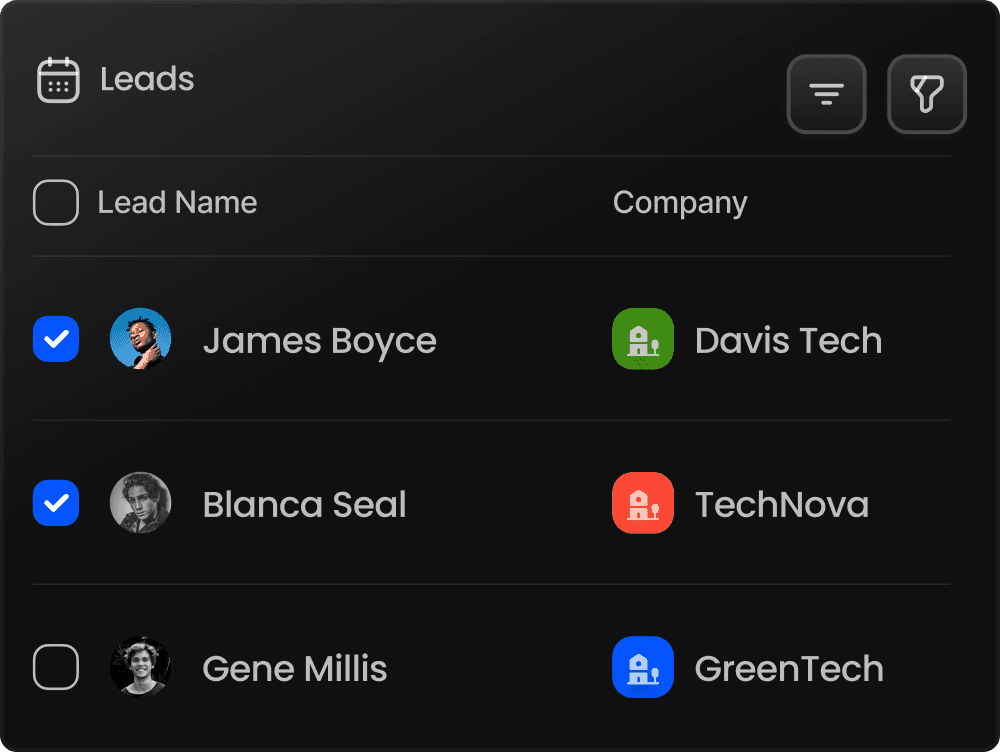
Modern lead management software gives your team a central place to maintain prospect information and sales activity. Instead of searching through different files and conversations, salespeople can work from a shared system.
For growing teams, lead management software for small business can provide the structure needed to make sure new enquiries are recorded, assigned, and followed up consistently.
2. Your Team Is Missing Follow-Ups
This is one of the clearest warning signs.
A prospect says, "Call me next Tuesday."
Your salesperson makes a mental note. Tuesday arrives with five new enquiries, two meetings, and an urgent customer issue. The call never happens.
A spreadsheet can contain a follow-up date, but someone still needs to open the file, find that date, and take action.
Good sales lead management software makes follow-ups part of the workflow rather than something employees have to remember independently.
SalesLyt, for example, combines lead tracking with automated follow-ups and an organized sales pipeline. It also supports automation for reminders, follow-ups, email sends, and task assignments.
For a startup where every opportunity matters, reducing missed follow-ups can be far more valuable than simply storing more customer data.
3. Two People Have Different Information About the Same Lead
Ask two salespeople about the same prospect.
If you receive two different answers, there is a problem.
One person may have spoken to the prospect yesterday but forgotten to update the spreadsheet. Another might still believe the customer is waiting for a proposal.
As teams grow, customer information needs to become shared information.
This is one reason startups eventually move toward CRM software for businesses. A CRM can provide a common record for leads, customers, activities, opportunities, and follow-ups.
The goal is simple: everyone works from the same information.
4. You Cannot Clearly See Your Sales Pipeline
A spreadsheet containing 200 leads might look impressive, but how many are genuine opportunities?
How many are new?
How many have been contacted?
Which prospects are waiting for a proposal?
Which deals are in negotiation?
These questions become difficult to answer when sales information exists as rows rather than a process.
This is where sales pipeline management becomes important.
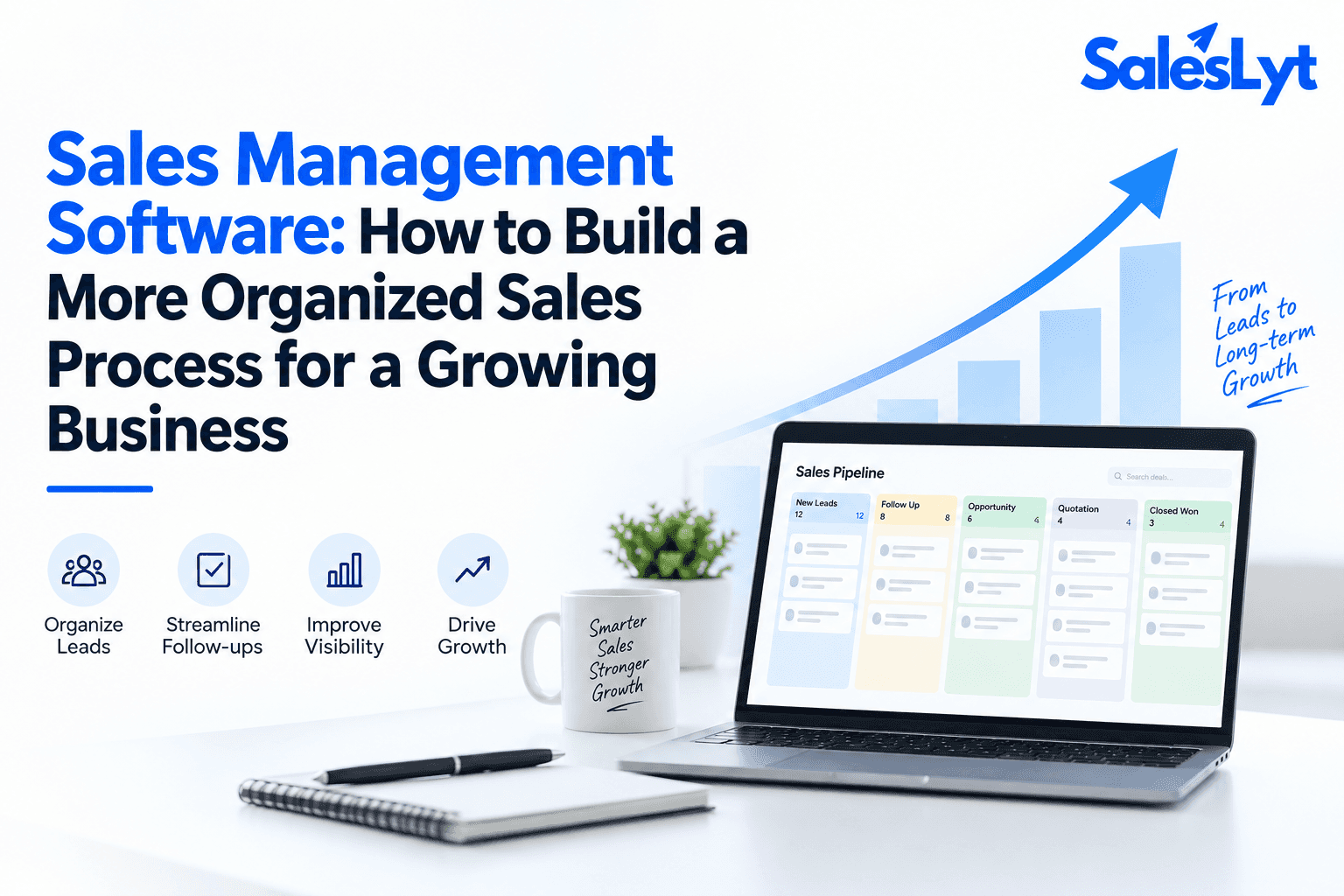
A visual sales pipeline tool allows teams to organize opportunities according to their current stage. Instead of looking through hundreds of rows, salespeople can see how deals are progressing.
A sales pipeline tracker also gives founders and managers a better understanding of potential revenue and bottlenecks.
SalesLyt's pipeline functionality is designed around tracking leads, automating follow-ups, and moving deals through a more organized sales flow.
5. Sales Meetings Have Become Status-Update Meetings
Think about your latest sales meeting.
Did the team spend most of the time discussing strategy, or did everyone simply report what they had done?
When managers cannot see current sales activity, meetings often become information-gathering exercises.
"How many calls did you make?"
"What happened with this customer?"
"Did you send that quotation?"
"Which deals are likely to close?"
As your startup grows, managers need visibility without constantly asking employees for updates.
Good sales performance management software can provide dashboards, KPIs, task monitoring, pipeline information, and productivity insights.
SalesLyt includes manager review and performance capabilities designed around KPI dashboards, task monitoring, review workflows, approvals, and productivity insights.
That allows meetings to focus more on solving problems and moving opportunities forward.
6. You Spend Too Much Time Updating Spreadsheets
Spreadsheets are supposed to save time. At some point, they can start consuming it.
Salespeople manually enter lead information. Someone updates stages. Another person prepares a separate report for management. Data is copied into another sheet for monthly analysis.
None of these activities directly involve speaking with customers or closing business.
An easy CRM for small business should reduce this administrative burden rather than add to it.
Automation is especially valuable here.
For example, SalesLyt describes an intelligent automated task planner for scheduling, prioritizing, and managing work, alongside automation for repetitive activities such as reminders and task assignments.
When evaluating sales management software for small business, look at how much everyday manual work it can eliminate.
7. You Have Data, but Very Few Useful Insights
A spreadsheet may contain hundreds of rows of sales data without telling you much about what to do next.
Which opportunities deserve attention?
Where are deals getting stuck?
Which sales activities are producing results?
Which leads appear more promising?
This is where AI sales management software is beginning to change how sales teams work.
Instead of using AI simply as a marketing label, businesses should look for features that support actual decisions.
SalesLyt provides AI-powered insight and prediction intended to help predict deal outcomes, provide recommendations, and support data-driven decisions. It also offers AI performance scoring for leads, customer calls, and sales visits.
Useful AI-powered sales software should help employees understand their data—not make the process more complicated.
8. Your Sales Process Extends Beyond the Spreadsheet
Closing a sale often involves much more than changing a cell from "Open" to "Won."
A prospect may request a quotation. After approval comes an invoice. Then someone needs to track payment.
If your startup manages leads in one spreadsheet, quotations in another tool, invoices somewhere else, and payments through another file, the sales lifecycle becomes fragmented.
This creates unnecessary administrative work and makes it harder to understand the complete customer journey.
SalesLyt integrates CRM functionality with quotation, invoice, and payment tracking, allowing businesses to manage leads and subsequent commercial activities in a connected system.
This is an important consideration when choosing a sales CRM for startups. Think beyond what your team needs today and consider how the sales process will evolve as the business grows.
9. Your Spreadsheet Depends on One Person
Every startup eventually develops that spreadsheet.
It may contain complicated formulas, unusual abbreviations, hidden columns, colour codes, and rules that only one employee fully understands.
As long as that person manages it, everything seems fine.
But what happens when they are unavailable?
A sales process should belong to the business, not to one employee's spreadsheet.
The best CRM for small business should create a repeatable system that employees can understand and managers can oversee.
This becomes increasingly important when onboarding new salespeople. Instead of teaching someone how a particular spreadsheet works, you can introduce them to a defined sales process with leads, stages, tasks, activities, and follow-ups.
What Should a Startup Look for in a CRM?
Moving away from spreadsheets does not mean choosing the most complicated CRM available.
In fact, complexity can create another problem entirely.
Start by identifying what your team genuinely needs: centralized lead information, easy follow-up management, pipeline visibility, task automation, useful reporting, team performance tracking, and room to grow.
If your business includes field sales, features such as geo-tagging may also matter. If customer data security is important, evaluate access controls, audit logs, encryption, and privacy capabilities.
SalesLyt currently includes geo-tagging as well as security features described as multi-tenant isolation, role-based access control, encryption, audit logs, and privacy controls designed for DPDP compliance.
The right system should simplify the sales process rather than create another administrative burden.
From Spreadsheet to Structured Sales
Spreadsheets are not bad tools. They simply have limits.
They are excellent for calculations, simple lists, and early-stage organization. But once your startup has multiple salespeople, growing lead volumes, frequent follow-ups, active opportunities, quotations, and management reporting requirements, those limitations become more visible.
That is when moving to a sales CRM for startups starts making sense.
The same applies to service businesses. A sales CRM for agencies, for example, can help organize prospects, client companies, follow-ups, proposals, and opportunities without requiring employees to maintain separate files.
The objective is not to abandon spreadsheets because they are old-fashioned. It is to recognize when your sales process has become too important to depend on them.
Conclusion
If your team is missing follow-ups, struggling to understand the pipeline, duplicating customer information, manually preparing reports, or spending too much time maintaining spreadsheets, your startup has probably reached the point where a CRM can provide real value.
The best CRM for startups should give your team structure without unnecessary complexity. It should combine lead management software, sales pipeline management, automation, performance visibility, and useful sales intelligence in a system employees can comfortably use every day.
SalesLyt is designed for startups, agencies, sales teams, and growing businesses, with capabilities covering lead management, automated follow-ups, AI insights, pipeline management, performance monitoring, quotations, invoices, and dashboards.
Your spreadsheet may have helped you win your first customers. Your next stage of growth requires something different: a sales process that remains organized even when your leads, team, and opportunities keep growing.

Conclusion
Spreadsheets may work when your startup is small, but as leads, follow-ups, opportunities, and team members increase, managing sales manually becomes harder. Moving to the best CRM for startups can help you create a more organized and scalable sales process.
With SalesLyt, startups can bring lead management, follow-ups, sales pipeline management, team activities, performance tracking, automation, and AI-powered insights into one place. Instead of spending time updating spreadsheets or searching for customer information, your team can focus on building relationships and closing opportunities.
Ready to move beyond spreadsheets? Explore SalesLyt and build a smarter, more structured sales process for your startup’s next stage of growth.