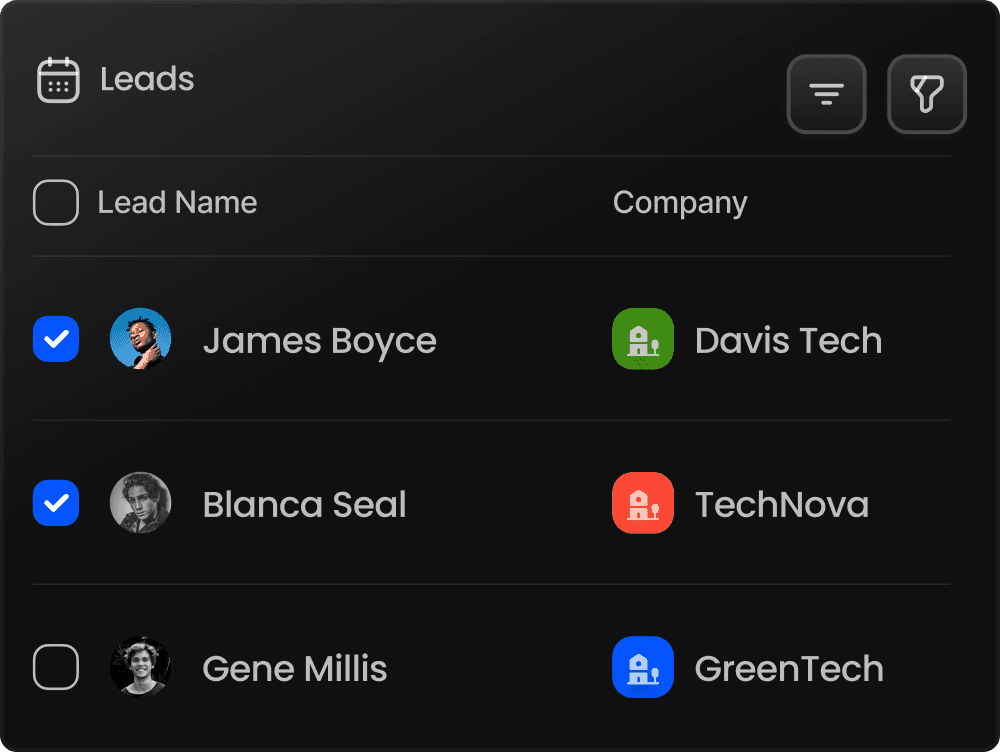
Every business wants more customers, but getting a new lead is only the beginning. The real challenge is keeping track of that lead, following up at the right time, understanding where the opportunity stands, and eventually turning it into revenue.
When a business handles only a few prospects, spreadsheets, emails, and notes may seem sufficient. But as the sales team grows and more opportunities enter the system, this approach quickly becomes difficult to manage. Leads are forgotten, follow-ups are delayed, and managers lose visibility into what is actually happening.
This is where sales pipeline management becomes important.
A properly managed sales pipeline gives businesses a structured way to see opportunities, understand their progress, prioritize sales activities, and make better decisions.
What Is Sales Pipeline Management?
Sales pipeline management is the process of organizing, tracking, and managing sales opportunities as they move through different stages of the buying journey.
A typical pipeline might look like:
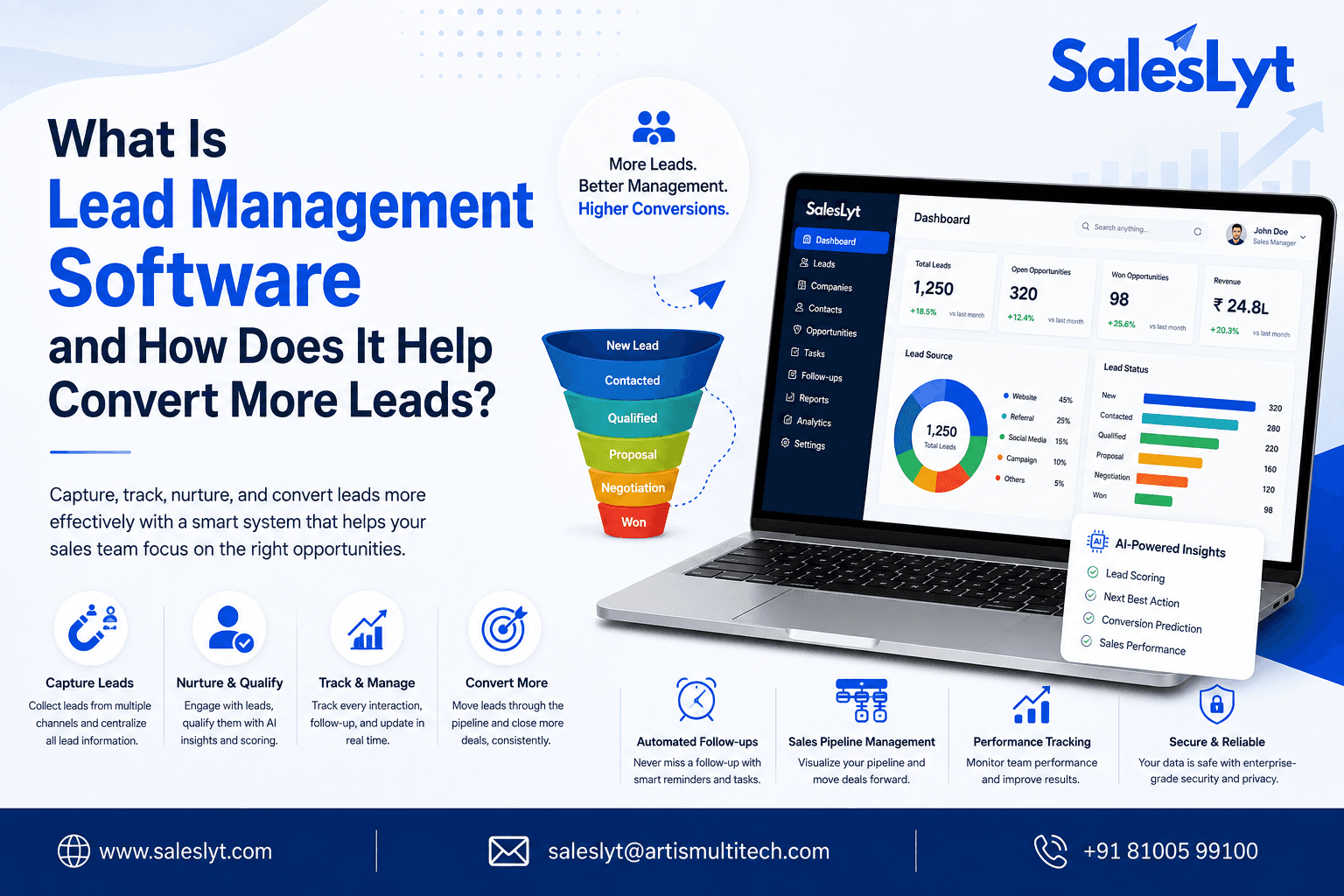
Lead → Contacted → Qualified → Meeting/Demo → Proposal → Negotiation → Won/Lost
The exact stages can vary depending on the business and its sales process.
Instead of keeping information scattered across spreadsheets, emails, notebooks, and messaging apps, a structured pipeline brings the sales journey together. A good sales pipeline tool allows representatives and managers to understand which deals are active, what action is required next, and which opportunities deserve immediate attention.
When this process is connected with modern CRM software for businesses, companies can also maintain customer information, sales activities, follow-ups, conversations, quotations, and other important details in one organized system.
Why Is Sales Pipeline Management Important?
Managing a pipeline is not simply about knowing how many deals you have. It helps a business understand how efficiently opportunities are moving toward conversion.
Here are some of the biggest benefits.
1. You Get Clear Visibility Into Your Sales Process
Without a structured pipeline, sales managers often have to ask individual team members for updates.
“Did we follow up with this prospect?”
“Has the quotation been sent?”
“Which opportunities are close to closing?”
A sales pipeline tracker gives the team a clearer view of where opportunities currently stand. Managers can quickly identify active deals, stalled opportunities, and upcoming actions without depending entirely on manual updates.
That visibility becomes increasingly important as the number of leads and salespeople grows.
2. Fewer Leads Fall Through the Cracks
One of the most common sales problems is not a lack of leads—it is inconsistent follow-up.
A salesperson may speak with a prospect today and plan to follow up next week. Without a proper system, that follow-up can easily be forgotten.
Combining lead management software with pipeline management helps businesses organize leads and their next actions. For companies handling larger volumes of enquiries, sales lead management software can make the journey from initial contact to qualified opportunity much easier to manage.
The result is simple: fewer promising leads are forgotten because someone missed a reminder or lost track of a conversation.
3. Sales Teams Know What to Prioritize
Not every opportunity deserves the same level of attention.
Some prospects may only be exploring options, while others may already be evaluating a proposal and preparing to make a decision.
A pipeline gives salespeople context.
Instead of simply working through a long list of contacts, representatives can prioritize opportunities according to their stage, potential value, urgency, engagement, and required next action.
Modern AI sales management software can take this further by using data and intelligent insights to help teams understand which opportunities may require greater attention.
SalesLyt, for example, combines AI-powered insights and predictions with lead and sales pipeline capabilities to help teams make more informed sales decisions.
4. Sales Forecasting Becomes More Practical
Imagine having 100 open opportunities but no idea how many are likely to convert this month.
That makes planning difficult.
Once deals are organized according to their stages, managers can get a more realistic picture of the potential business moving through the pipeline.
This information can help with revenue forecasting, resource allocation, targets, hiring decisions, and overall business planning.
When pipeline information is combined with sales performance management software, managers can also compare pipeline activity with team performance and identify where additional support may be needed.
5. Managers Can Identify Sales Bottlenecks
A pipeline does more than show what is working. It also exposes what is slowing the team down.
For example, you might discover that plenty of leads are being generated but very few become qualified opportunities. Or perhaps prospects reach the proposal stage but remain there for weeks.
These patterns highlight potential problems.
The issue could be poor lead qualification, slow follow-ups, ineffective proposals, pricing concerns, or an approval process that takes too long.
Without pipeline visibility, these issues can remain hidden. With it, managers have the information needed to investigate and improve the process.
How CRM and Pipeline Management Work Together
Pipeline management becomes more effective when it is part of a CRM system.
Good CRM software for businesses connects customer information with sales activity rather than treating each interaction as an isolated event.
For example, a salesperson should be able to understand who the prospect is, previous interactions, the current opportunity stage, upcoming follow-ups, and what needs to happen next.
This is especially useful for growing businesses searching for the best CRM for small business or an easy CRM for small business. Smaller teams usually do not need unnecessary complexity. They need a system their salespeople can actually use consistently.
The same applies to businesses evaluating sales management software for small business or lead management software for small business. Ease of use matters because even powerful software delivers little value if the sales team avoids using it.
The Role of AI in Modern Sales Pipeline Management
Sales pipeline software is becoming more intelligent.
Traditional systems primarily helped teams record information. Modern AI-powered sales software can help teams interpret that information and use it more effectively.
AI can support areas such as lead scoring, deal insights, sales recommendations, performance analysis, prioritization, and identifying patterns in sales activity.
For growing teams, AI sales management software can therefore act as more than a digital record of opportunities. It can help turn accumulated sales data into useful guidance.
SalesLyt follows this approach with AI-powered insights and predictions, AI performance scoring, analytics, automated task management, and tools designed to help sales teams move opportunities through a more organized sales flow.
Pipeline Management for Startups and Agencies
Pipeline visibility is not only important for established companies.
Startups often operate with small teams where founders and employees manage several responsibilities simultaneously. Choosing the best CRM for startups can help create a structured sales process before the number of prospects becomes difficult to manage.
A good sales CRM for startups can provide visibility without forcing the company to rely on scattered spreadsheets and individual memory.
Agencies face a similar challenge. Prospects may move through discovery calls, requirements discussions, proposals, negotiations, and onboarding. A sales CRM for agencies can help organize these opportunities and ensure the team knows what needs attention at every stage.
What Should You Look for in a Sales Pipeline Tool?
When selecting a pipeline solution, avoid choosing software simply because it has a long feature list.
Focus on whether it makes your actual sales process easier.
Look for a solution that allows your team to manage leads, customize or clearly understand sales stages, schedule follow-ups, monitor opportunities, track performance, access useful analytics, and maintain customer information without unnecessary complexity.
It should also be easy enough for your salespeople to update regularly.
After all, a pipeline is only valuable when the information inside it remains accurate.
How SalesLyt Supports a More Organized Sales Pipeline
SalesLyt is designed for startups, agencies, sales teams, and growing businesses that want to manage customer relationships and sales activities more effectively.
Its sales capabilities bring together lead tracking, automated follow-ups, smoother sales pipelines, AI-powered insights and predictions, performance scoring, dashboards, and sales activity management.
SalesLyt also extends beyond the opportunity stage by connecting CRM activities with quotation, invoice, and payment management. This can help businesses maintain greater continuity across the sales lifecycle rather than managing each step through disconnected systems.
Final Thoughts
A healthy sales pipeline gives a business more than a list of potential customers. It creates visibility, accountability, and structure throughout the sales process.
Effective sales pipeline management helps teams understand where opportunities stand, what needs to happen next, which prospects deserve attention, and where deals are getting stuck.
Whether you are looking for sales lead management software, a reliable sales pipeline tracker, the best CRM for small business, the best CRM for startups, a sales CRM for agencies, or intelligent AI-powered sales software, the goal should remain the same: make your sales process easier to understand, manage, and improve.
As your business grows, relying on memory, spreadsheets, and scattered communication becomes increasingly risky. A structured sales pipeline gives your team a clearer path from the first conversation to the final deal—and helps turn everyday sales activity into a repeatable process for growth.

Conclusion
Effective sales pipeline management gives your business a clear view of every opportunity, from the first interaction to the final deal. By organizing leads, tracking follow-ups, identifying bottlenecks, and monitoring sales performance, your team can focus on the opportunities that matter most.
With an AI-powered sales software like SalesLyt, businesses can bring lead management, pipeline tracking, follow-ups, sales insights, and performance monitoring into one place. A more structured sales process means fewer missed opportunities, better team visibility, and a stronger foundation for consistent business growth.


FAQ
What is FlowSuite and who is it for?
FlowSuite is a modern customer relationship management platform designed for startups, agencies, sales teams, and growing businesses.
Do I need technical experience to use FlowSuite?
Is my data secure on FlowSuite?
Does FlowSuite support team collaboration?
What kind of support do you offer?
Can I migrate my data from another CRM to FlowSuite?