Sales teams have never had more data at their fingertips. Every call, lead, follow-up, meeting, quotation, and deal can generate useful information. The problem is that having more data does not automatically lead to better sales.
A sales manager may know that hundreds of leads are sitting in the pipeline, but which ones deserve attention today? Which opportunities are likely to move forward? Which salesperson needs support? Which follow-up has been missed?
This is where artificial intelligence is changing the role of sales technology.
Modern AI-powered sales software goes beyond storing customer information. It can help teams understand their sales activity, prioritize opportunities, automate repetitive work, and make better decisions using the information already available in their CRM.
For businesses looking to improve productivity without adding unnecessary complexity, AI is quickly becoming a practical part of everyday sales management.
What Is AI-Powered Sales Software?
AI-powered sales software combines traditional sales and customer relationship management functions with artificial intelligence.
Traditional CRM software for businesses is mainly designed to organize information such as customer details, leads, activities, conversations, tasks, and opportunities. AI adds another layer by analyzing that information and helping users identify patterns, priorities, and possible next actions.
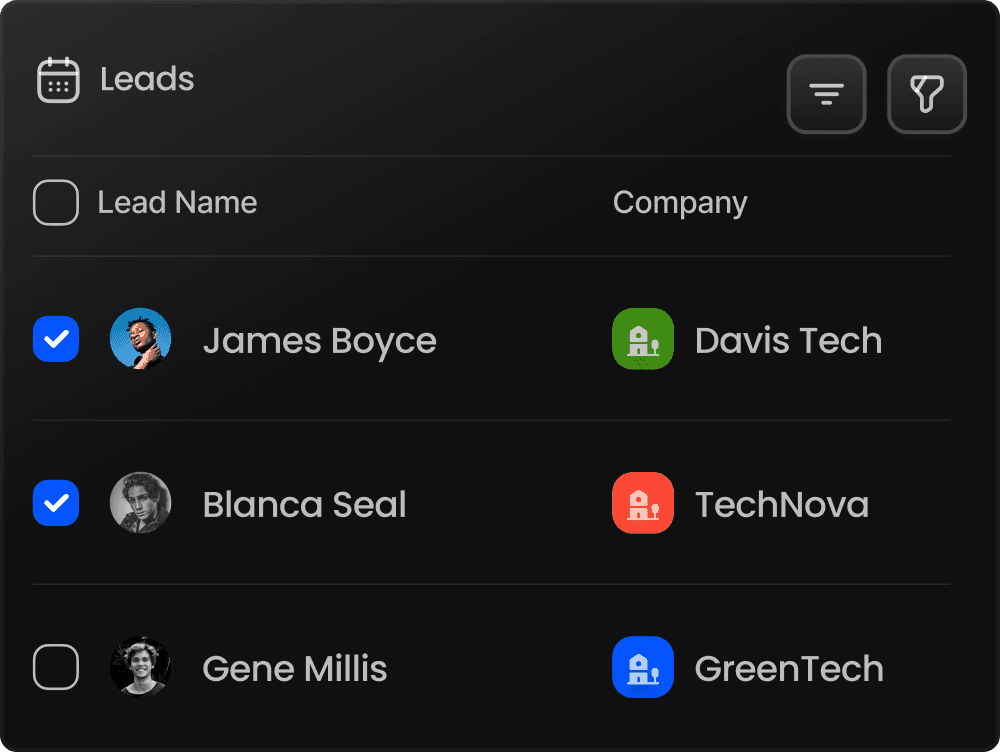
For example, instead of simply showing a list of open leads, AI sales management software can help a team understand which leads may deserve immediate attention.
Rather than asking a sales manager to manually review every activity, AI-supported systems can provide insights that make performance reviews faster and more focused.
The result is not replacing salespeople with technology. It is giving salespeople better information to work with.
1. AI Helps Teams Prioritize the Right Leads
Not every lead has the same potential.
One prospect may be actively discussing requirements, while another has not responded for weeks. When both appear in the same long list, sales representatives can easily spend valuable time on the wrong opportunities.
A modern lead management software system helps organize incoming prospects, activities, stages, and follow-ups. When AI is added, businesses can take prioritization further.
AI can examine available sales information and help identify leads that appear more promising or require attention.
This makes sales lead management software particularly useful for growing teams handling a large number of prospects. Instead of treating every lead equally, representatives can focus their time where it is more likely to produce results.
2. AI Can Make Sales Pipelines Easier to Understand
A pipeline should tell a team more than how many deals are open.
Good sales pipeline management gives managers visibility into where opportunities stand, what needs to happen next, and where deals may be getting stuck.
A traditional sales pipeline tracker can show the stage of each opportunity. AI can help teams interpret the activity behind those stages.
For example, managers may be able to spot opportunities that have remained inactive for too long or identify deals that require another follow-up.
This turns a sales pipeline tool from a simple tracking system into a more useful decision-making resource.
Instead of opening the CRM simply to check deal status, salespeople can use it to understand what deserves attention next.
3. Sales Follow-Ups Become More Consistent
A surprising number of sales opportunities are lost for a simple reason: nobody followed up at the right time.
Salespeople are often managing calls, meetings, customer questions, quotations, internal tasks, and new leads at the same time. Remembering every next action becomes difficult as the pipeline grows.
Automation can reduce that burden.
An AI-powered sales software platform can support sales teams by organizing tasks, reminders, and follow-up activities so fewer opportunities disappear from view.
This is especially valuable for smaller organizations where one employee may be responsible for many customers simultaneously.
The objective is simple: spend less time remembering what needs to be done and more time actually selling.
4. Managers Get Better Visibility Into Sales Performance
Sales management becomes difficult when performance information is spread across spreadsheets, messages, notebooks, and different applications.
Modern sales performance management software brings important activities and performance indicators into one place.
With AI-supported insights, managers can go beyond basic reporting. They can review sales activity, identify patterns, compare performance, and understand where coaching or intervention may be needed.
SalesLyt, for example, includes AI Performance Scoring designed to score sales visits, customer calls, and leads using AI-powered insights. It also provides manager review and performance capabilities around KPI dashboards, task monitoring, approvals, and productivity insights.
This type of visibility helps managers move from asking, “What happened?” to asking, “What should we improve next?”
5. Small Businesses Can Reduce Manual Sales Work
Small businesses rarely have unlimited sales resources.
A growing company may have only a handful of people managing prospecting, customer communication, follow-ups, quotations, and closing. That makes simplicity particularly important when selecting the best CRM for small business.
An easy CRM for small business should not create another administrative burden. It should reduce one.
Automation can help handle repetitive activities such as reminders, task assignments, follow-up organization, and routine data management. This allows sales representatives to spend more time speaking with prospects and customers.
For this reason, businesses evaluating sales management software for small business should consider not only how many features a platform offers, but also how much daily work those features can simplify.
Similarly, effective lead management software for small business should make it easier to see new leads, current conversations, pending actions, and opportunities without forcing users to navigate complicated workflows.
6. Startups Can Build Better Sales Processes Earlier
In the early days of a startup, managing leads through spreadsheets and messaging apps can seem perfectly reasonable.
The problem appears when the company starts growing.
More leads arrive. More people join the sales team. Follow-ups increase. Founders can no longer remember every conversation. Information begins to live in different places.
Choosing the best CRM for startups early can help prevent this operational mess.
A good sales CRM for startups creates a structured system for recording prospects, tracking opportunities, assigning work, and monitoring progress. Adding AI can make that system more useful by helping teams interpret their growing volume of sales data.
Startups can therefore build a repeatable sales process before poor habits become difficult to change.
7. Agencies Can Manage Multiple Opportunities More Clearly
Agencies face a different challenge.
They may be simultaneously managing new enquiries, proposals, client discussions, follow-ups, renewals, and ongoing relationships. Without a central system, important information can quickly become fragmented.
A sales CRM for agencies provides one place to organize prospects, communication history, tasks, opportunities, and customer relationships.
AI-supported insights can further help agency teams understand where opportunities stand and which conversations may require immediate action.
The value here is not simply having more technology. It is having clearer visibility across multiple business relationships.
8. AI Can Support Better Sales Forecasting and Decisions
Sales forecasting is difficult when decisions depend mainly on instinct.
Experienced managers will always bring valuable judgment to the process, but AI can give that judgment more context.
By analyzing available CRM information, AI-supported sales systems can help teams recognize trends and understand the condition of their pipeline.
This allows managers to have more informed discussions around questions such as:
Which opportunities are progressing?
Where are deals slowing down?
Which leads need immediate attention?
How is the team performing?
Where should managers intervene?
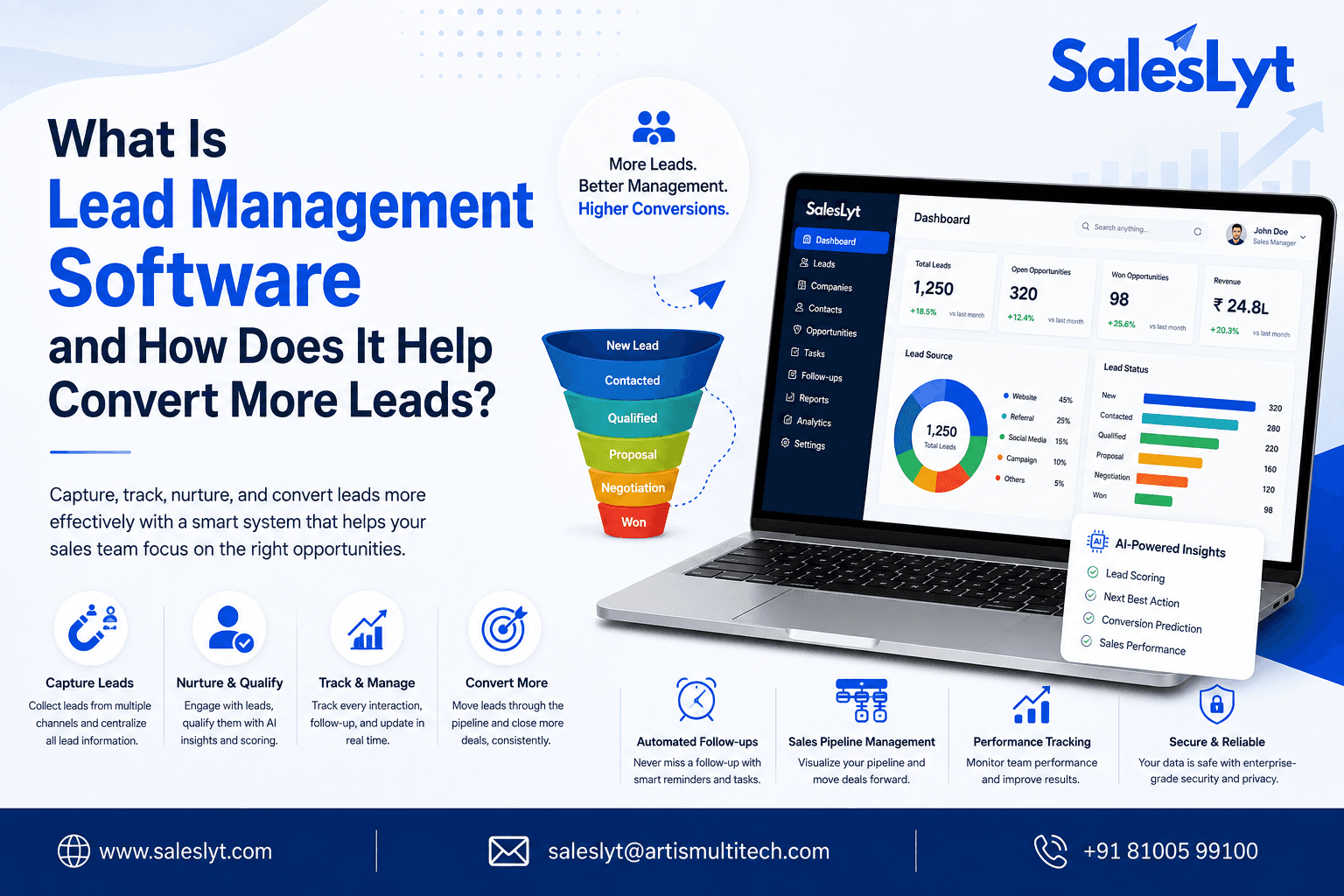
SalesLyt's current platform combines real-time reports, performance metrics, AI-powered insight and prediction, sales pipeline capabilities, and customizable dashboards to help businesses turn sales activity into clearer information.
AI Should Support Salespeople, Not Replace Them
Sales is still built on human relationships.
AI cannot replace trust, negotiation, empathy, industry knowledge, or the ability to understand what a customer genuinely needs. What it can do is reduce the administrative work surrounding those conversations.
That distinction matters.
The strongest use of AI sales management software is not asking AI to do the salesperson's entire job. It is using AI to help the salesperson arrive at the right information faster, maintain consistent follow-ups, and make more informed decisions.
Choosing the Right AI-Powered CRM
Businesses considering an AI-enabled CRM should look beyond the phrase “powered by AI.”
Start with the practical questions. Can the system organize leads effectively? Can employees understand the pipeline quickly? Does it help with follow-ups? Can managers see performance clearly? Is it simple enough that the team will actually use it?
The right platform should connect AI with real sales workflows rather than adding AI as an isolated feature.
SalesLyt is designed around this idea, combining CRM functionality with AI-powered insights, lead and pipeline management, performance scoring, automation, analytics, geo-tagging, quotations, invoices, payment tracking, and manager visibility.
Conclusion
Artificial intelligence is making sales software more useful because it can help businesses move from simply recording activity to understanding it.
A well-designed AI-powered sales software platform can help sales teams prioritize leads, organize pipelines, maintain follow-ups, evaluate performance, reduce repetitive work, and make better-informed decisions.
For startups, agencies, small businesses, and growing sales teams, the real advantage of AI is not complexity. It is clarity.
The future of CRM is therefore not just about storing more customer data. It is about turning that data into useful actions.
Businesses that combine strong sales processes with the right CRM software for businesses can give their teams better visibility, better organization, and more time to focus on what matters most: building relationships and closing opportunities.
For businesses ready to bring AI into their sales process, SalesLyt offers a modern approach to managing leads, pipelines, performance, customer relationships, and everyday sales activities from one connected platform.

Conclusion
AI is transforming sales by helping businesses work smarter, respond faster, and make better decisions. With AI-powered sales software, teams can manage leads more effectively, automate follow-ups, improve pipeline visibility, and gain valuable performance insights. SalesLyt brings these capabilities together in one connected platform, helping startups, small businesses, agencies, and growing sales teams simplify their sales process and focus on what matters most—building stronger customer relationships and closing more opportunities.


FAQ
What is FlowSuite and who is it for?
FlowSuite is a modern customer relationship management platform designed for startups, agencies, sales teams, and growing businesses.
Do I need technical experience to use FlowSuite?
Is my data secure on FlowSuite?
Does FlowSuite support team collaboration?
What kind of support do you offer?
Can I migrate my data from another CRM to FlowSuite?