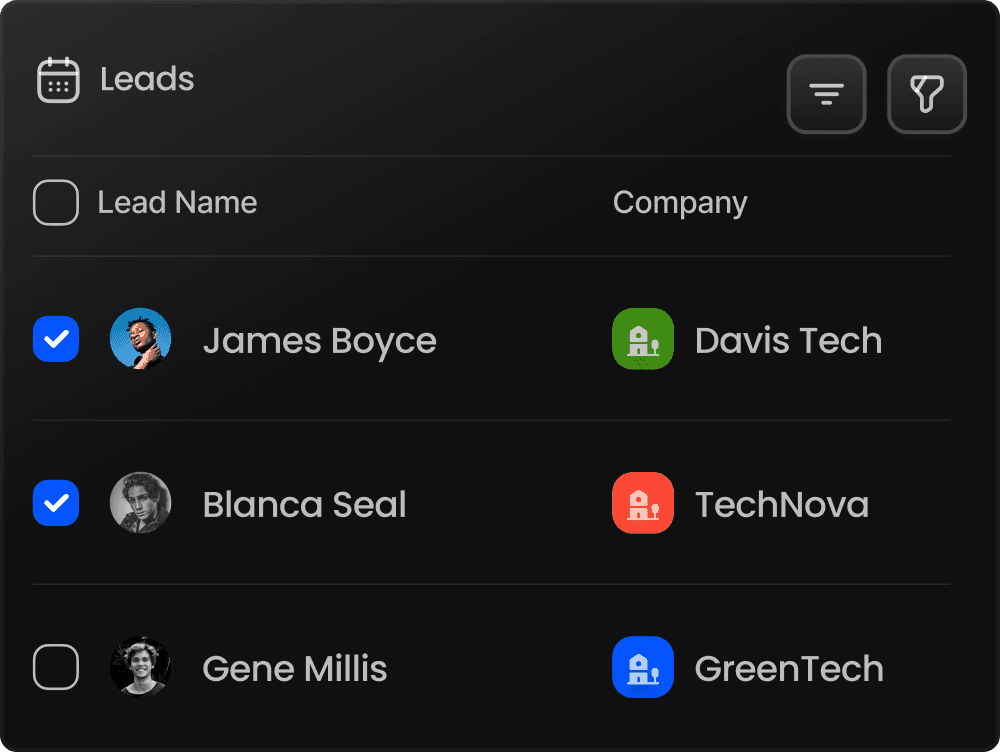
Generating leads is only the beginning of the sales process. The real challenge is what happens after someone shows interest in your business.
A prospect may submit a form, call your team, request a quotation, or respond to a campaign. If that information is stored in different spreadsheets, emails, notebooks, or messaging apps, it becomes surprisingly easy for a promising opportunity to disappear.
That is why sales lead management software has become an important tool for growing businesses. It gives sales teams a structured way to capture leads, track conversations, plan follow-ups, monitor opportunities, and move prospects toward a purchase.
More importantly, it gives everyone a clearer answer to a basic question: what should happen with this lead next?
What Is Sales Lead Management Software?
Lead management software is designed to organize the journey of a prospect from initial enquiry through qualification, nurturing, and conversion.
Instead of maintaining separate records across multiple tools, the sales team can keep important information in one system. This may include contact details, communication history, notes, tasks, follow-up dates, deal stages, and sales activities.
Modern CRM software for businesses takes this further by connecting lead management with customer relationships, sales pipelines, team activities, reporting, and automation.
For a salesperson, this means less time searching for information. For a manager, it means greater visibility into what the team is doing and where potential revenue is sitting.
Step 1: Capture and Organize Every Lead
Good lead management begins with accurate information.
Whether a lead comes from your website, a referral, a phone enquiry, an event, or another marketing activity, it should enter a structured system as early as possible.
Basic information such as the prospect's name, company, contact details, requirement, source, assigned salesperson, and current status can make future follow-ups much easier.
This is particularly valuable for smaller organizations. Lead management software for small business helps create a common process so important enquiries are not dependent on one employee's personal spreadsheet or memory.
Once leads are centralized, the team can quickly see who owns each opportunity and what action is pending.
Step 2: Qualify Leads Before Spending Too Much Time
Not every enquiry is ready to buy.
Some prospects are actively looking for a solution. Others may simply be researching options. A few may not be a good fit at all.
Qualification helps salespeople decide where to spend their limited time.
A sales team can consider factors such as the prospect's requirement, urgency, budget, decision-making authority, previous engagement, and fit with the company's product or service.
This is also where AI sales management software can add value. AI-supported systems can analyze available sales information and help teams identify priorities or patterns that may otherwise be difficult to notice.
Instead of working through a lead list randomly, representatives can make more informed decisions about who deserves attention first.
Step 3: Build a Clear Sales Pipeline
Once a lead is qualified, the next step is understanding where it sits in the sales journey.
A sales pipeline tool provides a visual structure for this process. Depending on the business, stages might include New Lead, Qualified, Meeting Scheduled, Proposal Sent, Negotiation, Won, or Lost.
Effective sales pipeline management makes it easier to see how opportunities are progressing.
A manager can quickly identify whether too many deals are stuck at the proposal stage. A salesperson can see which prospects need another conversation. Business owners can get a clearer picture of the opportunities currently being worked on.
A sales pipeline tracker therefore does more than display deal stages. Used properly, it becomes a daily guide for sales activity.
Step 4: Nurture Leads With Consistent Follow-Ups
Most prospects do not buy after the first conversation.
They may need additional information, internal approval, a revised quotation, another meeting, or simply more time.
This is where lead nurturing becomes important.
The salesperson needs to stay in touch without becoming intrusive. The problem is that manually remembering every follow-up becomes difficult when someone is managing dozens of prospects.
A CRM can help by organizing tasks, reminders, and follow-up activities.
Instead of relying on memory, representatives can work from a structured list of pending actions. This reduces the risk of a valuable prospect being forgotten simply because the salesperson became busy with another customer.
For businesses evaluating sales management software for small business, follow-up management should therefore be one of the first features to check.
Step 5: Keep the Complete Lead History in One Place
Imagine a prospect speaks with one salesperson on Monday and another employee on Thursday.
If the second employee cannot see what happened during the first conversation, the customer may have to repeat everything.
That creates a poor experience.
A well-organized CRM keeps communication history, notes, activities, tasks, and relevant customer information together. Anyone with appropriate access can understand the relationship before starting the next conversation.
This is one reason an easy CRM for small business can make such a noticeable operational difference. It creates continuity without requiring employees to constantly ask one another for updates.
The same principle is useful for a sales CRM for agencies, where teams may be handling numerous prospects, proposals, clients, and follow-up conversations simultaneously.
Step 6: Use AI to Make Lead Management Smarter
AI is beginning to change how businesses use CRM data.
Traditional systems tell you what has already happened. AI-powered sales software can help teams interpret that information and identify what may deserve attention.
For example, AI-supported insights can assist with lead prioritization, performance analysis, recommendations, and understanding patterns across sales activities.
This does not mean AI should make every sales decision.
A salesperson still understands context, relationships, objections, and customer needs in ways that software cannot fully replicate. AI is most useful when it supports that judgment with faster access to meaningful information.
For growing teams, the combination of human experience and AI-driven insights can make lead management more focused.
Step 7: Measure Sales Performance, Not Just Activity
A busy sales team is not necessarily an effective sales team.
Representatives may make many calls or schedule numerous meetings without moving enough opportunities toward conversion.
Good sales performance management software helps managers connect activity with outcomes.
Managers can review indicators such as lead progress, follow-up completion, pipeline movement, team productivity, and conversion performance. This makes coaching conversations more useful because they are based on visible information rather than assumptions.
It also helps businesses identify where the sales process itself may need improvement.
If many leads enter the pipeline but very few reach the proposal stage, for example, the problem may be qualification or early-stage nurturing rather than lead generation.
Step 8: Create a Process That Can Grow With Your Business
A small sales team can often manage leads informally. Growth makes that increasingly difficult.
As more leads arrive and more employees join the team, businesses need consistent processes for assigning leads, recording activities, updating opportunities, and completing follow-ups.
This is why companies searching for the best CRM for small business should think beyond their immediate requirements.
The system should be simple enough to use today but capable of supporting a more structured sales operation later.
The same applies to startups. The best CRM for startups is not necessarily the system with the most complicated features. It is one that helps establish repeatable sales habits while leaving room for growth.
A practical sales CRM for startups can provide that foundation before spreadsheets and disconnected tools become difficult to manage.
How SalesLyt Supports Lead Management
SalesLyt brings several parts of the sales lifecycle into one connected CRM environment.
Its current platform includes AI-powered insights and predictions, smoother sales pipelines, automated follow-ups, AI performance scoring, advanced analytics, relationship management, task automation, customizable dashboards, and manager performance visibility.
SalesLyt also connects CRM activity with quotations, invoices, and payment tracking, helping businesses maintain visibility beyond the initial lead and through more of the sales lifecycle.
For startups, agencies, sales teams, and growing businesses, this connected approach can reduce fragmented information and make it easier to understand what is happening with every opportunity.
Turning More Leads Into Customers
Better conversion does not always require more leads.
Sometimes the bigger opportunity is improving what happens to the leads you already have.
If enquiries are captured properly, qualified early, followed up consistently, and moved through a visible pipeline, salespeople can spend less time searching for information and more time having useful conversations.
That is the real purpose of sales lead management software.
It creates a repeatable process that helps teams know who to contact, what happened previously, what needs to happen next, and where each opportunity stands.
Conclusion
Lead generation brings opportunities into your business, but structured lead management helps turn those opportunities into revenue.
The right lead management software can help your team capture enquiries, prioritize prospects, maintain consistent follow-ups, track pipeline movement, measure performance, and build stronger customer relationships.
For small businesses, startups, agencies, and growing sales teams, the goal should not be to make selling more complicated. It should be to create a clear process that everyone can follow.
With a connected platform such as SalesLyt, businesses can combine lead management, sales pipelines, AI-powered insights, automation, analytics, and sales lifecycle management in one place—giving teams better visibility and more time to focus on converting the right opportunities.

Conclusion
Effective lead management is not just about generating more leads—it is about managing every opportunity with the right follow-up at the right time. With sales lead management software, businesses can organize prospects, track interactions, nurture relationships, monitor pipeline progress, and improve conversions.
SalesLyt brings lead management, automated follow-ups, sales pipelines, AI-powered insights, and performance tracking into one connected platform. This gives sales teams better visibility, reduces missed opportunities, and allows them to focus on what matters most: building stronger relationships and converting more leads into customers.


FAQ
What is FlowSuite and who is it for?
FlowSuite is a modern customer relationship management platform designed for startups, agencies, sales teams, and growing businesses.
Do I need technical experience to use FlowSuite?
Is my data secure on FlowSuite?
Does FlowSuite support team collaboration?
What kind of support do you offer?
Can I migrate my data from another CRM to FlowSuite?