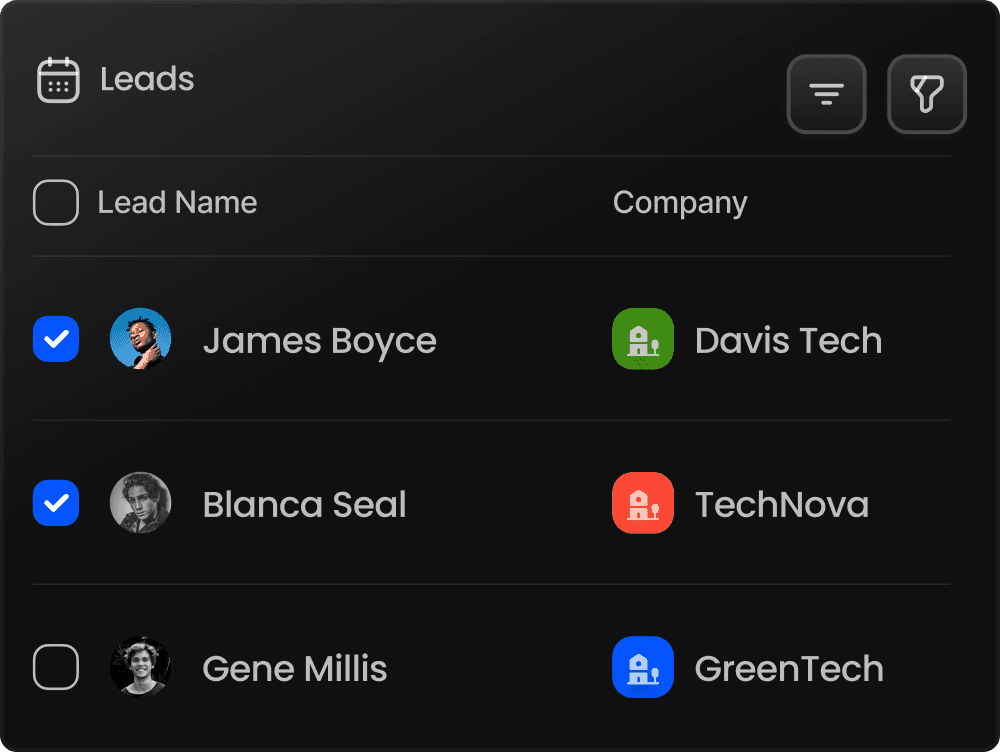
Startups often begin selling in the simplest way possible. A spreadsheet holds the leads, WhatsApp handles conversations, calendars store reminders, and someone on the team keeps track of important follow-ups.
That approach can work when you have ten prospects. It becomes a very different story when you have hundreds of leads, multiple salespeople, proposals waiting for approval, and opportunities at different stages.
This is usually when founders start searching for the best CRM for startups.
But choosing a CRM simply because it is popular can create another problem. Some systems are too complicated for a young team, while others are easy to use but quickly become limiting as the company grows.
Before making a decision, check these seven things.
1. Is the CRM Easy for Your Team to Actually Use?
A CRM only creates value when people use it consistently.
Startups move quickly, and salespeople rarely want to spend half their day entering information into complicated forms. If updating a lead takes too many clicks or the interface requires extensive training, team members may eventually return to spreadsheets and personal notes.
Look for an easy CRM for small business that makes everyday actions straightforward: adding a lead, recording an interaction, scheduling a follow-up, updating an opportunity, and checking what needs attention today.
Ease of use should not mean sacrificing functionality. The right CRM software for businesses should provide enough structure to improve the sales process without making routine work unnecessarily complicated.
The real test is simple: can a new salesperson understand the basic workflow quickly?
2. Can It Manage Leads From First Contact to Conversion?
Generating leads is only the beginning. The difficult part is ensuring that every genuine opportunity receives the right attention.
Good lead management software should give your team a central place to organize prospects, record interactions, schedule next actions, and understand where each lead stands.
For a growing company, sales lead management software becomes particularly valuable because leads no longer remain scattered across individual employees' spreadsheets, inboxes, or notebooks.
Look at what happens after a new enquiry enters the system. Can your salesperson assign it, add notes, schedule a follow-up, track conversations, and eventually convert it into an opportunity?
The right lead management software for small business should make this process visible and repeatable. That way, your sales process does not depend entirely on one employee remembering what to do next.
3. Does It Give You a Clear Sales Pipeline?
Founders need to know more than the total number of leads.
You should be able to answer questions such as: How many opportunities are qualified? Which deals are moving forward? Where are prospects getting stuck? What requires follow-up this week?
That makes sales pipeline management one of the most important areas to evaluate before choosing a CRM.
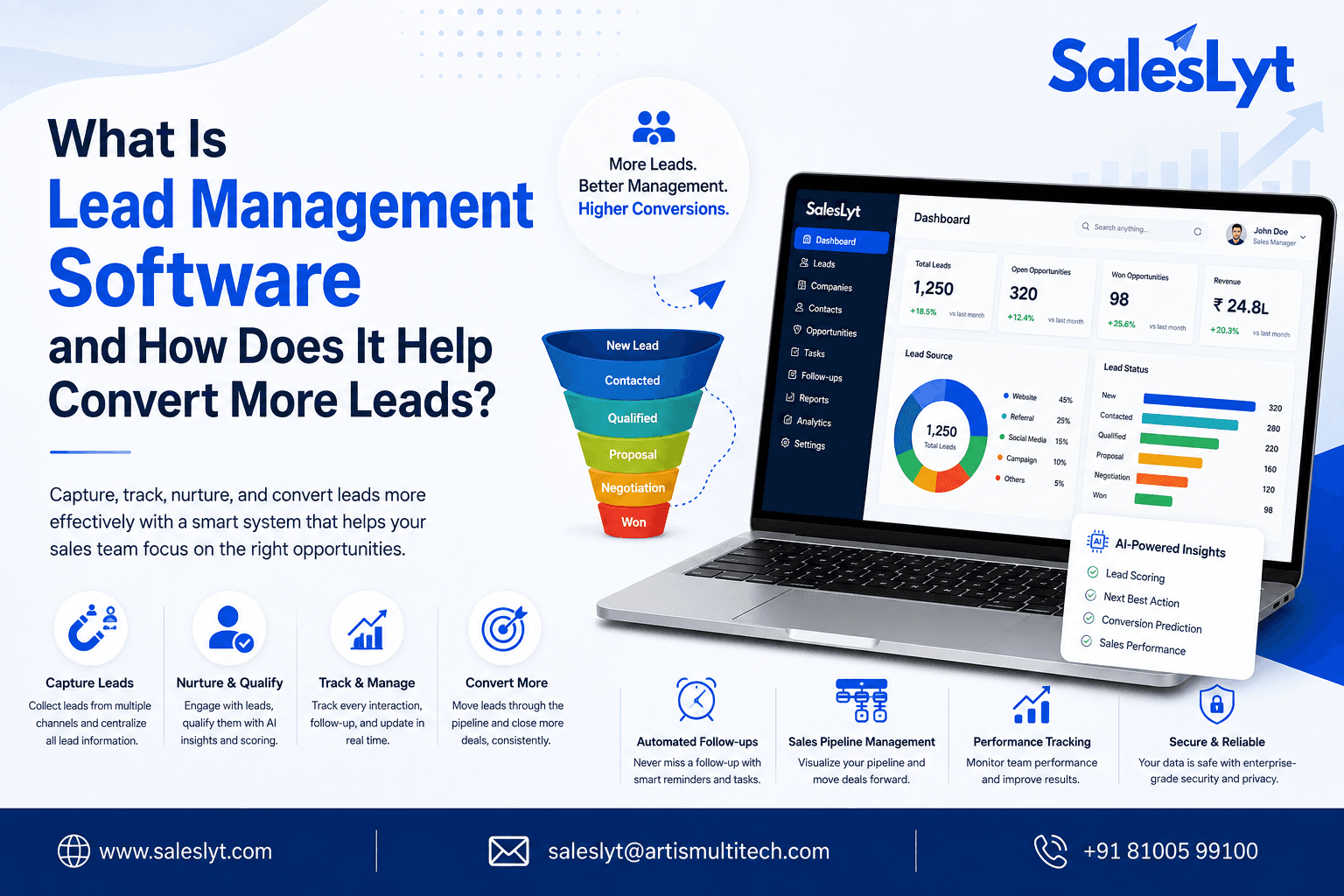
A practical sales pipeline tool should give your team a clear visual understanding of opportunities at different stages. It should also make updating a deal simple enough that the pipeline reflects what is actually happening.
A useful sales pipeline tracker then gives founders and managers visibility without requiring constant status meetings.
SalesLyt, for example, includes smoother sales pipelines designed to track leads, automate follow-ups, and help move deals through a more organized sales flow.
4. Does It Use AI in a Useful Way?
Almost every software category now talks about artificial intelligence, but startups should look beyond the AI label.
Ask what the AI actually does.
Useful AI sales management software should help your team make better decisions or reduce repetitive work. That could include identifying promising leads, analyzing sales activity, scoring interactions, predicting outcomes, or suggesting where attention is required.
SalesLyt includes AI-powered insights and predictions designed to support data-driven decisions. It also provides AI performance scoring for sales visits, customer calls, and leads.
That is the type of functionality to look for in AI-powered sales software: AI should support the salesperson rather than exist as a feature that sounds impressive on a pricing page but rarely gets used.
5. Can Managers Measure Sales Performance?
As a startup grows, founders cannot personally supervise every lead, call, meeting, and follow-up.
You need visibility without micromanagement.
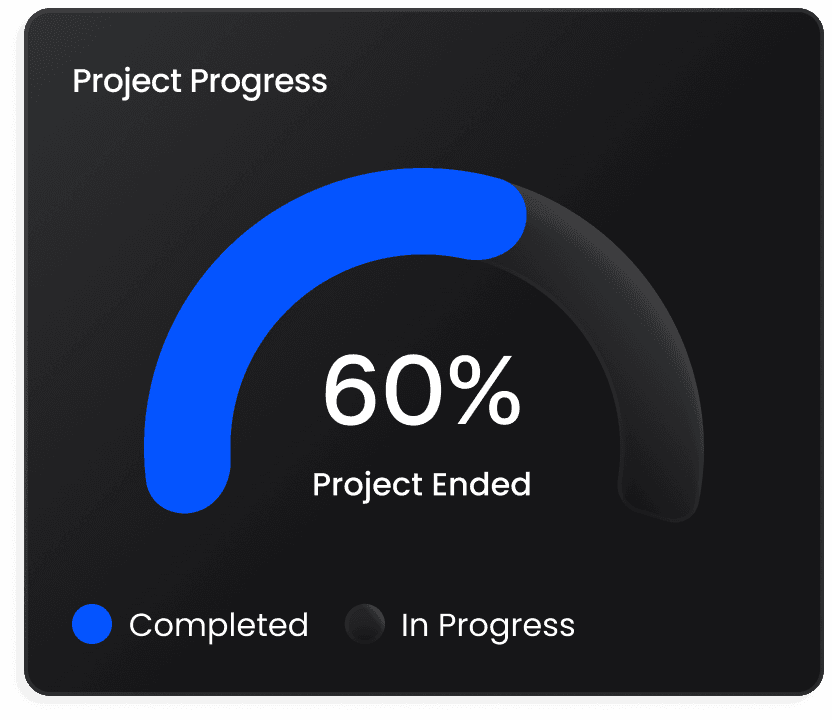
This is where sales performance management software becomes important. A CRM should help managers understand team activity, pipeline movement, targets, productivity, and areas where support may be needed.
Dashboards can make this considerably easier.
SalesLyt includes real-time reports, performance metrics, KPI dashboards, review workflows, task monitoring, and productivity insights. This gives managers a structured way to review performance instead of depending only on verbal updates.
The goal is not to monitor employees for the sake of monitoring them. It is to identify problems early enough to do something about them.
6. Can the CRM Grow With Your Startup?
The CRM you need today may not be the CRM you need two years from now.
Perhaps your startup currently has two salespeople. Later, you may have ten people managing different territories, customer segments, or industries.
That is why the best CRM for startups should support growth without forcing the business to rebuild its entire sales process every few months.
Consider user management, reporting, automation, security, pipeline capabilities, integrations, and the ability to handle increasing volumes of customer information.
This is equally relevant when comparing the best CRM for small business options. Buying far more software than you need can waste money, but choosing a system that you will quickly outgrow can create expensive migration work later.
A good sales CRM for startups should therefore offer simplicity at the beginning and enough capability for the next stage of growth.
7. Does It Fit the Way Your Business Actually Sells?
The final question is often overlooked.
Does the CRM match your real sales workflow?
A SaaS startup, marketing agency, industrial supplier, and consulting company may all call themselves B2B businesses, but their sales processes can be very different.
An agency, for example, may need a sales CRM for agencies that makes it easy to manage enquiries, client conversations, proposals, follow-ups, opportunities, and ongoing relationships. A B2B startup may place more importance on pipeline visibility, sales activities, forecasting, and performance management.
If your sales process continues from an opportunity into quotations, invoices, and payment tracking, consider whether your CRM can support those activities as well.
SalesLyt connects CRM activities with quotation, invoice, and payment management, allowing businesses to manage more of the sales lifecycle from one system.
For companies evaluating sales management software for small business, that connected workflow can reduce the need to constantly move between separate tools.
Don't Choose a CRM Based on Features Alone
It is tempting to compare CRM platforms by counting features.
That rarely tells the full story.
A platform with 200 features is not automatically better than one with 50 if your sales team only needs 20 of them. Instead, think about the problems you are trying to solve.
Are leads being forgotten? Are follow-ups inconsistent? Is your pipeline difficult to understand? Do managers lack performance visibility? Is customer information spread across too many tools?
Start with those problems and evaluate software against them.
A good CRM should make the sales process easier to manage, not give your team another system they have to manage.
Final Thoughts
Choosing the best CRM for startups is ultimately about finding the right balance between simplicity, visibility, automation, intelligence, and scalability.
Before committing to a platform, check whether it is easy to use, provides strong lead management software capabilities, supports effective sales pipeline management, gives managers meaningful performance visibility, uses AI practically, scales with your business, and fits the way your team actually sells.
SalesLyt brings these areas together through AI-powered insights and predictions, AI performance scoring, automated follow-ups, organized sales pipelines, analytics, manager performance tools, geo-tagging, and integrated CRM, quotation, invoice, and payment management.
Your startup does not need the CRM with the most features. It needs a CRM your team will actually use—one that keeps opportunities organized today while giving your sales operation room to grow tomorrow.

Conclusion
Choosing the best CRM for startups is not about finding the platform with the longest feature list. It is about choosing a CRM that is easy to use, supports effective lead management software, simplifies sales pipeline management, provides useful performance insights, and can scale as your startup grows.
SalesLyt brings lead management, pipeline tracking, automated follow-ups, AI-powered insights, performance analytics, quotations, invoices, and payment management together in one platform. For startups looking for a smarter sales CRM for startups, SalesLyt can help teams stay organized, reduce manual work, improve sales visibility, and focus more time on converting opportunities into customers.


FAQ
What is FlowSuite and who is it for?
FlowSuite is a modern customer relationship management platform designed for startups, agencies, sales teams, and growing businesses.
Do I need technical experience to use FlowSuite?
Is my data secure on FlowSuite?
Does FlowSuite support team collaboration?
What kind of support do you offer?
Can I migrate my data from another CRM to FlowSuite?