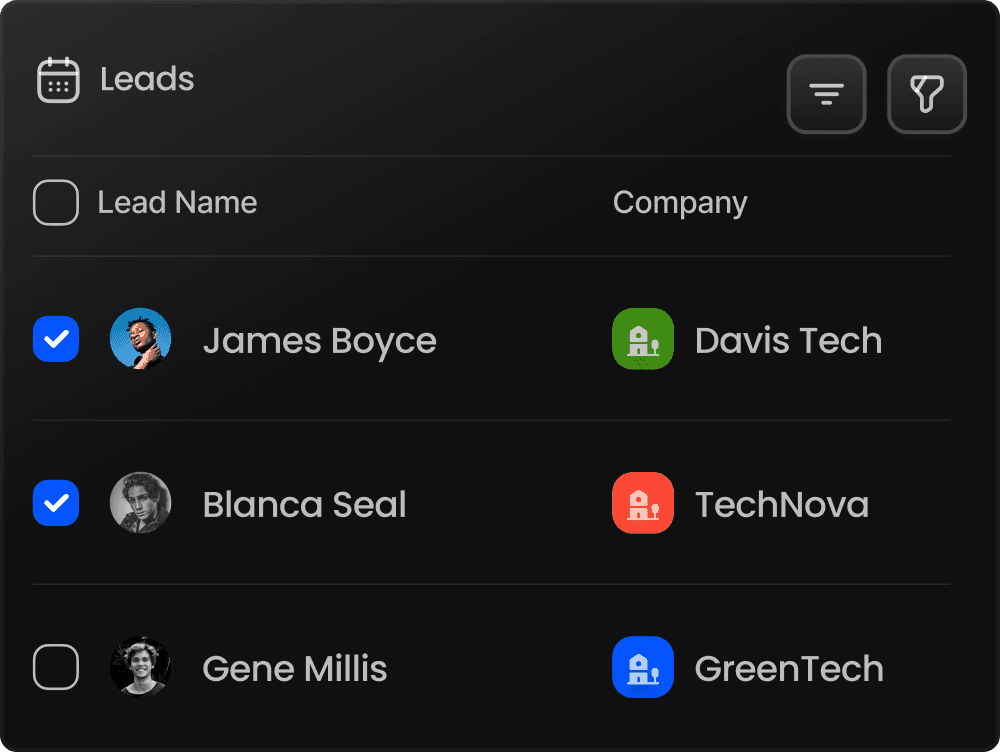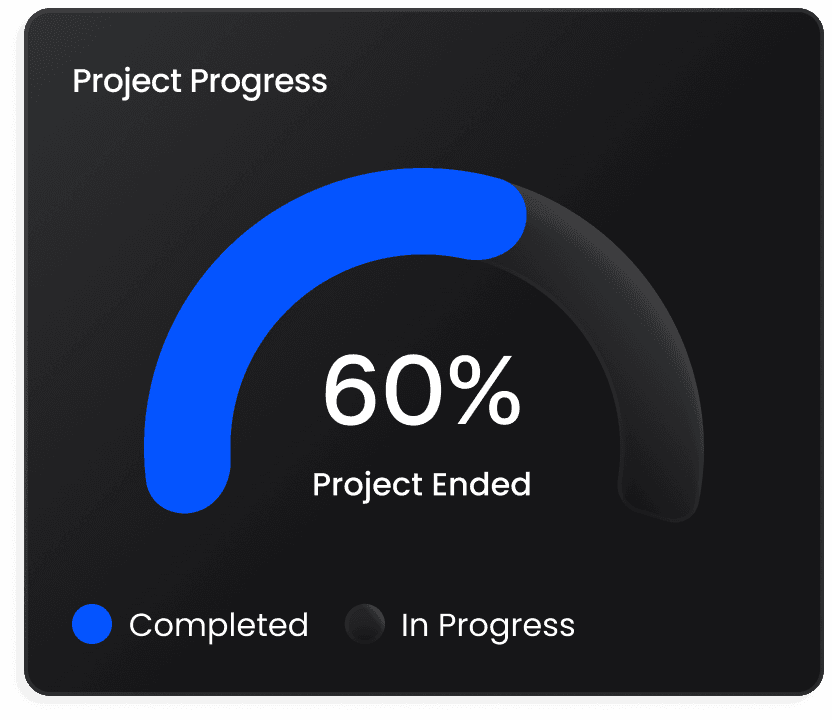
Generating leads is only the beginning of the sales process. The real challenge is knowing what to do with those leads once they enter your business. Some prospects need an immediate response, while others may need several conversations before they are ready to buy. Without a proper system, valuable leads can easily get forgotten, follow-ups can be delayed, and sales opportunities can disappear.
This is where lead management software becomes useful. It helps businesses organize prospects, track interactions, manage follow-ups, and move potential customers through the sales process in a more structured way.
For companies handling a growing number of prospects, having a centralized system can make the difference between simply collecting leads and actually converting them into customers.
What Is Lead Management Software?
Lead management software is a tool that helps businesses capture, organize, qualify, track, and convert sales leads.
Instead of keeping customer details in spreadsheets, email inboxes, notebooks, or different applications, a business can keep important information in one place. Sales representatives can see where a prospect came from, what conversations have taken place, what action is required next, and how close the lead is to becoming a customer.
A modern CRM can take this further by connecting lead management with sales activities, pipeline tracking, reporting, automation, and performance analysis.
For businesses looking for CRM software for businesses, lead management is therefore not an isolated feature. It is an important part of building a complete sales process.
Why Is Lead Management Important?
Not every lead is ready to purchase immediately. Some may be researching options, some may be comparing competitors, and others may simply need more information.
Without proper tracking, sales teams can treat every lead in the same way. That can result in wasted time and poor follow-up.
Effective lead management helps teams:
Organize prospects in one central location
Track conversations and previous interactions
Identify qualified opportunities
Schedule timely follow-ups
Assign leads to the right salesperson
Monitor movement through the sales process
Measure conversion performance
The objective isn't just to collect more leads. It is to make sure the right leads receive the right attention at the right time.
Lead Management vs. Sales Pipeline Management
These two concepts are closely connected, but they are not exactly the same.
Lead management generally focuses on prospects from the moment they enter the system until they become qualified opportunities. Sales pipeline management focuses more broadly on tracking opportunities through different stages until the deal is won or lost.
For example, a company might have the following process:
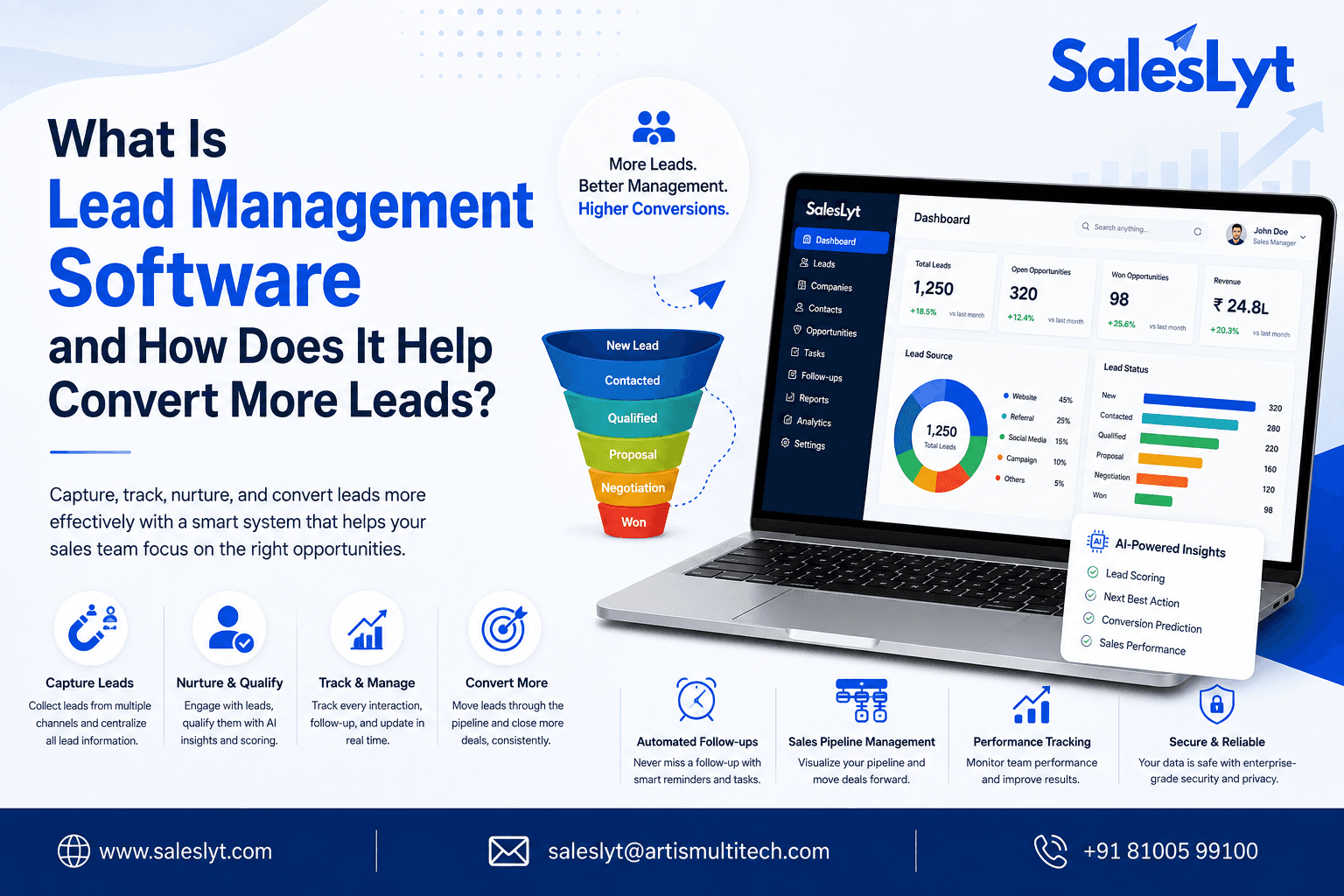
New Lead → Contacted → Qualified → Proposal → Negotiation → Won
A good sales pipeline tool allows sales managers to see how many opportunities are sitting at each stage.
A sales pipeline tracker can also make it easier to identify deals that have stopped progressing. If an opportunity has remained in the same stage for several weeks, the salesperson can decide whether another follow-up is required or whether the opportunity should be removed from the active pipeline.
How Does Lead Management Software Help Convert More Leads?
1. Centralizes Lead Information
One of the biggest advantages of sales lead management software is having customer information available in one place.
A salesperson doesn't have to search through multiple spreadsheets or email conversations to understand a prospect's history. Contact details, notes, activities, and tasks can be organized around the lead.
This gives salespeople more context before they make a call or send a message.
2. Makes Follow-Ups Easier
A lead that receives no follow-up can quickly become a lost opportunity.
Modern systems can help sales teams schedule reminders and organize follow-up activities. Automation can be especially useful when representatives are handling dozens or hundreds of prospects.
SalesLyt, for example, offers automation for repetitive activities such as reminders, follow-ups, email sending, and task assignments.
The benefit is simple: salespeople can spend less time remembering administrative tasks and more time having meaningful conversations with prospects.
3. Helps Identify Better Opportunities
Not every lead deserves the same amount of attention.
Lead qualification allows sales teams to prioritize prospects based on factors such as interest, engagement, business requirements, budget, or buying intent.
This becomes even more useful when businesses use AI sales management software. AI-based analysis can help identify patterns within sales information and provide recommendations that support decision-making.
SalesLyt includes AI-powered insights and predictions, along with AI performance scoring for sales visits, customer calls, and leads.
4. Connects Leads With the Sales Pipeline
Lead management works best when it connects naturally with the sales pipeline.
Once a lead becomes a genuine opportunity, sales representatives should be able to move it into the appropriate pipeline stage without manually entering the same information again.
This creates a smoother process from first contact to final purchase.
A platform that combines lead tracking with sales performance management software can also give managers a better understanding of how salespeople are handling opportunities and where improvements may be needed.
What Role Does AI Play in Lead Management?
AI is changing the way sales teams analyze and prioritize leads.
An AI-powered sales software platform can process large amounts of sales information much faster than a person manually reviewing spreadsheets. Depending on the system, AI can assist with lead scoring, opportunity analysis, sales predictions, recommendations, and performance insights.
However, AI should support salespeople rather than replace human judgment.
A salesperson still needs to understand the customer's actual requirements, build trust, answer questions, and handle objections. AI simply provides additional information that can help the salesperson decide where to focus.
Lead Management for Small Businesses
Small companies often assume that sophisticated CRM systems are only necessary for large organizations. In reality, small businesses can benefit significantly from having an organized sales process.
The best CRM for small business should make everyday work easier rather than adding unnecessary complexity.
An easy CRM for small business can help owners and sales representatives manage customer information, follow-ups, opportunities, and tasks without relying heavily on spreadsheets.
Similarly, sales management software for small business can provide useful visibility into sales activity while allowing a small team to maintain a structured workflow.
For companies that are still growing, choosing the right system early can also prevent messy customer data and disconnected sales processes later.
Lead Management for Startups and Agencies
Startups need to move quickly. Their sales teams may be small, but the number of prospects can increase rapidly as marketing activities begin generating results.
The best CRM for startups should therefore provide a balance between usability, automation, pipeline visibility, and scalability.
A sales CRM for startups can help teams establish consistent sales processes from the beginning rather than building their workflow around spreadsheets.
Agencies have another challenge: they may handle multiple clients, campaigns, and sales opportunities simultaneously. A sales CRM for agencies can help keep prospects, communications, activities, and opportunities organized.
SalesLyt describes its CRM as being designed for startups, agencies, sales teams, and growing businesses.
How to Choose the Right Lead Management Software
Before selecting a platform, businesses should consider more than the number of features available.
Look for software that offers:
Easy lead capture and organization
Customizable sales pipeline stages
Follow-up reminders and automation
Lead qualification and prioritization
Performance reporting and dashboards
CRM integration
AI-powered insights where useful
Simple user experience
Scalability as the business grows
It is also worth considering whether the software can connect different parts of the sales lifecycle. SalesLyt, for instance, combines CRM with quotation, invoice, payment tracking, and sales lifecycle management.
Final Thoughts
Managing sales leads effectively is less about having a huge database and more about knowing what happens to every important prospect.
The right lead management software for small business or growing sales team can bring structure to the entire process. It can help representatives organize prospects, remember follow-ups, prioritize opportunities, and understand where each lead stands.
When lead management is connected with sales pipeline management, automation, analytics, and AI-powered insights, businesses gain a clearer view of their sales process.
Ultimately, better lead conversion comes from consistency. When every lead is tracked, every follow-up has a purpose, and every sales opportunity has a clear next step, sales teams can work more efficiently and create more opportunities to turn prospects into long-term customers.
For businesses looking to bring these activities together, SalesLyt provides CRM, AI-powered insights, sales pipeline capabilities, performance scoring, automation, and customizable dashboards in one platform.

Conclusion
Effective lead management is about more than collecting prospects—it is about creating a consistent process that moves every opportunity forward. With the right lead management software, businesses can organize leads, prioritize high-value prospects, automate follow-ups, and maintain clear visibility across the sales pipeline.
By combining lead management with automation, analytics, and AI-powered insights, sales teams can spend less time managing information and more time building relationships and closing deals. A structured approach ensures that every lead has a clear next step, helping businesses improve productivity and turn more prospects into long-term customers.


FAQ
What is FlowSuite and who is it for?
FlowSuite is a modern customer relationship management platform designed for startups, agencies, sales teams, and growing businesses.
Do I need technical experience to use FlowSuite?
Is my data secure on FlowSuite?
Does FlowSuite support team collaboration?
What kind of support do you offer?
Can I migrate my data from another CRM to FlowSuite?