Choosing the right CRM can make a noticeable difference in how a sales team manages leads, follows up with prospects, tracks deals, and measures performance. As businesses grow, managing customer information through spreadsheets, emails, and scattered notes can quickly become difficult.
The right CRM software for businesses brings these activities together in one organized system. It gives sales teams a clearer view of their customers, opportunities, tasks, and overall sales process.
But with so many CRM platforms available, how do you know which one is right for your business?
The answer depends on your team size, sales process, goals, budget, and the features you actually need.
What Is CRM Software and Why Does Your Business Need It?
Customer relationship management software helps businesses organize information about prospects and customers while managing interactions throughout the sales journey.
A modern CRM can help your team store customer information, track leads, manage sales activities, monitor opportunities, schedule follow-ups, and analyze performance from one central platform.
Without a CRM, sales representatives may have to search through emails, spreadsheets, messaging applications, and personal notes to find important information. This can result in missed follow-ups, duplicated work, and poor visibility into the sales pipeline.
A CRM provides a structured approach. Instead of simply storing customer information, it can help your team understand what needs attention and what actions should happen next.
1. Look for Strong Lead Management Features
Leads are the starting point of many sales processes, so effective lead management should be one of your priorities.
Good lead management software should make it easy to capture, organize, track, and follow up with leads. Your sales representatives should be able to see important information about a prospect and understand where that prospect currently stands.
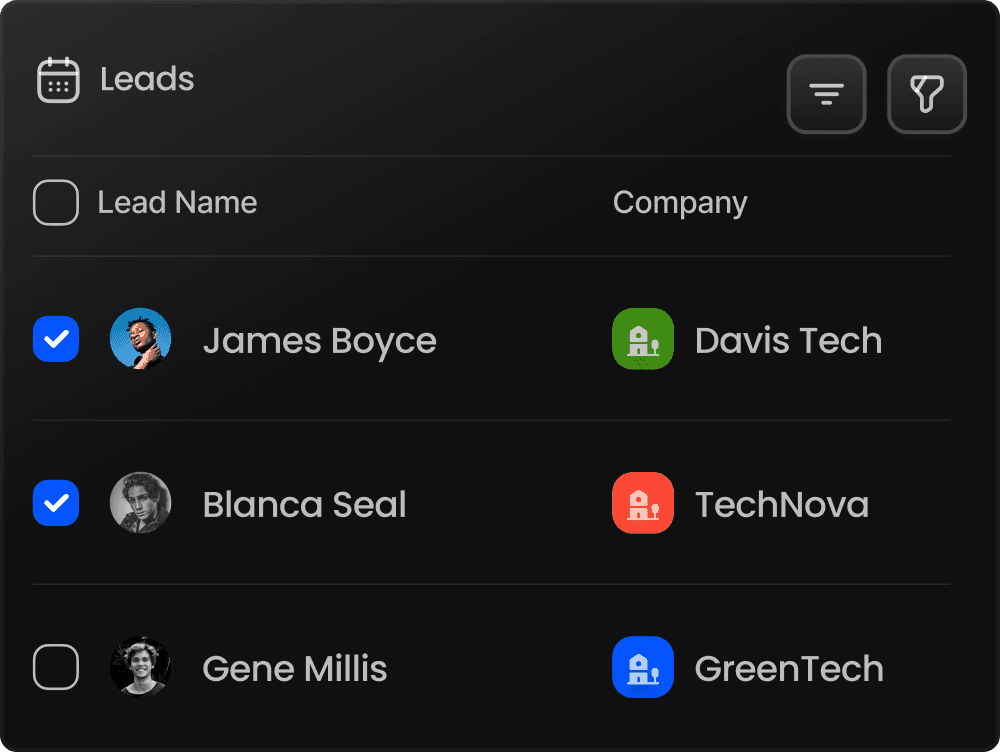
For teams that handle a large number of prospects, sales lead management software can make the process more organized by keeping lead information, activities, reminders, and follow-ups in one place.
When evaluating a CRM, check whether it can help your team:
Organize leads efficiently
Track lead activities
Schedule follow-ups
Monitor lead progress
Keep customer interactions in one place
Identify opportunities that require attention
The goal is simple: make sure valuable leads do not get forgotten.
2. Consider Your Sales Pipeline
A CRM should give your sales team a clear understanding of where every opportunity stands.
Sales pipeline management helps businesses organize opportunities according to different stages of the sales process. Instead of relying on memory or spreadsheets, representatives can see which deals are new, active, progressing, or close to completion.
When comparing a sales pipeline tool, look for features that allow your team to customize stages according to its actual sales process.
A useful sales pipeline tracker should also provide visibility into deal progress, follow-up activities, and potential bottlenecks.
This is particularly valuable for sales managers because they can identify opportunities that are moving slowly and determine where their team needs support.
3. Evaluate Sales Performance Tracking
Managing a sales team is not only about tracking deals. Managers also need to understand how effectively their representatives are working.
This is where sales performance management software can be useful.
A good CRM should provide meaningful information about activities and results rather than simply displaying a collection of numbers. Managers may want to understand sales activity, lead progress, team productivity, and overall performance.
For example, SalesLyt includes AI performance scoring that can evaluate sales visits, customer calls, and leads to provide insights into sales performance.
When reviewing CRM platforms, look for dashboards and reporting features that help managers make decisions based on actual sales data.
4. Think About AI and Automation
Artificial intelligence is becoming an important part of modern sales technology. However, AI should be useful rather than simply being included as a marketing term.
AI sales management software can help sales teams analyze information, identify patterns, and make more informed decisions.
Similarly, AI-powered sales software can assist with activities such as identifying opportunities, understanding sales performance, and providing recommendations based on available data.
For example, SalesLyt provides AI-powered insights and predictions designed to help teams predict deal outcomes, receive recommendations, and make data-driven decisions. It also offers AI performance scoring for sales visits, customer calls, and leads.
When evaluating AI features, ask a practical question: does the technology help your team save time or make better decisions?
If the answer is yes, AI can become a meaningful part of your sales workflow.
5. Choose a CRM That Fits Your Business Size
Not every business needs a complicated enterprise CRM.
Small companies often need a platform that is easy to understand, quick to adopt, and focused on essential sales activities.
If you are searching for the best CRM for small business, consider factors such as ease of use, pricing, scalability, reporting, automation, and customer support.
An easy CRM for small business can be particularly valuable when your sales representatives are not highly technical. A complicated interface may discourage adoption, while a straightforward system can help employees start using the platform more confidently.
Businesses should also consider whether the platform can grow with them. The CRM you choose today should still be useful when your team, customer base, and sales operations become larger.
6. Consider Sales Software for Small Teams
For growing organizations, sales management software for small business should help employees spend less time on repetitive administrative tasks and more time communicating with prospects and customers.
Look for features such as contact management, lead tracking, task management, sales pipelines, reporting, automation, and performance monitoring.
Similarly, lead management software for small business should make it easier for a smaller team to organize prospects without requiring a large sales operations department.
The best choice is not necessarily the platform with the most features. It is the platform that provides the features your team will actually use.
7. Consider Your Industry and Team Structure
Different businesses have different sales processes.
A startup may need flexibility and scalability, while an agency may need strong client relationship management and team collaboration.
If you are researching the best CRM for startups, look for a platform that can support growth without making the sales process unnecessarily complicated.
A sales CRM for startups should ideally help teams organize prospects, manage opportunities, monitor sales activities, and understand performance as the company grows.
Agencies have different requirements because they may manage multiple clients, sales opportunities, and team members simultaneously. A sales CRM for agencies should therefore support organized customer information, sales activities, pipelines, and performance visibility.
8. Look at Security, Reporting, and Customization
CRM software contains valuable customer and business information, so security should be part of your evaluation.
Check what security controls, access management, data protection, and privacy measures the provider offers.
Reporting and customization are also important. Your team should be able to view the information that matters most to its workflow.
SalesLyt offers role-based access controls, encryption, audit logs, privacy controls, customizable dashboards, and DPDP compliance-focused security features.
Why SalesLyt Can Be Considered
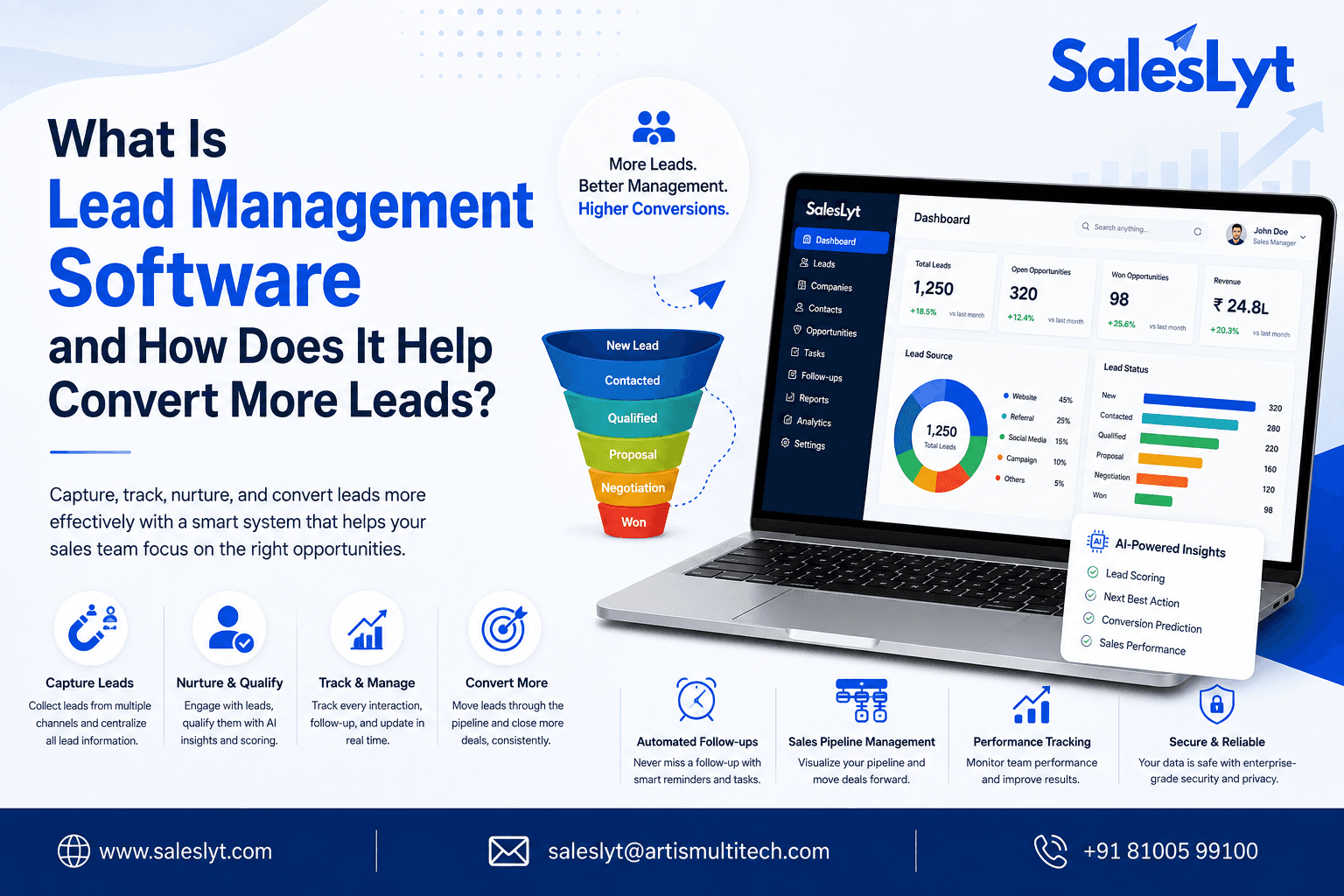
SalesLyt is designed as a modern customer relationship management platform for startups, agencies, sales teams, and growing businesses. Its feature set combines CRM, sales pipeline management, AI-powered insights, performance scoring, task automation, analytics, and customer relationship organization.
The platform also provides different plans based on team size and feature requirements, allowing businesses to select an option according to their operational needs.
For a business evaluating CRM platforms, the important question is not simply which software has the longest feature list. The better question is which platform fits your sales process, team, budget, and growth plans.
Final Thoughts
Choosing CRM software is an important decision because the platform you select can become part of your team's everyday sales process.
Start by identifying your biggest challenges. Are leads being missed? Are sales representatives forgetting follow-ups? Is management struggling to understand pipeline performance? Are customer records spread across different systems?
Once you know the problems, compare CRM platforms based on the features that solve them.
Whether you are a small business, startup, agency, or growing sales team, focus on ease of use, lead management, pipeline visibility, automation, reporting, security, and scalability.
A well-chosen CRM should do more than store customer information. It should help your team stay organized, understand its sales process, improve productivity, and ultimately build stronger customer relationships.

Conclusion
Choosing the right CRM software for your business can make a significant difference in how your sales team manages leads, tracks opportunities, and closes deals. The best solution should simplify your sales pipeline, improve team collaboration, provide clear visibility into sales activities, and support your business as it grows. Whether you are a small business, startup, or agency, focus on choosing a CRM that is easy to use, scalable, and aligned with your specific sales needs. By evaluating features, automation, integrations, pricing, and ease of use, you can select a CRM solution that helps your team work more efficiently and build stronger customer relationships.


FAQ
What is FlowSuite and who is it for?
FlowSuite is a modern customer relationship management platform designed for startups, agencies, sales teams, and growing businesses.
Do I need technical experience to use FlowSuite?
Is my data secure on FlowSuite?
Does FlowSuite support team collaboration?
What kind of support do you offer?
Can I migrate my data from another CRM to FlowSuite?