Sales teams are expected to do more than just make calls and close deals. They need to find the right prospects, follow up at the right time, manage customer conversations, update records, and consistently work toward revenue targets. When these activities are handled manually, even a talented sales team can lose valuable time.
This is where sales performance management software can make a real difference. Instead of relying on spreadsheets, scattered notes, and multiple disconnected tools, businesses can bring important sales activities into one organized system.
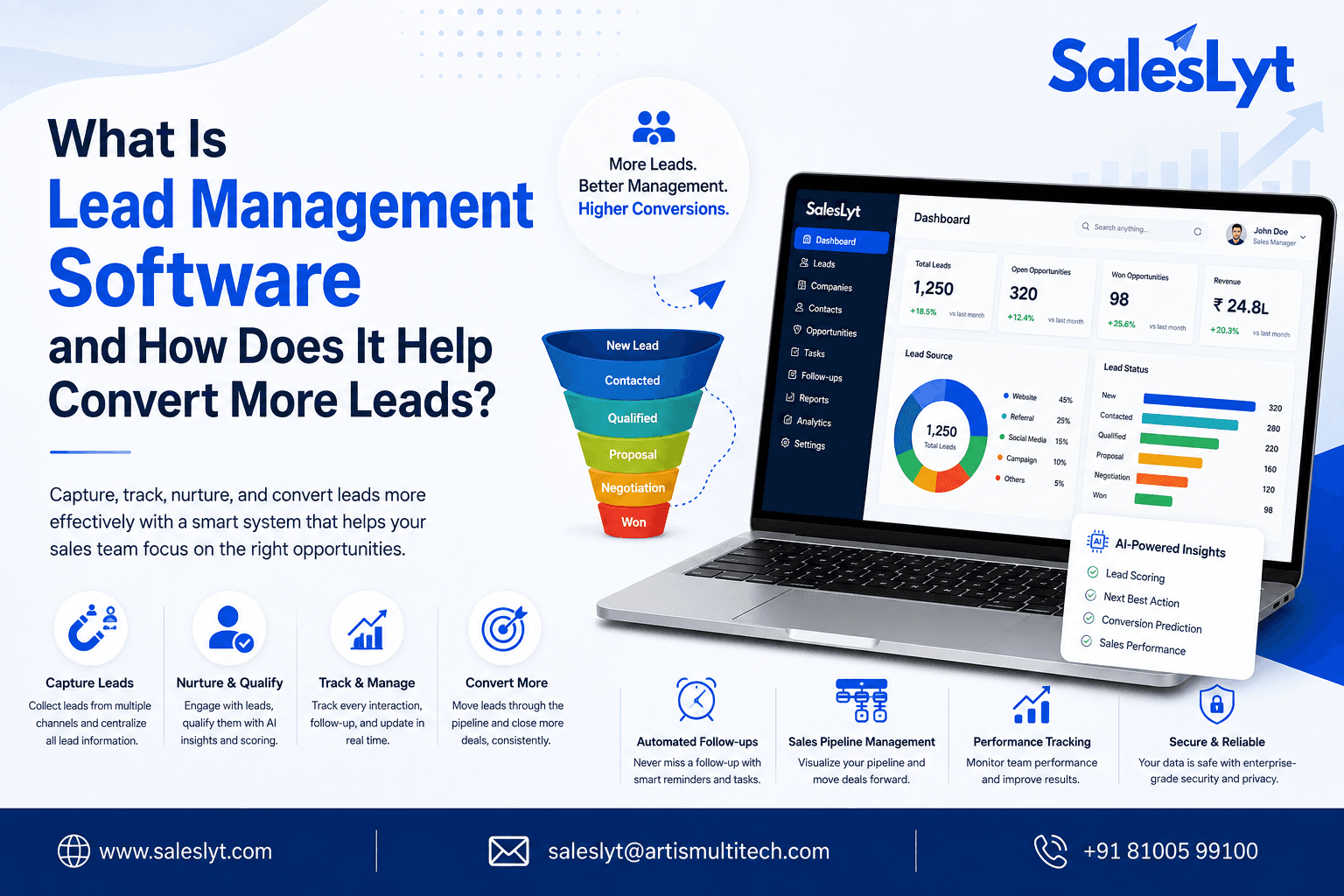
Modern platforms such as SalesLyt combine CRM capabilities, sales pipeline management, automation, analytics, and AI-powered features to help businesses create a more organized sales process. SalesLyt, for example, provides lead management, AI-based performance scoring, automated tasks, dashboards, sales pipeline features, and integrated quotation and invoice management.
What Is Sales Performance Management Software?
At its simplest, sales performance management software helps businesses monitor sales activities, measure performance, identify problems, and improve the way sales teams work.
A good platform doesn't simply tell a manager how much revenue a salesperson generated. It can also show how many leads were handled, which opportunities are moving forward, where follow-ups are being missed, and which activities may be affecting results.
This makes performance management more practical. Managers can use actual sales data to coach their teams instead of depending entirely on assumptions or occasional reviews.
1. Keep Leads Organized From the Start
A common sales problem is losing track of leads. A prospect may come through a website form, social media, email, a referral, or a phone call. If this information is stored in different places, sales representatives can easily miss important follow-ups.
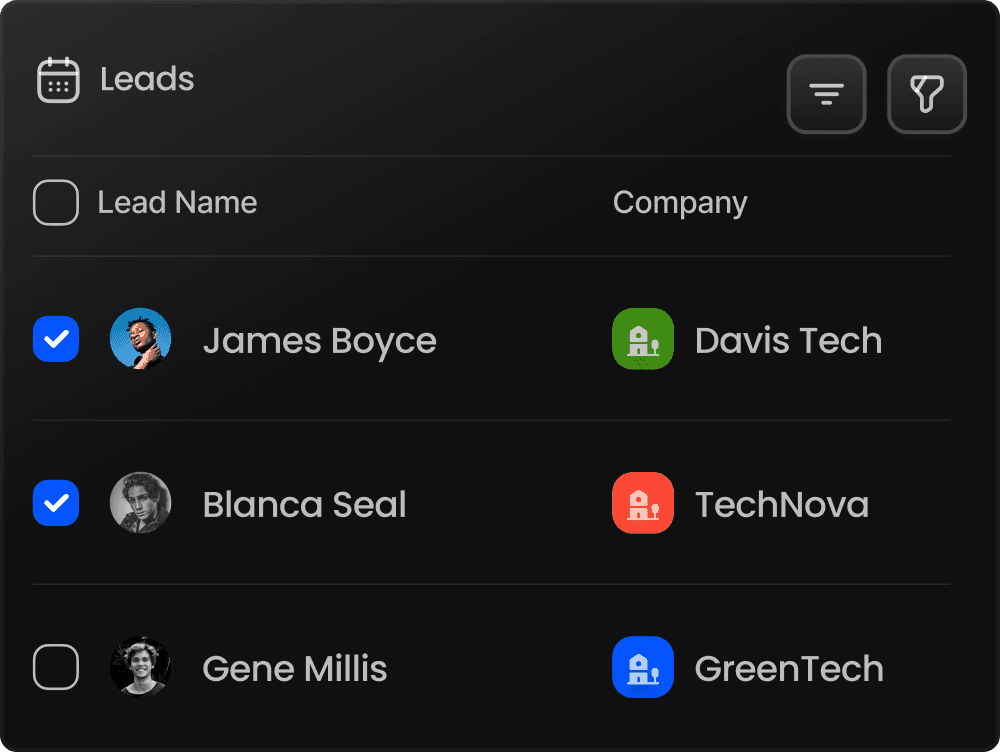
A lead management software platform gives teams a central place to record and organize prospects. Sales representatives can see customer information, previous interactions, tasks, notes, and the current status of an opportunity.
For growing companies, sales lead management software can also help create a consistent process. Instead of every salesperson managing leads in their own way, the organization can establish clear stages and follow-up practices.
2. Create a Clearer Sales Pipeline
Sales managers need visibility into what is happening between acquiring a lead and closing a customer. This is where sales pipeline management becomes important.
A well-structured pipeline allows a team to see which opportunities are new, qualified, under discussion, awaiting a proposal, or close to completion. A sales pipeline tool can make these stages easier to manage visually.
A sales pipeline tracker is particularly useful during weekly sales meetings. Rather than asking every salesperson for a separate update, managers can review the pipeline and identify opportunities that need attention.
This visibility can also improve forecasting. If a large number of opportunities are stuck at one stage, management can investigate the reason instead of discovering the problem after sales targets have already been missed.
3. Reduce Repetitive Administrative Work
Salespeople need time to sell. Unfortunately, a significant portion of their working day can be consumed by repetitive activities such as updating records, creating reminders, sending follow-up messages, and assigning tasks.
Automation can reduce this burden.
For example, SalesLyt includes automated reminders, follow-ups, email sending, and task assignments designed to reduce repetitive work.
When these small tasks are handled automatically, sales representatives can spend more time speaking with prospects and customers. Over time, these saved minutes can become several hours of productive selling activity each week.
4. Use AI to Understand Sales Performance
Artificial intelligence is becoming increasingly useful in sales management, but its value comes from how it is applied.
An AI sales management software solution can analyze sales information and help managers identify patterns that may not be immediately obvious. For example, AI can assist with identifying promising opportunities, predicting potential outcomes, or highlighting areas where sales activity needs improvement.
Similarly, AI-powered sales software can help salespeople make decisions based on available customer and pipeline data rather than relying only on intuition.
SalesLyt includes AI-powered insights and predictions as well as AI performance scoring for sales visits, customer calls, and leads.
The goal is not to replace the salesperson. Instead, AI can provide additional information that helps the salesperson work more effectively.
5. Make Performance Reviews More Meaningful
Traditional performance reviews often focus heavily on the final sales number. While revenue is important, it doesn't always explain why one salesperson is performing better than another.
A modern sales management system can provide a wider picture.
Managers can examine activities, lead progress, completed tasks, opportunities, customer interactions, and other relevant performance indicators. This makes it easier to identify whether a salesperson needs more leads, better follow-up habits, additional training, or support with specific stages of the sales process.
SalesLyt provides KPI dashboards, manager review workflows, task monitoring, approvals, and productivity insights to support this type of performance management.
6. Give Small Businesses Enterprise-Like Organization
Large companies aren't the only businesses that benefit from CRM technology. Smaller companies often need it even more because they have fewer people managing multiple responsibilities.
Finding the best CRM for small business doesn't necessarily mean choosing the platform with the longest feature list. A useful system should be practical, easy to understand, and capable of supporting the company's actual sales process.
An easy CRM for small business can help owners and sales managers organize customer information without creating unnecessary complexity.
Similarly, sales management software for small business can bring lead tracking, sales activities, tasks, and performance information together in one place. Businesses can establish a structured sales process without depending heavily on spreadsheets.
7. Support Growing Startups and Agencies
Startups and agencies often have rapidly changing sales processes. New prospects are added regularly, sales representatives may handle multiple accounts, and managers need to understand performance without spending hours collecting reports.
For these organizations, choosing the best CRM for startups should involve more than comparing prices. Scalability, automation, usability, reporting, and pipeline visibility are equally important.
A sales CRM for startups can help establish good sales habits from an early stage. Instead of waiting until the company has hundreds of customers to organize its data, the business can build a structured process from the beginning.
Agencies have their own challenges because they may manage several clients and sales opportunities simultaneously. A sales CRM for agencies can help teams maintain clearer records of prospects, conversations, tasks, and opportunities.
SalesLyt specifically positions its CRM for startups, agencies, sales teams, and growing businesses.
8. Connect Sales Activities With Business Results
The biggest advantage of sales performance software is that it connects everyday activities with larger business goals.
A manager can see whether leads are progressing, whether follow-ups are happening, and whether salespeople are staying active throughout the pipeline. With the right information available, problems can be addressed earlier.
A CRM also becomes more valuable when it connects different parts of the sales lifecycle. SalesLyt, for example, combines CRM, quotation, invoice, payment tracking, and sales lifecycle automation within its platform.
This reduces the need to move information manually between different systems.
Final Thoughts
Sales productivity is not simply about asking representatives to make more calls or work longer hours. It is about creating a process that helps them spend more of their time on activities that actually contribute to revenue.
The right lead management software for small business, CRM platform, or sales performance solution can bring structure to that process. It can organize leads, improve sales pipeline management, automate repetitive tasks, provide performance visibility, and use AI to support better decisions.
For businesses looking to improve sales efficiency without making their workflow unnecessarily complicated, a modern platform such as SalesLyt can provide a practical starting point. Its combination of CRM, pipeline management, AI-powered insights, performance scoring, automation, and customizable dashboards is designed around the everyday needs of sales teams.
Ultimately, better sales results usually come from better processes. When salespeople have the right information at the right time and managers have a clear view of performance, the entire team can work with greater focus, consistency, and confidence.

Conclusion
Sales performance improves when teams have a clear process, better visibility, and the right tools to support their daily work. By bringing lead management, pipeline tracking, automation, performance insights, and AI into one system, businesses can reduce administrative work and help salespeople focus more on customers and opportunities. As the article highlights, SalesLyt brings these capabilities together to help sales teams work with greater focus, consistency, and productivity.


FAQ
What is FlowSuite and who is it for?
FlowSuite is a modern customer relationship management platform designed for startups, agencies, sales teams, and growing businesses.
Do I need technical experience to use FlowSuite?
Is my data secure on FlowSuite?
Does FlowSuite support team collaboration?
What kind of support do you offer?
Can I migrate my data from another CRM to FlowSuite?