For many growing businesses, Salesforce is one of the first CRM names that comes to mind. It is widely used, highly configurable, and built to support complex sales organizations.
But a powerful CRM is not automatically the right CRM for every small business.
For Indian MSMEs and smaller B2B teams, the bigger concern is often simplicity. They need to manage leads, follow-ups, opportunities, salespeople, quotations, and payments without introducing unnecessary complexity into everyday work.
That is why businesses searching for a Salesforce alternative should not focus only on finding another platform with a long feature list.
They should focus on finding a CRM that matches the way their team actually sells.
So what should a small business in India compare before making a decision?
Why Small Businesses Look for a Salesforce Alternative
A small company and a large enterprise rarely have the same CRM requirements.
A large organization may need highly customized workflows, complex integrations, multiple approval layers, and extensive administrative control.
A small business may simply need answers to questions like:
Who needs a follow-up today?
Which leads are active?
Which deals are stuck?
Who is responsible for each opportunity?
Which quotations are pending?
How is the sales team performing?
For many growing businesses, those everyday questions matter more than having hundreds of configuration options.
The right Salesforce alternative should therefore make sales management easier, not create another administrative burden.
1. Start With Ease of Use
This should be one of the first things you compare.
A CRM may have impressive functionality, but if salespeople find it difficult to use, adoption becomes a problem.
That usually leads to incomplete data.
One salesperson updates the CRM regularly. Another maintains a spreadsheet. Someone else stores customer information in WhatsApp or email.
Soon, management is working with an incomplete view of sales activity.
When evaluating the best CRM for MSME in India, ask practical questions:
Can a salesperson add a lead quickly?
Can they see today's follow-ups?
Can they update a deal without too many steps?
Can managers understand the pipeline without building complicated reports?
If the answer is yes, the CRM has a better chance of becoming part of the team's daily routine.
2. Compare Lead and Customer Management
Every CRM should help you keep customer information organized.
But small businesses should look beyond contact storage.
The system should make it easy to understand:
Who the lead is
Where the enquiry came from
Who owns the opportunity
What was discussed
When the customer was last contacted
What should happen next
Which stage the deal is currently in
This becomes increasingly important as the number of leads and salespeople grows.
Businesses looking for CRM software for MSME businesses in India should prioritize a central system where salespeople and managers can work from the same customer information.
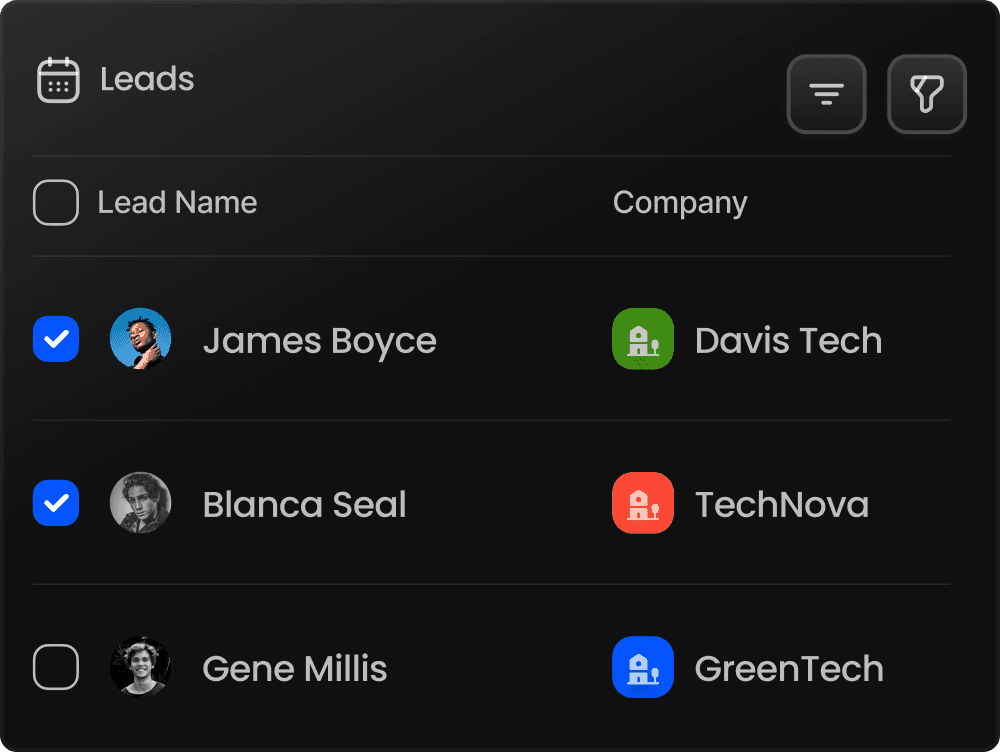
SalesLyt is designed around managing leads, customers, follow-ups, pipelines, and team activities in one place.
3. Look Closely at Follow-Up Management
Sales opportunities are often lost because of something very simple: a follow-up never happened.
A prospect might say:
“Call me next Monday.”
Another customer may be waiting for a revised quotation.
Someone else may want to speak again after discussing the proposal internally.
When those activities depend entirely on memory, mistakes become inevitable as the sales team becomes busier.
A CRM should help salespeople organize reminders, tasks, and next actions.
This is also one of the most practical ways to improve your sales process.
SalesLyt currently highlights automated follow-ups and task automation as part of its sales-management workflow.
The goal is not to automate every customer interaction.
It is to make sure important opportunities do not disappear simply because somebody forgot the next step.
4. Check Whether the CRM Fits Your B2B Sales Process
A CRM should reflect the journey your customers actually take.
For example, a typical B2B sales process might look like:
Lead → Qualified → Meeting → Follow-Up → Quotation → Negotiation → Won
Your process may be different.
What matters is whether the CRM can represent it clearly.
Salespeople should know where every opportunity stands.
Managers should be able to identify which stages are slowing down.
And the business should be able to see how opportunities move from initial enquiry toward revenue.
SalesLyt's current platform includes pipeline tracking and automated follow-ups designed to help teams keep opportunities moving through a more organized sales flow.
5. Make Deal Management Easy to Understand
As a business grows, understanding how to manage customer deals becomes increasingly important.
Imagine your sales team has 80 open opportunities.
Some received quotations yesterday.
Some are waiting for customer approval.
Some need a follow-up today.
Others have not moved for several weeks.
If all of those opportunities are treated in the same way, managers lose visibility.
A CRM should make it easy to identify:
Which deals are active?
Which deals are stalled?
What action is due next?
Who owns the opportunity?
How long has the deal remained in its current stage?
That information allows managers to focus attention where it matters most.
6. Compare AI Features Based on Practical Value
AI is now appearing in many CRM platforms.
But small businesses should avoid choosing software simply because the word “AI” appears on the product page.
Instead, ask what the AI actually helps your team accomplish.
Useful AI capabilities might include:
Deal predictions
Lead prioritization
Recommended next actions
Performance scoring
Sales activity analysis
Follow-up suggestions
Pipeline insights
SalesLyt currently provides AI-powered insights and predictions as well as AI performance scoring for sales visits, customer calls, and leads.
For businesses learning how to use AI in sales process management, this is a more practical way to think about AI.
The purpose should be better decisions and clearer priorities, not simply adding more technology.
7. Do You Need Field Sales Visibility?
This is especially important for businesses in manufacturing, distribution, industrial supply, and B2B trading.
Many salespeople spend a significant part of their day outside the office visiting customers, dealers, distributors, or prospects.
In that environment, businesses may need more than traditional contact management.
They may want visibility into field activities and sales visits.
SalesLyt currently includes geo-tagging to help track and optimize salesperson activity.
If your team spends a lot of time in the field, this should be included in your CRM comparison.
8. Look Beyond Leads and Pipelines
For many small businesses, closing the opportunity is not the end of the sales process.
The team may still need to:
Create a quotation.
Revise the quotation.
Issue an invoice.
Track payment.
Follow up on outstanding amounts.
If each of these activities happens in a separate system, information becomes fragmented again.
SalesLyt combines CRM functionality with quotation, invoice, and payment management, helping businesses maintain visibility across more of the sales lifecycle.
For a small business, this can reduce the number of disconnected tools employees need to manage.
9. Compare Manager Visibility
Salespeople and managers need different things from a CRM.
Salespeople need to know what to do next.
Managers need to know what is happening across the team.
Useful manager capabilities include:
KPI dashboards
Pipeline visibility
Task monitoring
Performance tracking
Review workflows
Approvals
Productivity insights
SalesLyt currently includes manager review and performance features along with KPI dashboards and task monitoring.
This can make sales reviews more useful.
Instead of asking each salesperson for a general update, managers can focus on actual activity, stalled opportunities, and next actions.
10. Check Whether the CRM Can Grow With You
Small businesses should not choose software only for their current size.
A team of five people today may become a team of 15 later.
Before selecting a CRM, ask:
Can we add more users?
Can roles and permissions be controlled?
Can the pipeline evolve?
Can dashboards be customized?
Can automation expand with the business?
Can managers gain more visibility as the team grows?
SalesLyt currently offers customizable dashboards and sales automation capabilities designed to support growing teams.
The best CRM should be simple enough for today but structured enough for future growth.
Salesforce vs SalesLyt: What Should Small Businesses Compare?
Salesforce is built to support sophisticated CRM requirements and can be highly valuable for organizations that need deep customization and enterprise-level processes.
But not every small business needs that level of complexity.
SalesLyt takes a more focused approach around day-to-day sales execution.
Its current capabilities include:
Lead and customer management
Sales pipeline tracking
Automated follow-ups
AI-powered insights and predictions
AI performance scoring
Geo-tagging
KPI dashboards
Manager review
Task automation
Quotations
Invoice management
Payment tracking
Customizable dashboards
For Indian MSMEs, the question is therefore not whether SalesLyt has more features than Salesforce.
The better question is:
Which platform fits the way your team needs to work every day?
What About Zoho CRM?
Businesses searching for a Salesforce alternative often compare Zoho CRM as well.
Zoho is a well-known option, particularly among Indian businesses, and it offers a broad software ecosystem.
But the same comparison principle applies.
Do not choose a CRM only because it is familiar.
Compare:
Ease of use
Follow-up management
Pipeline visibility
AI capabilities
Field-sales requirements
Quotations and invoicing
Manager visibility
Pricing
Team adoption
A Zoho CRM alternative or Salesforce alternative should be evaluated based on workflow fit rather than brand recognition alone.
A Simple Checklist Before You Choose
Before selecting a CRM, ask your team:
Can we manage every lead in one place?
Can salespeople clearly see today's follow-ups?
Can managers identify stalled deals?
Can we manage our actual sales stages?
Can the system support field sales if required?
Are AI features genuinely useful?
Can we manage quotations and invoices?
Can we track payments?
Is the CRM easy enough for employees to use daily?
Can the platform grow with the business?
If a platform answers these questions well, it is probably worth a closer look.
Why SalesLyt Is Worth Considering
SalesLyt is designed around the sales activities that small businesses and growing B2B teams deal with every day.
Its current platform brings together lead management, automated follow-ups, pipeline tracking, AI-powered insights, performance scoring, geo-tagging, dashboards, quotations, invoices, payment tracking, and sales-team visibility.
The idea is straightforward:
Rather than managing your sales process across spreadsheets, reminders, separate billing tools, and disconnected customer records, bring more of that activity into one structured environment.
For a growing MSME, that can make sales easier to monitor and easier to scale.
Conclusion
Finding the right Salesforce alternative is not about finding a CRM that copies every Salesforce feature.
For most small businesses, the priority should be much simpler.
The CRM should help the team stay organized, follow up consistently, understand the pipeline, manage customer deals, and give managers better visibility.
Businesses looking for the best CRM for MSME in India should pay particular attention to usability, sales workflow, automation, AI capabilities, field-sales requirements, and how much of the customer journey can be managed within one system.
SalesLyt is built around those practical requirements.
It combines lead management, automated follow-ups, pipeline tracking, AI-powered insights, performance monitoring, geo-tagging, quotations, invoices, payments, and dashboards in one connected sales platform.
If your current process depends on spreadsheets, personal reminders, scattered customer information, or repeated manual updates, adopting structured CRM software for MSME businesses in India can help you improve your sales process and give your team clearer priorities.
The right CRM should make three things obvious:
Who needs attention?
What should happen next?
Which opportunities are moving closer to revenue?
For small businesses in India looking for a practical Salesforce alternative, SalesLyt is designed to make those answers easier to see and easier to act on.

Conclusion
Choosing the right Salesforce alternative is not about finding the most complex CRM. For small businesses in India, the better choice is usually the one that makes day-to-day sales work easier, clearer, and more organized.
Before choosing a platform, businesses should compare ease of use, follow-up management, pipeline visibility, customer deal tracking, reporting, AI support, and how well the CRM fits their actual sales process.
For teams looking for CRM software for MSME businesses in India, the goal should be simple: use a system that helps salespeople stay on top of leads, helps managers understand performance, and helps the business move opportunities forward without confusion.
SalesLyt is built around these practical needs. It brings together lead management, follow-up tracking, pipeline visibility, AI-powered insights, performance monitoring, and sales management tools in one place for growing teams.
If your current process depends on spreadsheets, manual reminders, or disconnected tools, switching to a structured CRM can help you improve your sales process, manage customer deals more effectively, and create a stronger sales workflow.
For small businesses in India looking for a practical Salesforce alternative, SalesLyt offers a smarter and more manageable way to grow sales.