Generating leads is only the beginning of a sales process. The real challenge is keeping track of every conversation after that first contact.
A prospect asks for pricing. Another wants a call next week. Someone else needs a quotation before making a decision. Meanwhile, your sales team is handling dozens of other conversations.
Without a clear system, even a promising opportunity can quietly disappear.
This is where a sales pipeline tracker becomes valuable. It gives sales teams a structured view of their opportunities, shows where every deal stands, and makes it easier to understand what needs to happen next.
For growing businesses, better tracking is not simply about keeping records. It is about creating a sales process where fewer opportunities are lost because someone forgot to follow up.
What Is a Sales Pipeline Tracker?
A sales pipeline tracker is a system used to monitor sales opportunities as they move through different stages of the buying journey.
A typical pipeline may include stages such as:
Lead → Contacted → Qualified → Proposal Sent → Negotiation → Won/Lost
Instead of checking spreadsheets, emails, WhatsApp conversations, notebooks, and individual sales representatives for updates, the team gets a clearer picture of its active opportunities in one place.
A good sales pipeline tool can help answer practical questions:
Which deals are currently active? Which prospects are waiting for a response? Which opportunities have not moved recently? Who is responsible for each deal? What action needs to happen next?
These questions sound simple, but when a business is handling hundreds of leads, answering them consistently can become difficult without proper sales pipeline management.
Why Deals Get Lost Between Follow-Ups
Many sales opportunities are not lost because the prospect said no. Sometimes, they are lost because the conversation simply stopped.
Imagine a salesperson speaks with a potential customer on Monday. The customer says, “Send me the proposal and call me again on Friday.”
The proposal gets sent, but Friday becomes busy. There are meetings, new enquiries and urgent customer requests. The follow-up is forgotten.
By the following week, the prospect may already be talking to another supplier.
This is one of the problems that CRM software for businesses can help solve. Instead of depending completely on memory, sales teams can maintain records of interactions, follow-up activities and deal progress.
The objective is simple: every genuine opportunity should have a clear owner, current stage and next action.
1. Put Every Opportunity Into One Pipeline
The first rule of effective pipeline tracking is simple: do not allow genuine sales opportunities to remain scattered across different places.
If some leads are in Excel, others are in personal notebooks, and the rest are buried in messages, managers cannot get an accurate picture of the pipeline.
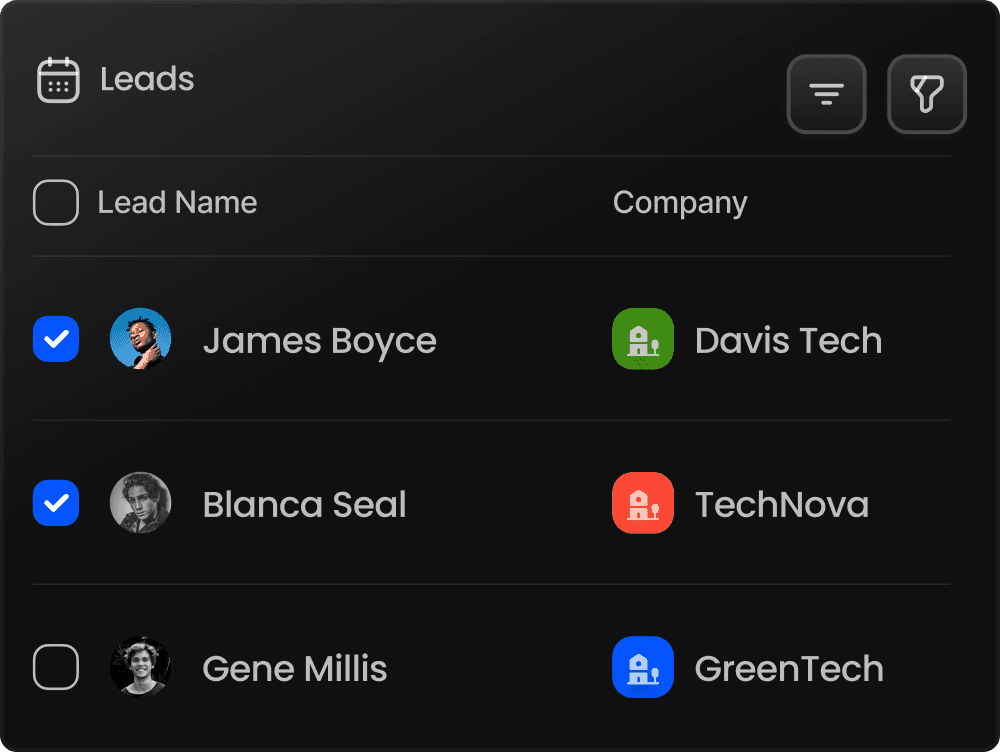
Using lead management software gives teams a more organized way to capture and maintain lead information.
More structured sales lead management software can also help salespeople keep customer details, activities and opportunity information connected throughout the sales journey.
This creates a more reliable foundation for pipeline tracking.
2. Define Clear Sales Stages
A pipeline becomes useful only when its stages represent the way your team actually sells.
Avoid creating too many complicated stages simply because the software allows it. Instead, use stages that make sense for your business.
For example:
New Lead → Contacted → Qualified → Demo/Meeting → Proposal → Negotiation → Closed
Each salesperson should understand exactly when an opportunity should move from one stage to another.
Clear stages make sales pipeline management more meaningful because managers can quickly understand where deals are concentrated and where opportunities tend to slow down.
3. Give Every Deal a Next Action
Knowing the current stage of a deal is useful. Knowing what should happen next is even more important.
For every active opportunity, your team should record a specific next action.
For example:
“Call customer on 12 September.”
“Send revised quotation tomorrow.”
“Schedule product demonstration.”
“Follow up after management review.”
This is where a sales pipeline tracker becomes more than a visual board. It becomes a working system for the sales team.
SalesLyt, for example, is designed to help teams track leads, automate follow-ups and move opportunities through a more organized sales flow. Its task automation capabilities can also support reminders, follow-ups and task assignments.
4. Pay Attention to Stalled Deals
A healthy pipeline is not necessarily one with the largest number of opportunities.
Suppose your pipeline shows 150 active deals. That sounds positive. But what if 70 of them have not received any meaningful activity for three weeks?
Those opportunities may be making the pipeline look stronger than it really is.
A useful sales pipeline tool should make it easier to identify deals that have stopped moving.
Managers can then ask:
Why has this deal stalled?
Is the customer waiting for information?
Does the salesperson need support?
Should we follow up again?
Is the opportunity still genuine?
This is also where sales performance management software can provide additional value. Managers need visibility not only into how many leads exist, but also into how effectively their teams are moving those opportunities forward.
5. Connect Lead Tracking With Follow-Ups
Lead tracking and follow-up management should not operate as completely separate processes.
A salesperson should be able to understand what happened previously and what needs to happen next without searching through multiple tools.
This is particularly important for small businesses where salespeople may manage many responsibilities at once.
Choosing an easy CRM for small business can help reduce unnecessary administrative work while creating more consistency in follow-ups.
Similarly, practical sales management software for small business should make everyday sales activities easier to manage instead of adding another complicated layer of work.
For teams focused heavily on prospect acquisition, lead management software for small business can help ensure that new enquiries do not disappear after the first conversation.
6. Use Data to Prioritize the Right Opportunities
Not every lead deserves the same amount of attention.
Some prospects may be actively evaluating your solution. Others may still be researching. A few may have little chance of buying in the near future.
This is where AI sales management software is becoming increasingly useful.
Instead of relying entirely on manual judgment, AI-supported systems can help teams analyze sales information, identify patterns and prioritize opportunities.
SalesLyt includes AI-powered insights and predictions designed to support data-driven sales decisions, along with AI performance scoring for sales visits, calls and leads.
This type of AI-powered sales software can help salespeople decide where their attention may have the greatest impact.
AI should not replace the salesperson. It should help the salesperson work with better information.
7. Review the Pipeline Regularly
Software alone cannot create a disciplined sales process.
Teams still need regular pipeline reviews.
A weekly review could focus on a few practical questions:
Which high-value opportunities moved forward this week? Which deals are stuck? Which follow-ups are overdue? Which proposals are awaiting responses? What should the team prioritize next?
Over time, these reviews can also reveal useful patterns.
Perhaps deals regularly stall after proposals are sent. Maybe one salesperson converts qualified leads more consistently than others. Perhaps a particular lead source generates many enquiries but very few serious opportunities.
These insights can help improve both the sales process and management decisions.
What Should Growing Businesses Look for in a CRM?
The best CRM for small business is not automatically the platform with the longest feature list.
It should make daily sales work easier.
Look for a system that can bring together lead management, pipeline visibility, follow-up tracking, automation and useful reporting without creating unnecessary complexity.
Startups have similar requirements. The best CRM for startups should help establish a repeatable sales process while remaining practical as the company grows.
A good sales CRM for startups can provide structure before spreadsheets, personal notes and disconnected communication become difficult to control.
Agencies face another challenge: they often manage multiple prospects and client relationships at the same time. A practical sales CRM for agencies can help teams keep conversations, opportunities and follow-ups organized across different accounts.
How SalesLyt Helps Keep Deals Moving
SalesLyt is built around the idea that growing sales teams need more than a place to store contacts.
The platform brings lead management, pipeline tracking, automated follow-ups, AI-powered insights and predictions, performance monitoring, analytics and task automation into a connected CRM environment.
SalesLyt also extends beyond the initial opportunity by supporting quotations, invoices and payment tracking, helping businesses maintain visibility across more of the sales lifecycle.
For companies looking for CRM software for businesses, this connected approach can reduce the need to manage critical sales information across disconnected systems.
More importantly, it can give sales representatives and managers a clearer answer to a simple question:
What needs to happen next?
Turn Your Sales Pipeline Into an Action Plan
A pipeline should never become a collection of deals that nobody looks at.
Used properly, a sales pipeline tracker becomes an action plan for your sales team.
Every opportunity has a stage. Every important deal has an owner. Every active prospect has a next step. Managers can identify stalled opportunities, and salespeople know which conversations need attention.
When that pipeline is connected with lead management software, sales performance management software, automation and AI-powered sales software, businesses gain more than visibility—they gain a more structured way to manage sales.
The goal is not simply to track more deals.
It is to make sure the right deal never disappears because the next follow-up was forgotten.
With SalesLyt, growing businesses can bring leads, follow-ups, sales pipelines, performance insights and sales activities together in one system—helping teams stay organized, work smarter and keep more opportunities moving toward revenue.

Conclusion
A well-managed sales pipeline gives your team a clear view of every opportunity—from the first interaction to the final close. With the right sales pipeline tracker, businesses can organize deals, prioritize follow-ups, monitor progress, and reduce the chances of valuable leads slipping through the cracks.
Instead of relying on spreadsheets, scattered notes, or manual reminders, SalesLyt brings leads, follow-ups, opportunities, and sales pipeline management into one organized system. This helps sales teams spend less time searching for information and more time building relationships and closing deals.
Whether you need an easy CRM for small business, lead management software, or a smarter sales pipeline tool, SalesLyt can help you build a more consistent and efficient sales process.
Track smarter. Follow up on time. Close more deals with SalesLyt.