A sales team can have plenty of leads and still struggle to close enough deals. In many cases, the problem isn't a lack of opportunities. It's an unclear or poorly managed sales process.
When salespeople don't know which leads to prioritize, when follow-ups are missed, or when managers can't see where deals are getting stuck, productivity quickly drops. This is why sales pipeline management has become an important part of modern sales operations.
A well-organized pipeline gives businesses a clear view of every opportunity, from the first interaction with a prospect to the final purchase. With the right process and technology, sales teams can spend less time searching for information and more time moving qualified opportunities forward.
What Is Sales Pipeline Management?
Sales pipeline management is the process of organizing, tracking, and managing potential customers as they move through different stages of the sales journey.
A typical pipeline might include stages such as:
New lead
Lead contacted
Qualified opportunity
Proposal or quotation
Negotiation
Closed won or lost
The exact stages depend on the business. The important thing is that every opportunity has a clear position and a logical next step.
Without a defined process, sales representatives may maintain separate spreadsheets, notes, emails, and reminders. That makes it difficult to know what needs attention. A structured pipeline brings these activities together and gives both salespeople and managers better visibility.
Why an Efficient Sales Pipeline Matters
An efficient pipeline does more than display deals on a screen. It helps a business understand how its sales process is actually working.
For example, imagine a company has 100 new leads. If 60 are contacted but only 10 become qualified opportunities, there may be a problem with lead quality, messaging, targeting, or follow-up.
Similarly, if many qualified opportunities remain stuck at the proposal stage, managers can investigate what is preventing prospects from making a decision.
This type of visibility makes the sales process easier to improve because decisions are based on actual pipeline activity rather than guesswork.
1. Define Clear Sales Stages
The first step is to create sales stages that accurately reflect how customers make buying decisions.
Avoid creating too many stages. A salesperson shouldn't have to spend more time updating the pipeline than actually selling.
A simple pipeline might look like:
New Lead → Contacted → Qualified → Proposal → Negotiation → Won
Each stage should have a clear definition. For example, a lead shouldn't be marked as "Qualified" simply because someone responded to an email. There should be specific criteria that determine when an opportunity moves forward.
Clear definitions make pipeline reports more reliable and help sales managers compare performance across the team.
2. Keep Lead Information in One Place
A pipeline becomes difficult to manage when customer information is scattered across different systems.
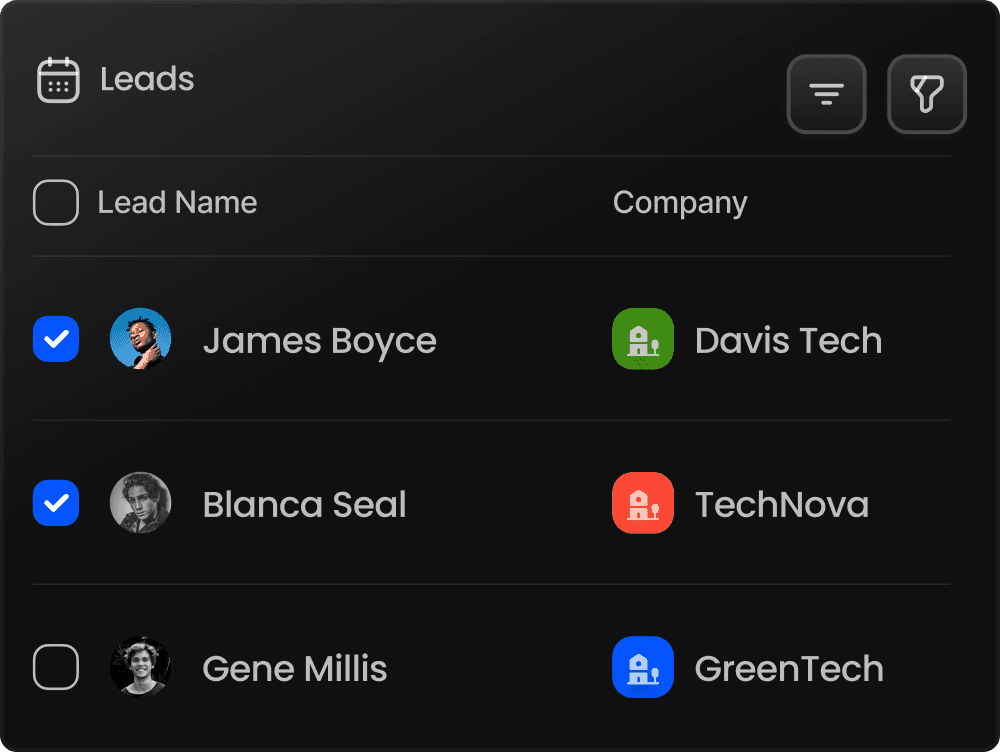
This is where lead management software becomes useful. Instead of storing prospect information in spreadsheets or personal notes, teams can maintain a central record containing contact details, communication history, tasks, notes, and opportunity status.
For businesses handling a large number of prospects, sales lead management software can also help representatives organize leads according to priority, stage, source, or other business requirements.
SalesLyt, for example, is designed to centralize contacts, communication history, notes, activities, and tasks within its CRM platform.
3. Use a Sales Pipeline Tool
Managing a growing pipeline manually can quickly become complicated. A sales pipeline tool gives teams a more organized way to monitor opportunities.
Instead of asking salespeople to prepare individual reports, managers can review the current pipeline and identify:
Which deals are close to completion
Which opportunities haven't been followed up
Which leads have been inactive
Which sales representatives need support
Where opportunities are frequently being lost
A sales pipeline tracker can be particularly helpful during weekly sales meetings because everyone can work from the same information.
The objective isn't simply to track deals. It is to understand what needs to happen next.
4. Prioritize Follow-Ups
One of the simplest ways to improve a sales process is to make follow-ups more consistent.
A prospect who receives a timely response is more likely to continue the conversation than one who waits several days for an answer. Yet when salespeople are managing dozens of opportunities, remembering every follow-up manually is difficult.
Automation can help.
Modern CRM platforms can create reminders and automate routine follow-up activities. SalesLyt highlights automated reminders, follow-ups, email sends, and task assignments as part of its productivity features.
This allows sales representatives to focus more attention on conversations instead of remembering every administrative task.
5. Use Data to Identify Pipeline Problems
A healthy pipeline should be measured regularly.
Businesses can monitor metrics such as:
Number of new leads
Lead-to-opportunity conversion
Opportunity-to-customer conversion
Average deal value
Sales cycle length
Deals won and lost
Pipeline value
Stage conversion rates
These numbers can reveal problems that aren't obvious from individual conversations.
For example, a company may discover that it generates plenty of leads but struggles to convert qualified opportunities into customers. That suggests the problem may be further down the sales process rather than at the lead-generation stage.
Advanced CRM software for businesses can make these metrics easier to monitor through dashboards and reports.
6. Bring AI Into Sales Management
Artificial intelligence is also changing how sales teams analyze their pipelines.
AI sales management software can help identify patterns in sales data, highlight important opportunities, and provide insights that support better decisions.
Similarly, AI-powered sales software can assist teams by analyzing available information and helping sales managers understand which opportunities may require attention.
SalesLyt offers AI-powered insights and predictions designed to support data-driven decisions, along with features for analyzing sales activity and pipeline performance.
AI shouldn't replace human judgment. Instead, it can reduce the amount of manual analysis required and give sales teams another source of useful information.
7. Choose CRM Software That Fits Your Business
Not every business needs a complicated enterprise system.
For smaller companies, finding the best CRM for small business usually means finding a platform that combines useful functionality with a straightforward workflow.
An easy CRM for small business should make everyday activities easier rather than introduce unnecessary complexity.
Likewise, sales management software for small business can help teams manage leads, opportunities, tasks, customer information, and sales activities from a central system.
Startups should consider scalability when selecting the best CRM for startups. A system that can support the company as its sales team and customer base grow can prevent unnecessary migrations later.
A sales CRM for startups can also help establish a consistent sales process from the beginning, while a sales CRM for agencies can help teams manage multiple prospects and client-related opportunities more systematically.
SalesLyt states that its CRM is designed for startups, agencies, sales teams, and growing businesses.
8. Review and Improve the Pipeline Regularly
A sales pipeline should never be treated as a "set it and forget it" system.
Sales managers should regularly review whether opportunities are moving through the stages as expected. Old or inactive opportunities should be updated, removed, or re-engaged where appropriate.
Teams should also examine where deals are most frequently getting stuck.
If opportunities consistently remain in the same stage, it may indicate that the sales team needs better qualification criteria, stronger sales messaging, improved product information, or additional training.
Regular pipeline reviews turn sales data into practical improvements.
Conclusion
An efficient sales process doesn't happen by accident. It requires clear stages, reliable lead information, consistent follow-ups, regular performance analysis, and the right technology.
Effective sales performance management software can bring these elements together while giving managers a clearer picture of team activity and sales results.
For businesses that want to improve their pipeline without creating unnecessary complexity, a modern CRM platform such as SalesLyt can provide a centralized environment for managing relationships, tracking opportunities, automating tasks, and gaining AI-powered insights.
Ultimately, good sales pipeline management is about more than knowing how many deals are open. It's about knowing what needs to happen next, who is responsible for it, and how each opportunity can move closer to a successful outcome.

Conclusion
Building an efficient sales pipeline is not just about tracking deals—it is about creating a clear and consistent process that helps every opportunity move forward. With defined sales stages, timely follow-ups, accurate pipeline data, and better visibility, sales teams can identify bottlenecks earlier and focus on the opportunities that matter most.
By combining pipeline management with automation, performance analytics, and AI-powered insights, businesses can reduce manual work, improve team productivity, and make better sales decisions. A well-managed pipeline ultimately gives every opportunity a clear next step and helps sales teams move more deals toward successful outcomes.