Running a growing business often creates a strange problem.
As the sales team becomes bigger, the owner gets less visibility.
Leads come from different sources. Follow-ups happen over phone calls, WhatsApp, email, and personal notes. Quotations are sent, but nobody is fully sure what happened afterward. Some deals move forward while others stay untouched for days.
Naturally, business owners start asking questions.
“Did you follow up with this customer?”
“What happened to yesterday’s enquiry?”
“Why is this quotation still open?”
“Which deals are likely to close this month?”
The intention is not to micromanage. The owner simply wants visibility.
This is where choosing the best CRM for MSME in India can make a real difference. A good CRM gives business owners a clear view of what is happening across the sales process without requiring them to constantly chase team members for updates.
Why Sales Visibility Becomes Difficult as MSMEs Grow
In the early days of a business, the sales process may be simple.
The owner knows most customers personally. A few leads are tracked in Excel. Follow-ups are remembered manually. The sales team may consist of only one or two people.
But as the company grows, this system starts breaking.
More enquiries come in.
More people handle customers.
More quotations are created.
More follow-ups need to happen.
At this stage, relying on spreadsheets, notebooks, chat messages, and memory becomes risky.
One salesperson may know everything about a customer, while the business itself has very little structured information.
This is one of the main reasons businesses start looking for CRM software for MSME businesses in India.
The goal is not simply to store customer names and phone numbers. The real goal is to build a sales process that gives management visibility without creating unnecessary pressure on the team.
Micromanagement Often Starts Because Information Is Missing
Business owners usually do not want to ask their sales team for updates every few hours.
They do it because they cannot see what is happening.
When there is no reliable system, managers have to depend on verbal updates.
A salesperson might say:
“The customer is interested.”
“The quotation has been sent.”
“I will follow up tomorrow.”
“The deal may close next week.”
But without a structured system, it becomes difficult to know whether the follow-up actually happened, whether the opportunity is progressing, or whether the deal has been sitting at the same stage for two weeks.
Good CRM software changes this.
Instead of asking every salesperson individually, the owner can look at the sales pipeline and understand:
how many leads are active
which deals need follow-up
which opportunities are delayed
who owns each customer
what the next action is
which quotations are pending
how the sales pipeline is moving
This creates accountability without constant supervision.
The Best CRM for MSME in India Should Make Sales Activity Visible
Not every CRM is suitable for an MSME.
Some systems are designed for large enterprises with complex implementation requirements, large admin teams, and highly customized processes.
MSMEs usually need something different.
They need simplicity.
The best CRM for MSME in India should help a business owner understand the sales situation quickly without spending hours configuring reports or learning complicated workflows.
The system should answer practical questions such as:
Which leads came in today?
Which customers need follow-up?
Which deals have not moved recently?
What is each salesperson working on?
Which opportunities are closest to closing?
Where is the sales pipeline getting stuck?
When this information is available in one place, management becomes easier.
How CRM Helps Improve the Sales Process
Many businesses searching for how to improve sales process focus only on increasing the number of leads.
But more leads do not automatically create more sales.
Sometimes the real problem is what happens after the lead enters the business.
A lead may wait too long for the first response.
A quotation may be sent without a follow-up date.
A salesperson may forget to call a prospect again.
A promising opportunity may remain stuck because nobody recorded the next action.
A CRM helps bring structure to these activities.
For example, a simple sales workflow may look like this:
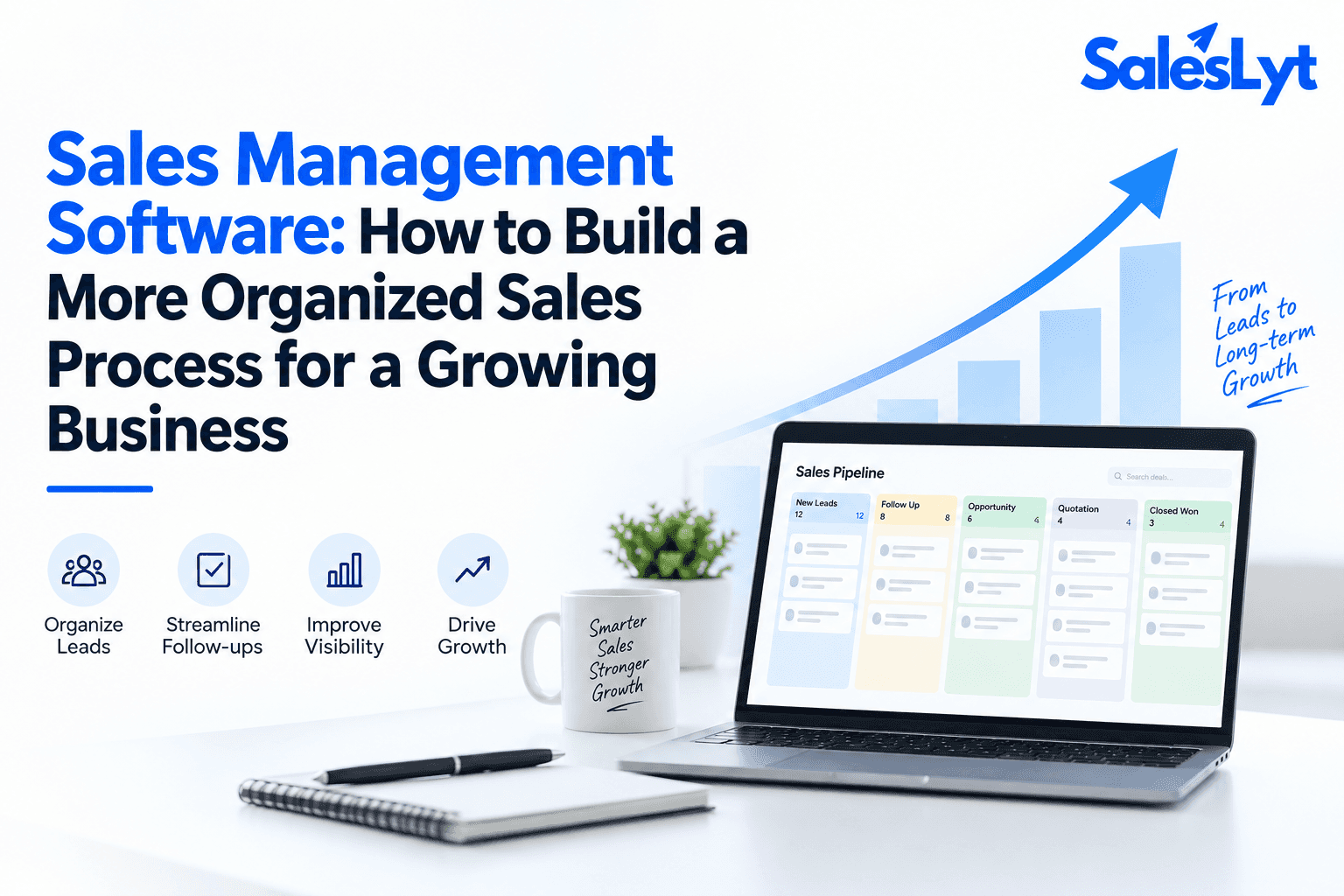
New Lead → Contacted → Requirement Identified → Quotation Sent → Follow-Up → Negotiation → Won or Lost
The exact stages may differ from business to business, but the important thing is visibility.
When every opportunity has a clear stage, owner, next action, and follow-up date, the sales process becomes easier to manage.
A Better B2B Sales Process Without Constant Checking
The B2B sales process is often longer than a simple retail purchase.
A customer may enquire today but make a decision several weeks later.
There may be multiple conversations.
Technical discussions may happen.
Prices may be revised.
Quotations may be compared.
Approvals may take time.
In such situations, the biggest challenge is not always generating interest. It is maintaining consistency throughout the sales cycle.
Without a CRM, information becomes fragmented.
One salesperson may have the latest information in WhatsApp.
Another update may be written in a notebook.
The quotation may be stored somewhere else.
The manager may only know what happened after calling the salesperson.
A CRM keeps these updates connected to the opportunity.
This allows the business owner to see progress without repeatedly asking the team.
How to Manage Customer Deals More Effectively
Understanding how to manage customer deals is especially important for MSMEs where every major opportunity can significantly affect monthly revenue.
A deal should never exist only inside a salesperson’s memory.
At minimum, the business should know:
who the customer is
what they are interested in
expected deal value
current sales stage
responsible salesperson
last interaction
next action
next follow-up date
quotation status
Once these details are visible, it becomes much easier to identify neglected opportunities.
For example, suppose a customer received a quotation ten days ago and no further activity has been recorded.
That deal immediately becomes visible as something requiring attention.
The owner does not need to call everyone and ask what happened.
The system itself provides the answer.
CRM for Manufacturing Companies India: Visibility Across Longer Sales Cycles
The need for structured sales tracking becomes even more important for businesses looking for a CRM for manufacturing companies India.
Manufacturing sales often involve several stages before an order is confirmed.
A prospect may request specifications.
A salesperson may arrange a meeting.
A quotation may need approval.
The buyer may compare multiple vendors.
Commercial negotiations may happen.
The final order may come weeks later.
When several such opportunities are being handled at once, tracking them manually becomes difficult.
A CRM allows manufacturing businesses to monitor enquiries, quotations, follow-ups, opportunities, and customer communication in a more structured way.
This gives management better visibility into the actual sales pipeline instead of relying only on monthly revenue figures.
CRM for Industrial Suppliers India: Follow-Ups Matter More Than Ever
Industrial suppliers face similar challenges.
Businesses searching for CRM for industrial suppliers India often deal with repeat enquiries, dealers, distributors, industrial buyers, project-based requirements, and quotation-driven sales.
A customer may request pricing today but place the order after several follow-ups.
Another customer may ask for a revised quotation.
A third prospect may delay the purchase for a month.
If the team handles these conversations manually, some opportunities will eventually get forgotten.
A CRM creates a common system where the team can record interactions, schedule follow-ups, manage opportunities, and keep important customer information accessible.
This is not about controlling every salesperson.
It is about preventing valuable opportunities from disappearing.
How AI Can Improve Sales Visibility
Another major change in CRM technology is the growing use of artificial intelligence.
Businesses exploring how to use AI in sales process should not think only about chatbots or automated messages.
AI can also help teams understand their pipeline better.
For example, an AI-powered CRM may help identify:
leads that need attention
deals with no recent activity
overdue follow-ups
opportunities that appear more active
sales patterns across the pipeline
tasks that should be prioritized
The purpose is not to replace human salespeople.
It is to help them focus on what needs attention.
For a business owner, this creates another layer of visibility without requiring constant monitoring.
What Business Owners Should See on a CRM Dashboard
A useful CRM dashboard should not overwhelm owners with dozens of complicated charts.
It should show information that helps them make decisions.
A practical dashboard may include:
Total active leads
Open opportunities
Follow-ups due today
Overdue follow-ups
Pipeline value
Deals by stage
Recent sales activity
Quotation status
Salesperson activity
Won and lost opportunities
With this information available in one place, an owner can understand the health of the sales operation within minutes.
SalesLyt: Built for Better Sales Visibility
SalesLyt is designed to help growing businesses bring their sales activities into one structured system.
Instead of managing leads across spreadsheets, notebooks, scattered messages, and individual memory, teams can use SalesLyt to organize their sales process.
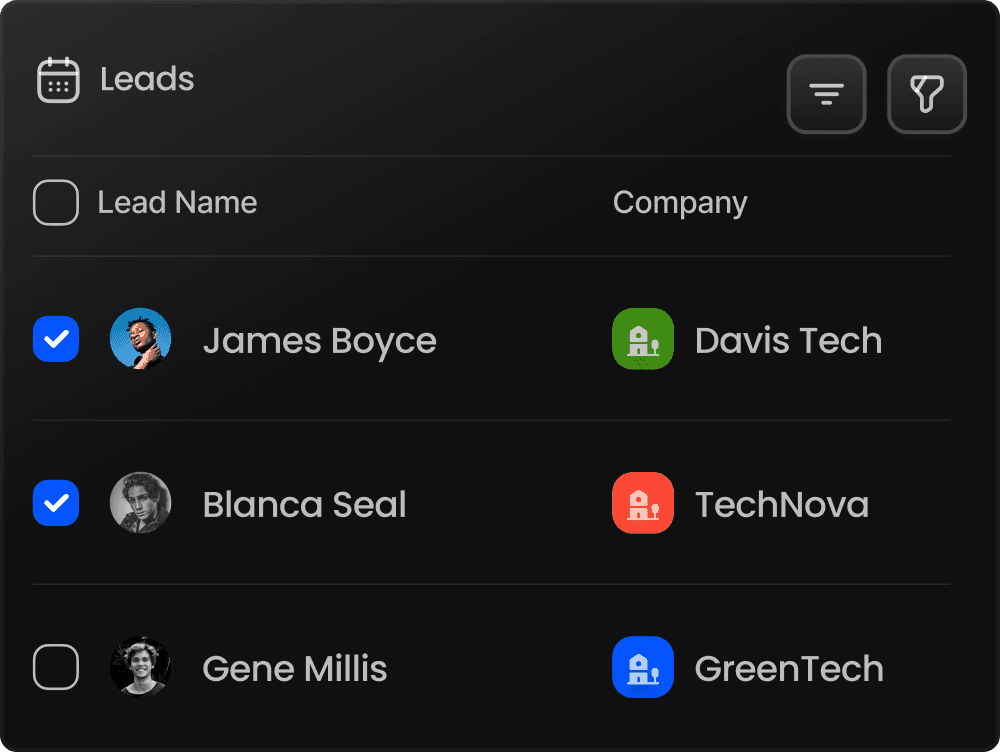
With SalesLyt, businesses can manage leads, follow-ups, opportunities, customer interactions, quotations, pipeline activity, and sales tasks from one platform.
The goal is simple:
give business owners visibility while giving sales teams a clear process to follow.
Owners should not have to call every salesperson to know what is happening.
Managers should not need multiple spreadsheets to understand the pipeline.
Salespeople should not depend on memory to remember every follow-up.
A structured CRM helps everyone work from the same information.
Visibility Creates Accountability Without Micromanagement
There is an important difference between visibility and micromanagement.
Micromanagement means constantly checking people.
Visibility means having access to reliable information.
When the sales system is transparent, conversations between managers and salespeople also become better.
Instead of asking:
“What did you do today?”
A manager can ask:
“I noticed these three opportunities have not moved this week. What is blocking them?”
That is a much more useful conversation.
The focus moves away from monitoring activity and toward solving sales problems.
Final Thoughts
Choosing the best CRM for MSME in India is not only about finding software with the longest feature list.
The real question is whether the CRM helps the business run a more organized sales operation.
Growing MSMEs need visibility into leads, follow-ups, customer deals, quotations, sales activity, and pipeline movement.
When that information is available in one place, owners can stay informed without constantly checking on the team.
Salespeople gain clarity about what they need to do next.
Managers can identify bottlenecks earlier.
And the business becomes less dependent on memory, spreadsheets, and individual working styles.
SalesLyt helps MSMEs build this kind of structured, visible sales process.
Instead of asking your team for updates all day, you can focus on the bigger question:
Where should the business go next?

Conclusion
For growing MSMEs, better sales management does not mean constantly checking every salesperson. It means having clear visibility into leads, follow-ups, quotations, opportunities, and pipeline movement.
The best CRM for MSME in India should help business owners understand what is happening across the sales process without depending on spreadsheets, scattered messages, or repeated status updates.
With SalesLyt, teams can keep customer information, follow-ups, deals, and sales activities organized in one place. This makes it easier to improve accountability, identify delayed opportunities, and build a more structured sales process.
Better visibility gives owners more control over the business while giving sales teams the freedom to focus on selling.
Visit SalesLyt: https://saleslyt.com/