Sales teams rarely struggle because they have absolutely no leads.
A more common problem is deciding which lead deserves attention first.
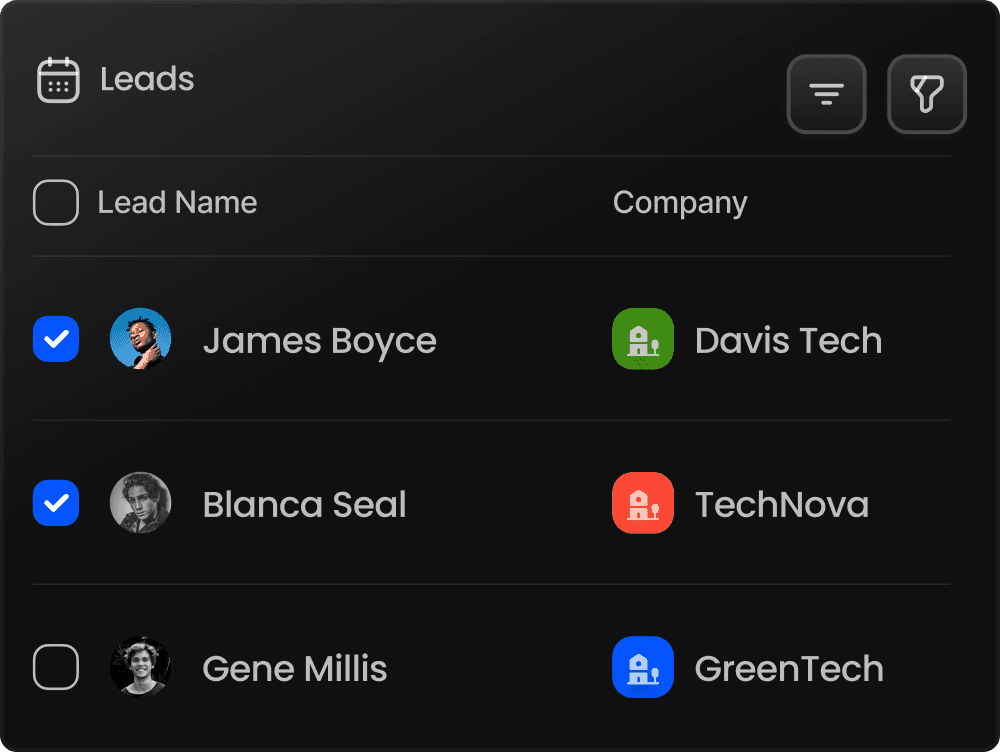
Imagine a salesperson starts the day with 30 enquiries. One prospect has visited the pricing page several times, another has already requested a quotation, a third has not replied for two weeks, and several others have only filled out a basic enquiry form.
Calling every lead in the same order is not always the best use of time.
This is where understanding how to use AI in sales process workflows becomes valuable.
AI can help sales teams analyse available lead information, identify patterns, score opportunities, and highlight prospects that appear more likely to move forward. Instead of replacing human judgement, it can give salespeople a clearer starting point for deciding where to focus.
For MSMEs and growing B2B businesses, this can lead to faster responses, better follow-ups, and a more organized sales pipeline.
What Is a High-Intent Lead?
A high-intent lead is a prospect showing stronger signs of genuine buying interest.
That does not necessarily mean the person is ready to purchase immediately.
It means their behaviour, requirements, or interactions suggest they may deserve more attention than an early-stage enquiry.
High-intent signals can include:
Requesting a quotation
Asking about pricing
Scheduling a product demonstration
Responding regularly to follow-ups
Sharing detailed requirements
Moving repeatedly through your sales conversations
Asking about implementation or delivery timelines
Re-engaging after an earlier discussion
Showing clear interest in a particular product or service
A salesperson may recognise these signals manually.
The challenge begins when a team is managing hundreds of leads at the same time.
AI can help organize those signals at scale.
Why Traditional Lead Prioritization Often Fails
Many sales teams still prioritize leads based on whichever one entered the system most recently.
Others depend almost entirely on salesperson intuition.
Experience is valuable, but this approach can become inconsistent.
One salesperson may immediately recognize a strong opportunity while another may overlook it.
Teams may also unintentionally spend too much time on leads that are unlikely to progress.
A structured B2B sales process should make it easier to answer questions such as:
Which leads should we contact today?
Which opportunities are becoming more active?
Which prospects have gone quiet?
Which deals require management attention?
Which customers are showing stronger buying signals?
AI-supported prioritization can help make these decisions more systematic.
How to Use AI in Sales Process for Lead Prioritization
1. Start With the Right Lead Data
AI cannot create useful insights from poor-quality information.
Before introducing AI scoring or recommendations, businesses should make sure basic lead information is being recorded consistently.
Useful data may include:
Lead source
Industry
Company size
Location
Product requirement
Previous conversations
Calls and meetings
Follow-up history
Pipeline stage
Quotation status
Recent activity
Deal value
The goal is not to collect every possible data point.
It is to capture information that actually helps your sales team understand the opportunity.
For businesses researching how to improve sales process efficiency, improving data quality is often one of the best places to begin.
2. Use AI to Score Leads
Lead scoring is one of the most practical ways to use AI in sales.
Instead of treating every prospect equally, AI can evaluate available information and assign a score or priority level.
For example, Lead A may have requested pricing, completed multiple calls, and asked for a quotation.
Lead B may have submitted one enquiry and never responded again.
Both may technically be open leads, but their level of intent is very different.
AI-supported scoring can help surface that difference.
SalesLyt currently includes AI Performance Scoring, which can score leads, customer calls, and sales visits using AI-powered insights. It also provides AI-powered insights and predictions to support sales decision-making.
This type of functionality can help salespeople focus on opportunities that require action rather than manually reviewing every lead one by one.
3. Combine Lead Intent With Recent Activity
A lead's past behaviour matters, but recent activity is often even more useful.
Imagine two prospects.
The first requested a quotation 45 days ago but has not responded since.
The second requested pricing yesterday and has already replied twice.
The first lead once showed strong intent.
The second may currently deserve more immediate attention.
AI can help evaluate activity patterns together rather than looking at one isolated action.
This makes prioritization more dynamic.
Your team can focus not only on who looked promising in the past, but also on who appears engaged right now.
4. Identify Leads That Need Immediate Follow-Up
A high-intent lead can quickly lose interest if nobody responds.
This is where lead prioritization and follow-up management should work together.
Suppose a prospect:
Requested a quotation
Had a sales call
Asked for one revision
Has not been contacted for three days
That opportunity may need immediate attention.
AI-supported systems can help surface leads with important pending actions so salespeople know what requires attention first.
SalesLyt highlights automated follow-ups and smoother sales pipeline management as part of its CRM workflow, allowing teams to manage leads and move opportunities through a more organized sales process.
For teams learning how to manage customer deals, this combination of prioritization and follow-up visibility is particularly useful.
5. Use AI to Find Stalled Opportunities
Not every important lead is actively moving.
Sometimes a potentially valuable opportunity becomes stuck.
Perhaps the customer requested a quotation but has not responded.
Maybe a meeting happened but no next action was scheduled.
Or a deal has remained in the same pipeline stage for several weeks.
A manual review may eventually uncover these problems.
AI can help highlight them sooner.
This can allow sales teams to distinguish between:
Active opportunities
High-priority follow-ups
Stalled deals
Low-engagement leads
Long-term prospects
That distinction becomes increasingly important as the sales pipeline grows.
6. Prioritize Based on Business Fit, Not Just Activity
High activity does not always mean high value.
A lead may respond frequently but still be a poor fit for your business.
Another prospect may communicate less often but represent a much stronger opportunity.
A better lead-prioritization model combines engagement with business relevance.
For example, your team may consider:
Customer fit: Does the company match your ideal target segment?
Requirement: Is there a genuine business need?
Opportunity value: How significant could the deal become?
Buying stage: Is the prospect researching, comparing, negotiating, or ready to buy?
Engagement: How actively are they communicating?
Recency: Has something meaningful happened recently?
AI can help analyze several of these signals together.
This can give salespeople a more useful priority than simply ranking prospects by the number of interactions.
7. Use AI Recommendations as Guidance, Not Absolute Answers
AI lead scoring should support salespeople—not make every decision for them.
Consider a long-standing customer who contacts your salesperson directly by phone.
The CRM may not immediately capture all of that context.
A salesperson who knows the account may recognize the opportunity faster than an automated model.
That is why AI recommendations should be treated as decision support.
A useful workflow might look like this:
AI identifies priority → Salesperson reviews context → Salesperson takes action → Outcome is recorded
This approach combines technology with human judgement.
AI brings consistency and speed.
The salesperson brings experience, relationship knowledge, and commercial understanding.
8. Use Prioritization to Build a Better Daily Sales Routine
Lead scoring becomes useful only when it changes what the team actually does.
Instead of opening the CRM and randomly selecting leads, a salesperson could begin each morning with a priority view.
For example:
Priority 1: High-intent leads requiring immediate action
Priority 2: Active opportunities with scheduled follow-ups
Priority 3: Stalled deals worth re-engaging
Priority 4: New enquiries requiring qualification
Priority 5: Lower-intent leads for long-term nurturing
This creates a more focused daily workflow.
It also helps managers understand why salespeople are spending time on particular opportunities.
For growing businesses, this can be an effective way to improve the sales process without simply asking employees to make more calls.
How AI Helps Sales Managers Prioritize the Pipeline
Lead prioritization is not only useful for individual salespeople.
Managers also need visibility across the entire team.
Without a central system, managers often have to ask:
“What happened with this customer?”
“Who followed up?”
“Why hasn't this deal moved?”
“Which opportunities are most important this week?”
AI-supported CRM systems can help managers identify sales activity, potential risks, and important opportunities from a shared dashboard.
SalesLyt currently provides customizable dashboards, manager review and performance tools, AI-powered insights, sales pipeline management, and productivity automation.
This gives managers a clearer view without requiring them to manually inspect every lead.
How to Introduce AI Lead Prioritization in Your Business
Businesses do not need to redesign the entire sales operation at once.
A simple implementation can start with five steps:
Define what a high-intent lead means for your business.
Standardize how salespeople record lead and activity information.
Organize leads into clear pipeline stages.
Use AI scoring or insights to identify stronger opportunities.
Review whether prioritized leads actually convert better.
After a few weeks, your team can refine the process.
You may discover that quotation requests are highly predictive.
Perhaps recent meetings matter more than lead source.
Or maybe certain industries convert more consistently than others.
The objective is to build a prioritization system around your real sales behaviour rather than generic assumptions.
Why This Matters for Indian MSMEs
For many growing businesses, the challenge is not simply generating more leads.
It is managing the leads already coming in.
Teams may still rely on spreadsheets, WhatsApp conversations, notebooks, emails, and individual salesperson memory.
As lead volume grows, this approach becomes harder to control.
Follow-ups get missed.
Managers lose visibility.
Strong opportunities can sit unnoticed.
This is where CRM software for MSME businesses in India can provide more structure.
A centralized CRM can help connect leads, customer conversations, follow-ups, opportunities, quotations, and sales activity.
When AI is added to that workflow, the information can become more useful because the system can help teams identify patterns and priorities instead of simply storing records.
How SalesLyt Supports AI-Powered Lead Prioritization
SalesLyt is designed as an AI-powered CRM and sales management platform for growing businesses.
Its current capabilities include:
AI-powered insights and predictions
AI Performance Scoring for leads, calls, and visits
Lead management
Automated follow-ups
Sales pipeline tracking
Task automation
Manager performance monitoring
Customizable dashboards
Quotation and invoice management
Payment tracking
These capabilities allow businesses to connect AI insights with everyday sales activity instead of operating AI as a separate tool.
A salesperson can work with lead information, activities, pipeline stages and follow-ups while managers maintain visibility across the broader sales process.
AI Should Help Your Team Focus, Not Add Complexity
The purpose of AI in sales is not to add another complicated system.
It should reduce uncertainty.
A useful AI-enabled sales workflow should help answer simple questions:
Who should I contact first?
Which lead is becoming more interested?
Which opportunity is stuck?
Which follow-up is overdue?
Where should the manager intervene?
When AI helps answer those questions clearly, it becomes practical rather than simply impressive technology.
Conclusion
Understanding how to use AI in sales process workflows starts with one fundamental goal: helping your team focus on the opportunities that matter most.
Not every lead has the same level of intent, urgency, or commercial value. Treating every prospect equally can waste time and allow stronger opportunities to slip through the pipeline.
AI can help sales teams evaluate lead activity, identify high-intent signals, score opportunities, highlight stalled deals, and prioritize important follow-ups.
When combined with a structured B2B sales process, these insights can help teams respond faster and make better use of their time.
Businesses exploring how to improve sales process performance should focus on using AI where it provides a clear next action—not simply adding technology for its own sake.
The same principle applies to how to manage customer deals. Good sales management depends on knowing what has happened, what should happen next, and which opportunities deserve attention now.
For companies evaluating CRM software for MSME businesses in India, SalesLyt brings AI-powered insights, performance scoring, pipeline management, automated follow-ups, dashboards and broader sales management capabilities into one platform.
The result is a simpler goal for your sales team:
Spend less time deciding who to chase—and more time speaking with the prospects most likely to move forward.

Conclusion
Understanding how to use AI in sales process workflows can help sales teams make better decisions about where to focus their time.
Instead of treating every lead equally, AI can help identify high-intent prospects, highlight important follow-ups, surface stalled opportunities, and support faster action across the B2B sales process.
For businesses trying to understand how to improve sales process performance, the key is not simply adding more automation. The real value comes from using AI to turn sales data into clear priorities and practical next steps.
The same applies to how to manage customer deals. When teams can see which opportunities are active, which need attention, and which are most likely to move forward, managing the pipeline becomes much easier.
For companies looking for CRM software for MSME businesses in India, SalesLyt brings AI-powered insights, lead scoring, pipeline management, follow-up tracking, and sales visibility into one platform.
The goal is simple: help your sales team spend less time deciding what to do next and more time engaging the leads that matter most.