A salesperson receives 20 new leads. Which one should they call first? A manager has dozens of active deals in the pipeline. Which opportunities need immediate attention? A prospect asked for a follow-up last week, but nobody contacted them.
These are everyday sales problems, especially for growing B2B businesses where teams are managing multiple leads, calls, meetings, quotations, and follow-ups at the same time.
Artificial intelligence can help bring more structure to this process.
Understanding how to use AI in sales process workflows does not mean replacing salespeople with technology. The practical goal is to use AI to analyse sales information, reduce repetitive work, identify priorities, and help people make better decisions.
For Indian MSMEs, startups, and growing B2B teams, this can be particularly valuable when the sales operation becomes too complex for spreadsheets, manual reminders, and individual follow-up lists.
Where Does AI Fit into the B2B Sales Process?
A typical B2B sales process may move through stages such as:
Lead generation
Lead qualification
Initial contact
Discovery call or meeting
Follow-up
Opportunity management
Proposal or quotation
Negotiation
Deal closure
Customer relationship management
AI can support several of these stages, but businesses should not introduce AI simply because it is available.
Start with a business problem.
Are salespeople spending too much time deciding which leads to contact? Are follow-ups being missed? Is management struggling to understand pipeline health? Are teams entering information but not using that data to make decisions?
Once the problem is clear, it becomes much easier to identify where AI can create practical value.
How to Use AI in Sales Process Workflows
1. Prioritise Leads More Effectively
Not every lead deserves the same level of attention.
One prospect may have a clear requirement and be actively speaking with your sales team. Another may have submitted an enquiry but shown little engagement afterward.
Without a structured system, salespeople often prioritise leads based on memory, intuition, or whichever enquiry arrived most recently.
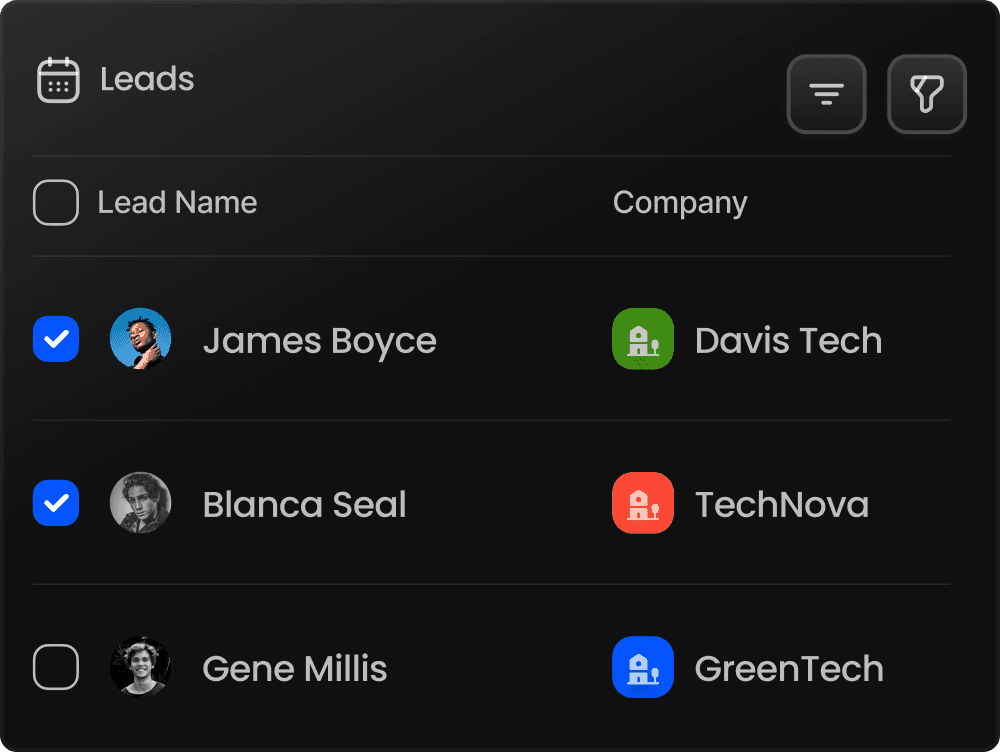
AI-supported lead scoring can analyse available lead information and sales activity to help teams identify opportunities that may deserve greater attention.
Instead of asking, “Who should I call next?” a salesperson can work from a clearer priority list.
AI should not make the final decision automatically in every situation. Salespeople still understand context, relationships, urgency, and customer behaviour. AI provides another layer of information to support that judgement.
2. Make Follow-Ups More Consistent
Many B2B deals require several conversations before the customer makes a decision.
The problem is that follow-ups can easily get lost between calls, meetings, emails, quotations, and new enquiries.
Automation can help teams schedule and manage repetitive follow-up activities so that the next action is clearer.
For example, after a sales interaction, a structured system can help ensure that the salesperson has a defined next task rather than relying on a notebook or memory.
This is one of the simplest answers to how to improve sales process efficiency: make sure every genuine opportunity has an owner, a current status, and a next action.
AI and automation can support that discipline without removing the human interaction required to build B2B relationships.
3. Use AI to Understand Sales Calls and Visits
Managers often evaluate sales performance through final numbers: revenue generated, deals won, calls completed, or meetings conducted.
Those metrics matter, but they do not always explain the quality of the activity.
AI-based analysis can add another layer by evaluating sales interactions and activity data to provide performance insights.
For example, SalesLyt currently describes AI Performance Scoring that can score sales visits, customer calls, and leads using AI-powered insights.
This type of analysis can help managers move beyond simply asking, “How many calls did the salesperson make?” toward questions such as, “Which activities are contributing to better sales progress?”
That can make coaching and performance reviews more focused.
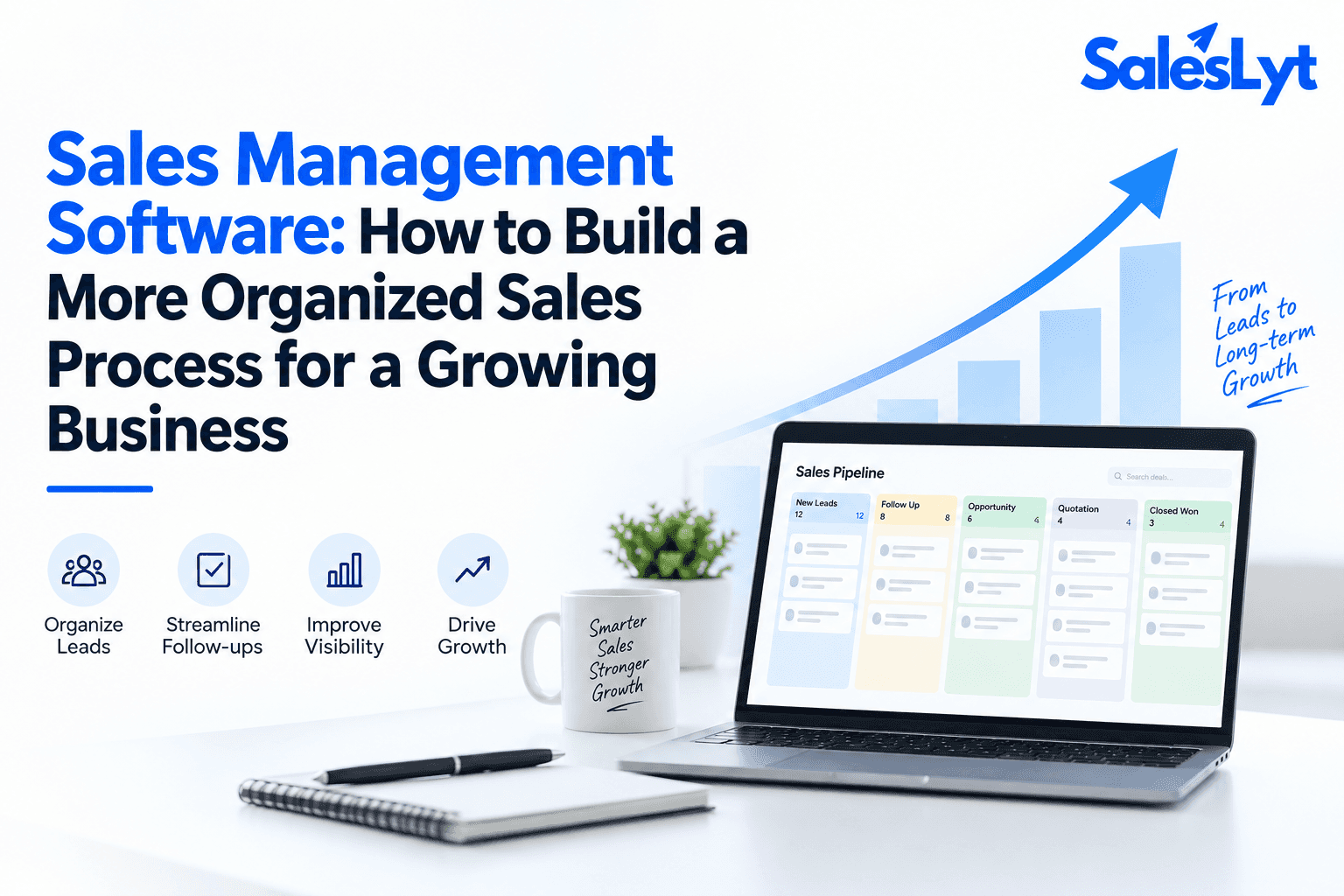
4. Identify Deals That Need Attention
A sales pipeline may look healthy because it contains many opportunities. But the number of deals alone tells you very little.
Consider two opportunities:
Deal A has moved through multiple stages, the customer has recently engaged, and the next meeting is scheduled.
Deal B has remained at the same stage for three weeks with no meaningful follow-up.
They should not receive the same attention.
AI-powered insights can help teams analyse pipeline information, identify patterns, and surface opportunities that may require action.
SalesLyt, for example, currently describes AI-powered insights and predictions for deal outcomes and smart recommendations alongside its sales pipeline capabilities.
The important principle is simple: AI should help your team decide where human attention is most valuable.
5. Improve Sales Forecasting and Decision-Making
Sales forecasting becomes difficult when it is based primarily on salesperson confidence.
A manager may hear:
“This deal should close this month.”
But what evidence supports that prediction?
A better forecasting process considers factors such as pipeline stage, recent activity, historical patterns, deal progression, and other available sales information.
AI can analyse structured sales data and help businesses develop a more evidence-based view of their pipeline.
This does not mean an AI forecast will always be correct. B2B sales involves human decisions, changing budgets, negotiations, competition, and unexpected delays.
Instead, AI can help management make forecasts using more than intuition alone.
6. Reduce Repetitive Administrative Work
Salespeople should spend their time selling, not repeatedly managing routine administrative tasks.
Automation can support activities such as:
Follow-up reminders
Task assignments
Sales activity organisation
Pipeline updates and monitoring
Performance tracking
Routine sales workflow management
Reducing repetitive work can also improve data consistency because salespeople have fewer reasons to manage important customer information outside the system.
This is particularly relevant when selecting CRM software for MSME businesses in India. A CRM should not simply become another place where employees have to enter data. It should help the team use that information more effectively.
7. Give Sales Managers Better Visibility
As a business grows, a sales manager cannot manually check every call, visit, lead, opportunity, and follow-up.
The team needs visibility without constant micromanagement.
AI combined with dashboards and analytics can help managers understand:
Which opportunities are progressing
Which deals appear stalled
Where follow-ups are required
How salespeople are performing
Where pipeline risks may exist
Which activities require management attention
This shifts management from constantly collecting updates to interpreting information and taking action.
How SalesLyt Can Support an AI-Enabled Sales Process
SalesLyt positions itself as an AI-powered CRM and sales management platform for small businesses, startups, agencies, and growing B2B sales teams.
Its current capabilities include AI-powered insights and predictions, AI Performance Scoring for leads, calls, and visits, sales pipeline management, automated follow-ups, analytics dashboards, task automation, manager performance visibility, and relationship management.
SalesLyt also connects CRM activities with quotation, invoice, and payment management.
For a growing business, the advantage of this approach is that AI does not have to operate separately from the everyday sales workflow. Insights can sit alongside the leads, activities, pipeline, follow-ups, and commercial processes that the sales team is already managing.
How to Introduce AI Without Disrupting Your Sales Team
Do not try to automate the entire sales operation on day one.
Start with one or two problems that create the most friction.
For example, you might begin with lead prioritisation and follow-up management. Once your team consistently records sales activity, you can use that information for deeper pipeline analysis, performance measurement, and forecasting.
A practical implementation sequence is:
Step 1: Map your current sales process.
Step 2: Identify repetitive tasks and decision bottlenecks.
Step 3: Centralise accurate lead and customer data.
Step 4: Introduce AI where it can provide a clear action or insight.
Step 5: Measure whether the change actually saves time or improves visibility.
Step 6: Expand AI usage gradually based on results.
Remember that poor data will limit the usefulness of AI. If lead statuses are outdated, activities are not recorded, and opportunities are not updated, even sophisticated technology will have incomplete information to work with.
FAQs
Can AI replace B2B salespeople?
AI is better suited to supporting salespeople than replacing the relationship-building aspect of B2B selling. It can analyse data, identify priorities, automate repetitive activities, and provide insights while salespeople handle conversations, negotiation, trust, and customer relationships.
How can a small business start using AI in sales?
Start with a specific problem such as missed follow-ups, poor lead prioritisation, or limited pipeline visibility. Introduce AI or automation for that use case first and expand only after the team has established a consistent workflow.
How does AI improve a B2B sales process?
AI can support lead prioritisation, sales activity analysis, pipeline monitoring, forecasting, performance insights, and repetitive task automation. The objective is to help teams spend more time on valuable sales activities and make decisions using better information.
Does an MSME need an AI-powered CRM?
Not every MSME needs complex AI functionality. However, when lead volumes, team size, customer interactions, and follow-ups become difficult to manage manually, an AI-enabled CRM can help create a more structured and visible sales operation.
Conclusion
Learning how to use AI in sales process workflows starts with identifying where your sales team is losing time, visibility, or opportunities.
AI can help prioritise leads, organise follow-ups, analyse sales activities, highlight pipeline risks, support forecasting, and give managers better visibility. But the greatest value comes when these capabilities support a clearly defined sales process rather than being introduced as isolated technology.
For Indian MSMEs, startups, and growing B2B teams, the goal should be simple: use AI to make salespeople better informed, more consistent, and more focused on customers.
SalesLyt brings AI-powered insights, performance scoring, pipeline management, automated follow-ups, analytics, task automation, and broader sales lifecycle management into one CRM environment.
If your team is moving beyond spreadsheets and disconnected sales tools, explore SalesLyt to see how a more structured, AI-supported sales process could work for your business.

Conclusion
Use AI to Build a Smarter Sales Process
Understanding how to use AI in sales process workflows is not about replacing salespeople. It is about helping them work with better information, reduce repetitive tasks, prioritize the right opportunities, and make more informed decisions.
For B2B teams, startups, and MSMEs, AI can support lead prioritization, follow-up management, sales forecasting, pipeline visibility, and performance analysis. The key is to start with real sales problems and introduce AI where it can create measurable value.
SalesLyt brings AI-powered insights, performance scoring, pipeline management, automated follow-ups, analytics, and sales management into one platform, helping growing businesses build a more structured sales process.
Ready to make your sales process smarter with AI? Explore SalesLyt and discover how AI-powered sales management can help your team stay organized, focus on the right opportunities, and drive more consistent growth.