For a small business, sales rarely become messy overnight. It usually happens gradually.
A few leads are stored in Excel. Customer conversations happen on WhatsApp. One salesperson keeps follow-up dates in a notebook, while another relies on calendar reminders. Quotations are saved somewhere else, and managers spend time asking the team for updates.
This approach may work when there are only a handful of prospects. As the business grows, however, it becomes increasingly difficult to answer simple questions: Which leads need attention today? Which opportunities are close to closing? When was a customer last contacted? Who is responsible for the next follow-up?
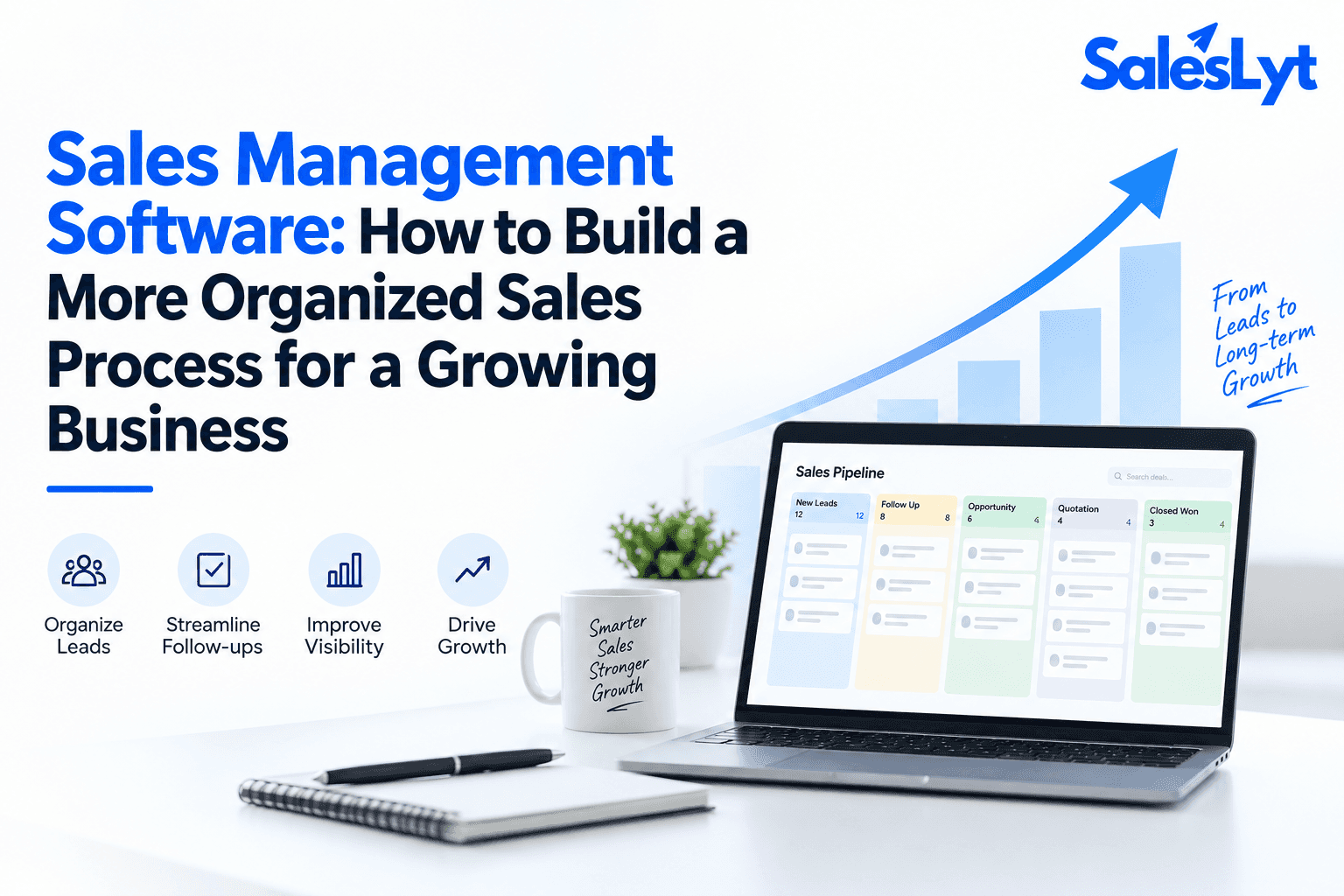
This is where sales management software for small business becomes useful. Instead of managing different parts of the sales process through disconnected tools, businesses can bring leads, follow-ups, opportunities, activities, and performance into one organized system.
Why Small Businesses Outgrow Spreadsheets
Spreadsheets are useful, inexpensive, and familiar. The problem is that they were never designed to manage an active sales process.
A spreadsheet may tell you a prospect's name and phone number, but it cannot easily show the complete history of conversations, automatically remind a salesperson about the next follow-up, or give a manager a live picture of the sales pipeline.
As the number of leads grows, small gaps begin to matter. A salesperson forgets to update a row. Two employees contact the same prospect. A promising enquiry remains untouched for several days.
Modern CRM software for businesses helps solve this by creating a shared source of sales information. Instead of depending on individual memory, the team works from a structured process.
1. Keep Every Lead Organized in One Place
A lead can arrive from almost anywhere: your website, social media, a referral, an advertisement, a phone call, an exhibition, or a direct enquiry.
The first challenge is making sure those leads do not become scattered.
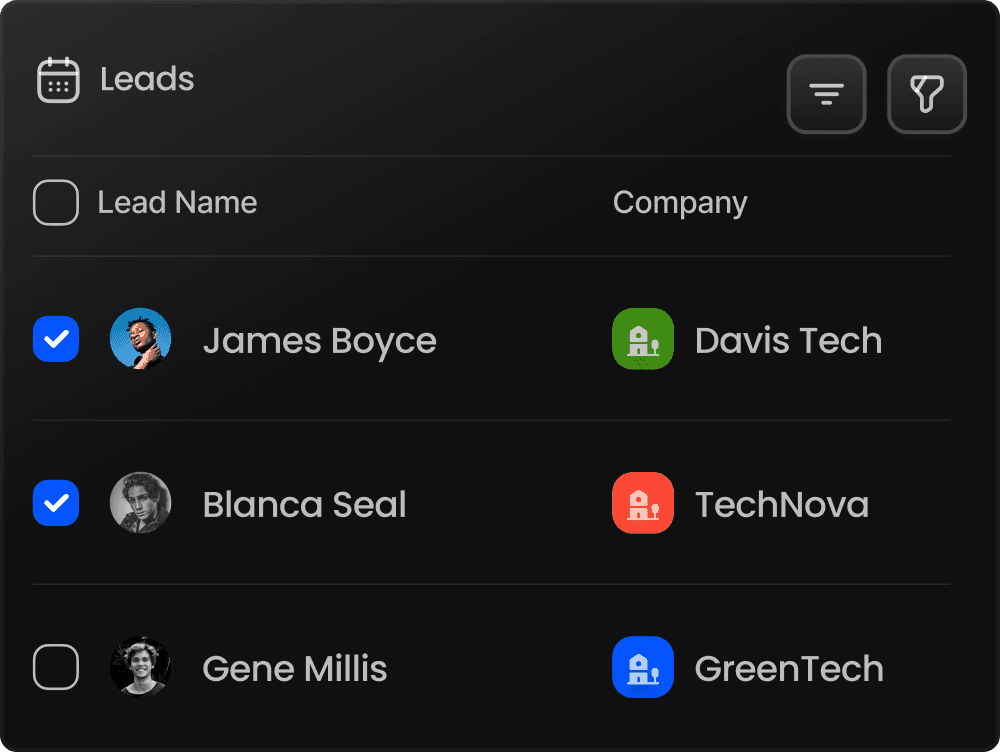
Good lead management software allows businesses to maintain prospect information in one system and track what happens after the initial enquiry.
This becomes particularly important when several salespeople are involved. With sales lead management software, a lead can be assigned to the appropriate team member, updated as conversations progress, and tracked through different stages.
For a growing company, lead management software for small business can provide something that spreadsheets struggle to deliver: accountability.
Instead of asking someone whether a prospect was contacted, a manager can check the lead's current status and activity history.
2. Make Follow-Ups Part of the Process
Many sales are not lost because customers reject the product. They are lost because the conversation simply stops.
Imagine that a prospect asks for a quotation on Monday and says, "Call me again next week."
The salesperson intends to remember. But several new enquiries arrive, meetings get scheduled, and urgent customer issues appear. By the following week, that follow-up is easy to miss.
An easy CRM for small business should make the next action visible.
SalesLyt, for example, describes its sales pipeline functionality as helping businesses track leads, automate follow-ups, and move deals through a more organized sales flow. Its automation features also cover repetitive activities such as reminders, follow-ups, email sends, and task assignments.
The benefit is straightforward: salespeople spend less time trying to remember what they need to do and more time actually doing it.
3. See Your Entire Pipeline
Having 100 leads does not mean having 100 genuine sales opportunities.
Some prospects may be new. Others may have requested a demonstration. Several might be waiting for a proposal, while a few could already be in negotiation.
This is why sales pipeline management matters.
A structured pipeline helps teams understand where each opportunity stands and what needs to happen before it can move forward.
A sales pipeline tool gives managers a broader view of potential business. Rather than calling each salesperson for an update, they can examine the pipeline and identify areas that need attention.
At the individual level, a sales pipeline tracker can help a salesperson decide where to focus first.
For example, five opportunities waiting for proposals may deserve more immediate attention than twenty newly added contacts.
That visibility can make everyday sales decisions much easier.
4. Use AI for Practical Sales Decisions
Artificial intelligence is becoming common in sales software, but small businesses should look beyond the AI label.
The useful question is: How does the AI help my team sell better?
Effective AI sales management software can help teams analyze information, identify priorities, understand performance, and make more informed decisions.
SalesLyt currently includes AI-powered insight and prediction designed to predict deal outcomes and provide recommendations. It also offers AI performance scoring for sales visits, customer calls, and leads.
That is where AI-powered sales software can become practical.
Instead of expecting employees to manually analyze every activity and opportunity, AI can help surface patterns or signals that deserve attention. The salesperson still owns the relationship and the final decision; technology simply provides additional context.
5. Give Managers Visibility Without Constantly Asking for Updates
Small-business sales managers often face an awkward choice.
Either they trust verbal updates from the team or spend a significant amount of time checking what everyone is doing.
Neither approach scales particularly well.
Good sales performance management software gives managers a clearer picture through activity data, KPIs, tasks, pipeline information, and performance reporting.
SalesLyt includes manager review and performance capabilities with KPI dashboards, task monitoring, review workflows, approvals, and productivity insights. It also provides customizable dashboards and real-time analytics features.
This allows a manager to have a more useful conversation.
Instead of asking, "What did you do today?" the discussion can become, "These opportunities have not moved recently—what is blocking them?"
That is a much better use of everyone's time.
6. Connect Sales With Quotations and Revenue
Sales management does not end when a prospect says yes.
For many small B2B businesses, the process continues through quotations, invoices, payments, and customer follow-ups.
When these activities happen in separate systems, information becomes fragmented again.
SalesLyt addresses this with integrated CRM, quotation, invoice, and payment tracking functionality, allowing businesses to manage more of the sales lifecycle within the same platform.
For a small team, this type of integration can be particularly valuable because employees often handle multiple responsibilities.
The objective is not to introduce more software into the business. It is to reduce the number of disconnected places employees have to check.
7. Choose Software Your Team Will Actually Use
A long feature list means very little if the sales team avoids the system.
When evaluating the best CRM for small business, consider everyday usability before advanced functionality.
Can a salesperson quickly add a lead? Can they see today's follow-ups? Is updating an opportunity straightforward? Can a manager understand the pipeline without building complicated reports?
Small businesses usually benefit from software that provides enough structure to improve the sales process without creating unnecessary administrative work.
The same principle applies when selecting the best CRM for startups. Early-stage businesses need to build good sales habits without introducing a system that becomes a burden.
A practical sales CRM for startups should therefore be able to support today's small team while remaining useful as the number of customers, employees, and opportunities increases.
8. Different Businesses Need Different Sales Workflows
There is no single sales process that works for every company.
A B2B agency might move from enquiry to discovery call, proposal, negotiation, and agreement. A distributor may handle enquiry, quotation, order, invoice, and payment. A field-sales organization may also need to track customer visits and salesperson activity.
For agencies, a sales CRM for agencies should make it easy to manage multiple prospects, companies, proposals, conversations, and follow-ups simultaneously.
SalesLyt also includes geo-tagging capabilities designed to help businesses track and optimize salespeople based on real-time location information, which may be relevant for teams that regularly work in the field.
The important point is to choose software that matches how your business actually sells.
What Should Small Businesses Look for Before Choosing?
Before committing to a sales management platform, evaluate how well it handles the activities your team performs every day.
Look at lead organization, follow-up reminders, sales pipeline management, activity tracking, reporting, automation, AI capabilities, quotations, performance visibility, security, and ease of adoption.
Also consider what happens as your team grows.
The system that feels adequate for three users should not become an obstacle when you have ten or twenty.
SalesLyt currently positions its platform for startups, agencies, sales teams, and growing businesses and combines CRM capabilities with AI insights, pipeline management, automation, performance monitoring, quotations, invoices, and dashboards.
Bringing the Entire Sales Process Together
Small businesses do not necessarily need more sales tools. They need better visibility into the sales work already happening.
The right sales management software for small business can bring leads, customer information, follow-ups, activities, opportunities, pipeline visibility, and performance into one structured workflow.
That makes everyday questions easier to answer.
Who needs a follow-up today? Which leads deserve attention? Where is a particular deal stuck? What is the team working on? Which opportunities are moving closer to revenue?
When those answers are readily available, the sales process becomes less dependent on spreadsheets, scattered messages, and memory.
For growing businesses, that is the real value of a modern CRM: not simply storing more customer data, but helping the team turn that information into consistent sales action.

Conclusion
Managing sales becomes more challenging as a small business grows, especially when leads, follow-ups, customer conversations, and opportunities are spread across different tools. The right sales management software for small business brings these activities together and gives the entire team a clear view of what needs attention.
With SalesLyt, businesses can organize leads, manage follow-ups, improve sales pipeline management, monitor sales performance, automate repetitive activities, and use AI-powered insights to make better sales decisions. Instead of relying on spreadsheets and memory, teams can build a more structured and consistent sales process.
Ready to simplify your sales process? Explore SalesLyt and manage your leads, follow-ups, pipeline, and sales activities from one place.