Changing a CRM can feel risky.
Your sales team may already have hundreds of leads, customer records, follow-up notes, opportunities, tasks, and activities stored in the existing system. Even if the current CRM is becoming difficult to manage, switching to another platform can create concerns around lost data, interrupted follow-ups, employee resistance, and delayed sales activity.
This is why businesses searching for a Zoho CRM alternative should not think only about choosing a new CRM. The migration process itself deserves equal attention.
A well-planned CRM migration should help your sales team move from one system to another without losing visibility, customer history, or momentum.
For growing Indian MSMEs, the goal should be simple: move to a system that makes sales management easier without creating unnecessary disruption.
Why Businesses Start Looking for a Zoho CRM Alternative
Zoho CRM is widely used by businesses of different sizes. However, every company eventually develops its own sales process, reporting expectations, team structure, and operational requirements.
As the sales team grows, some businesses may start looking for a Zoho CRM alternative because they want:
A simpler sales workflow
Better visibility into daily follow-ups
Easier lead and opportunity tracking
A CRM that matches their B2B sales process
Better control over sales team activity
Easier reporting for business owners
More practical AI-driven assistance
A system designed around their current stage of growth
The objective is not simply to replace one software product with another.
The real question is whether the new system can help the business improve how leads, opportunities, customers, follow-ups, and sales activities are managed.
1. Understand Why You Want to Migrate
Before moving any data, identify what is not working well in your current CRM.
Speak with salespeople, managers, and business owners.
Ask questions such as:
Are follow-ups being missed?
Is the sales team entering complete information?
Is reporting difficult?
Are employees still maintaining separate Excel sheets?
Is opportunity tracking clear?
Can managers easily identify stalled deals?
Does the CRM fit your actual sales process?
This exercise is important because changing software without fixing the underlying process may simply move the same problems into a new platform.
If your objective is to understand how to improve sales process performance, start by identifying where your current workflow is creating delays, confusion, or unnecessary manual work.
2. Document Your Current B2B Sales Process
Before migration, map the way your team actually works.
For example, a typical B2B sales process might look like:
Enquiry → Qualification → Meeting or Site Visit → Proposal → Negotiation → Follow-up → Order → Payment
Your process may be different.
A manufacturing company may depend heavily on quotations and site visits. A distributor may need frequent dealer follow-ups. A service company may move through consultations, proposals, and approvals.
The new CRM should support this real workflow rather than forcing employees into a process that does not match the business.
Document:
Lead stages
Opportunity stages
Follow-up methods
Sales ownership rules
Required customer information
Reporting requirements
Approval processes
Quotation-related activities
This makes configuration easier before employees start using the new system.
3. Clean Your CRM Data Before Migration
One of the biggest mistakes businesses make is transferring every old record without reviewing it.
Your current database may contain:
Duplicate leads
Old phone numbers
Invalid email addresses
Closed opportunities
Incomplete customer records
Former employees as record owners
Test entries
Leads that have not been contacted for years
Migrating unnecessary data creates unnecessary complexity.
Instead, clean your records first.
Separate active customers, active opportunities, recent leads, historical customers, and outdated records.
This makes the new CRM cleaner from day one and gives your sales team more confidence in the information they see.
4. Decide What Information Must Be Migrated
Not every field from the old CRM necessarily needs to appear in the new one.
Prioritize information that directly supports selling and customer management.
This may include:
Company name
Contact person
Phone number
Email
Lead source
Lead status
Opportunity value
Pipeline stage
Sales owner
Last interaction
Next follow-up date
Notes
Customer history
Quotation details
Important documents
For businesses evaluating CRM software for MSME businesses in India, simplicity matters.
A CRM filled with unnecessary fields can reduce adoption because salespeople start seeing data entry as administrative work instead of something that helps them sell.
5. Map Old CRM Fields to the New CRM
Once you know what data needs to move, create a simple mapping document.
For example:
Old field: Deal Owner
New field: Opportunity Owner
Old field: Next Activity Date
New field: Next Follow-up
Old field: Account
New field: Company
This step helps prevent data from appearing in the wrong place after migration.
It also gives you an opportunity to standardize naming conventions and simplify the sales structure.
For businesses comparing the best CRM for MSME in India, easy customization and clear data organization should be important considerations.
6. Test the Migration With a Small Data Set
Do not immediately transfer the entire CRM database.
Start with a smaller group of records.
For example, migrate:
20 companies
30 contacts
20 leads
10 active opportunities
A few follow-up records
Then check whether:
Contact details are correct
Opportunity stages are accurate
Notes are readable
Owners are assigned correctly
Follow-up dates are preserved
Custom fields are working
Duplicate records have been avoided
A small test migration can reveal problems before they affect the entire team.
7. Avoid Switching Everything Overnight
A CRM change does not always have to happen in one dramatic step.
A phased rollout can reduce disruption.
You might begin with one sales team, one territory, or a selected group of employees.
Let them use the new CRM for a short period and collect feedback.
They may identify simple issues such as:
A missing field
An unclear pipeline stage
An unnecessary form
A report that managers need
A follow-up workflow that should be simplified
Fixing these issues before full rollout can make adoption much easier.
8. Train Employees Around Their Daily Work
Long CRM training sessions are rarely the best way to build adoption.
Instead, train the team around real sales activities.
Show employees how to:
Add a new lead
Schedule a follow-up
Update an opportunity
Record meeting notes
Move a deal to the next stage
Check today's pending activities
Review their pipeline
The team should quickly understand how the CRM helps them rather than seeing it as another reporting tool created for management.
When employees know exactly how to manage customer deals inside the system, adoption becomes much easier.
9. Keep Important Follow-Ups Visible During Migration
The biggest CRM migration risk is not technical.
It is missing customer follow-ups while the team is adjusting to the new system.
Before the final transition, create a list of:
Follow-ups due today
Follow-ups due this week
Active proposals
High-value opportunities
Customers waiting for quotations
Deals in negotiation
Important pending payments
These records should receive special attention during migration.
A CRM change should never cause an active customer opportunity to disappear from view.
10. Use AI to Support the Sales Team, Not Complicate It
Modern CRM platforms are increasingly introducing AI capabilities.
But AI should solve practical sales problems.
Businesses researching how to use AI in sales process management should look for capabilities that can help teams prioritize work, understand customer activity, identify important opportunities, and decide what should happen next.
The objective should be better decision-making, not simply having an AI feature because it sounds advanced.
For growing businesses, useful AI should support salespeople while keeping the workflow straightforward.
Where SalesLyt Fits Into CRM Migration
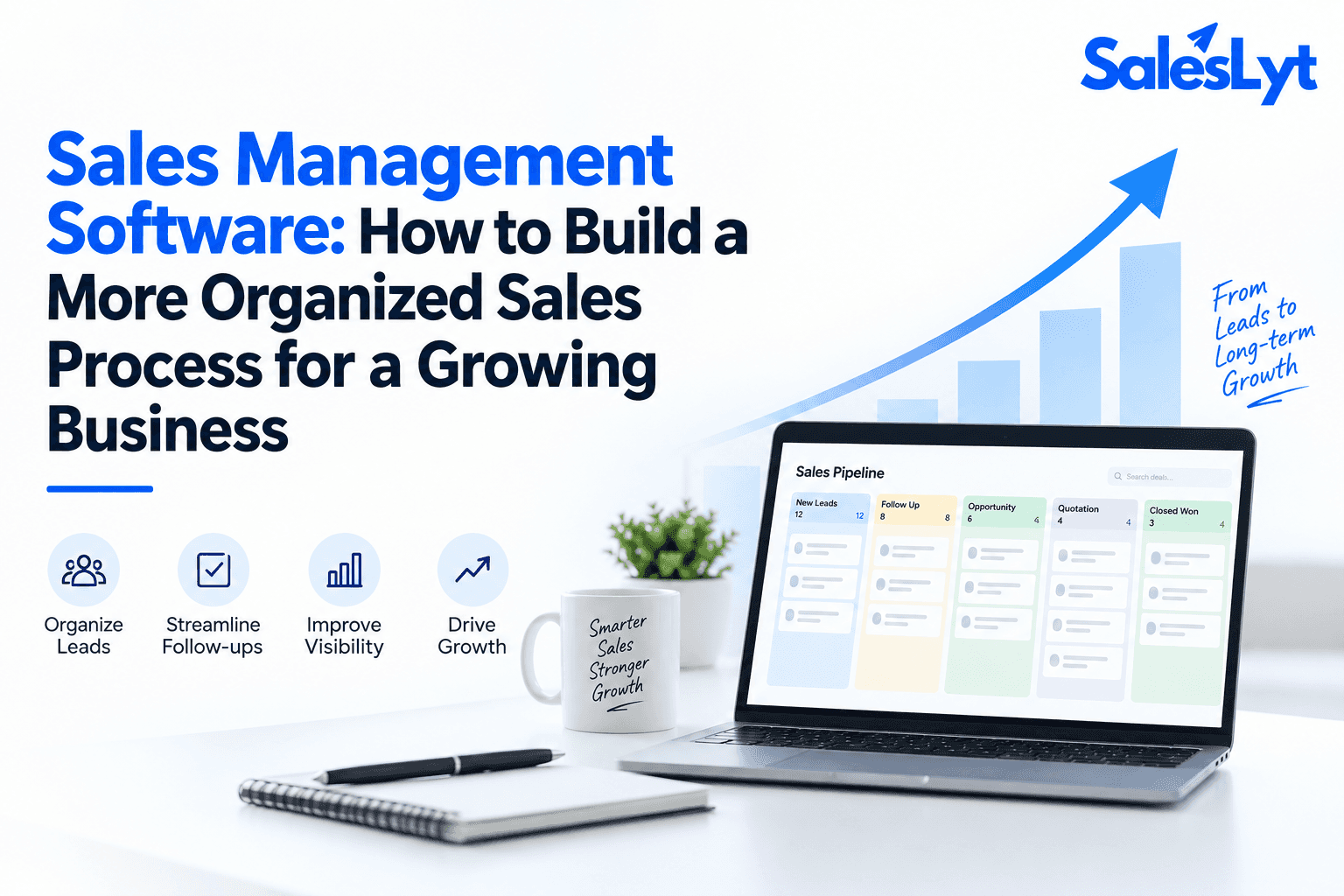
SalesLyt is built for growing B2B sales teams that want better visibility across leads, follow-ups, opportunities, sales activities, and customer relationships.
Instead of allowing important information to remain scattered across Excel sheets, WhatsApp conversations, notebooks, and individual employee systems, SalesLyt brings sales activity into one structured platform.
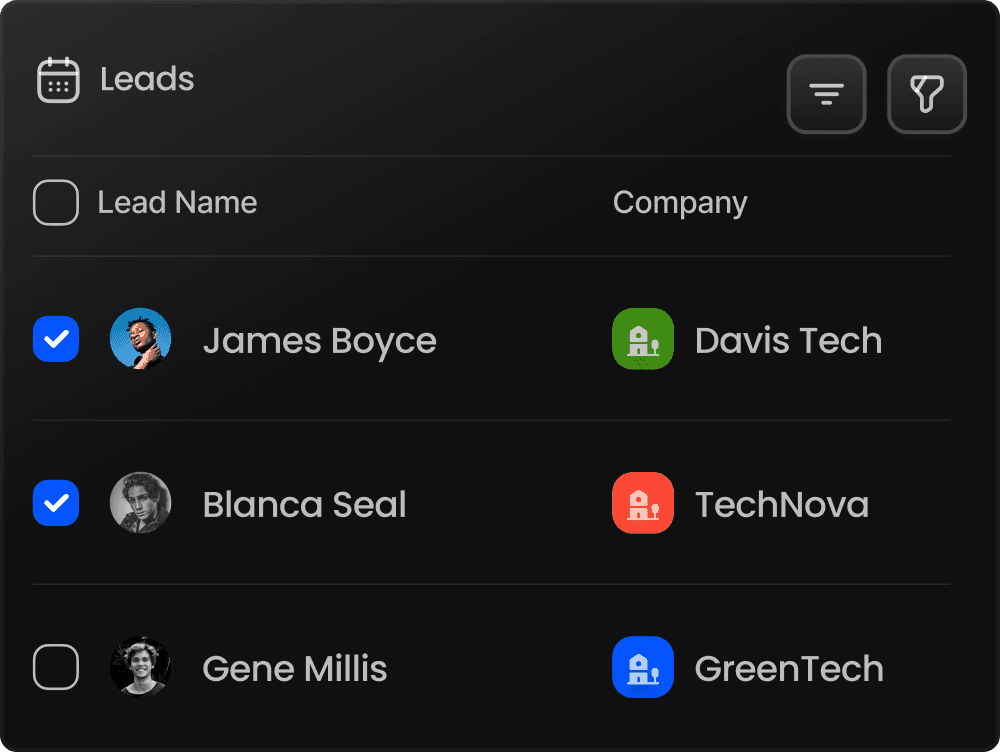
Businesses can use SalesLyt to manage:
Leads
Companies and contacts
Opportunities
Follow-ups
Sales pipeline
Activities
Customer interactions
Quotations
Sales visibility
Team performance
For an MSME moving away from an existing CRM, the focus should not simply be importing records.
The bigger opportunity is to create a cleaner and more structured sales process.
SalesLyt can help businesses organize customer information, assign responsibility, track next actions, and give managers better visibility without relying on constant manual updates from the sales team.
Zoho CRM Alternative vs Salesforce Alternative: Focus on Business Fit
Businesses researching a Zoho CRM alternative may also come across searches for a Salesforce alternative.
Both searches often come from the same underlying need: finding a CRM that better matches the company's team size, budget, process, and level of complexity.
Instead of selecting software purely because it is popular, evaluate whether it fits your actual workflow.
Ask:
Will my salespeople use it consistently?
Can managers see what is happening without repeatedly asking the team?
Can we track leads and opportunities easily?
Are follow-ups visible?
Can we adapt it to our sales process?
Will it remain manageable as our team grows?
These questions are often more useful than simply comparing long feature lists.
Final Thoughts
Moving to a new CRM should not feel like restarting your sales operation.
With proper planning, you can protect your existing customer data, preserve important follow-ups, and introduce the new system gradually.
Start by understanding your current problems. Clean your data. Map your sales process. Test the migration with a smaller data set. Train employees using real examples. Most importantly, make sure active opportunities remain visible throughout the transition.
If you are considering a Zoho CRM alternative, look beyond software features and think about how the CRM will fit into the daily work of your sales team.
For Indian MSMEs and growing B2B businesses, a CRM should make selling more organized, not more complicated.
SalesLyt is designed to help teams bring leads, customer information, follow-ups, opportunities, and sales activities into one structured system—giving business owners and sales teams clearer visibility into what is happening and what needs to happen next.
Visit https://saleslyt.com/ to explore SalesLyt and see how a more structured sales system can support your growing business.

Conclusion
Switching to a new CRM does not have to interrupt your sales team or slow down your business. With the right migration plan, businesses can protect customer data, maintain follow-up continuity, and help teams move into a more structured workflow with confidence. For growing businesses looking for a practical Zoho CRM alternative, the focus should be on simplicity, visibility, and better sales control. SalesLyt helps Indian MSMEs manage leads, follow-ups, opportunities, and customer relationships in one organized platform, making CRM migration more meaningful and growth-focused.