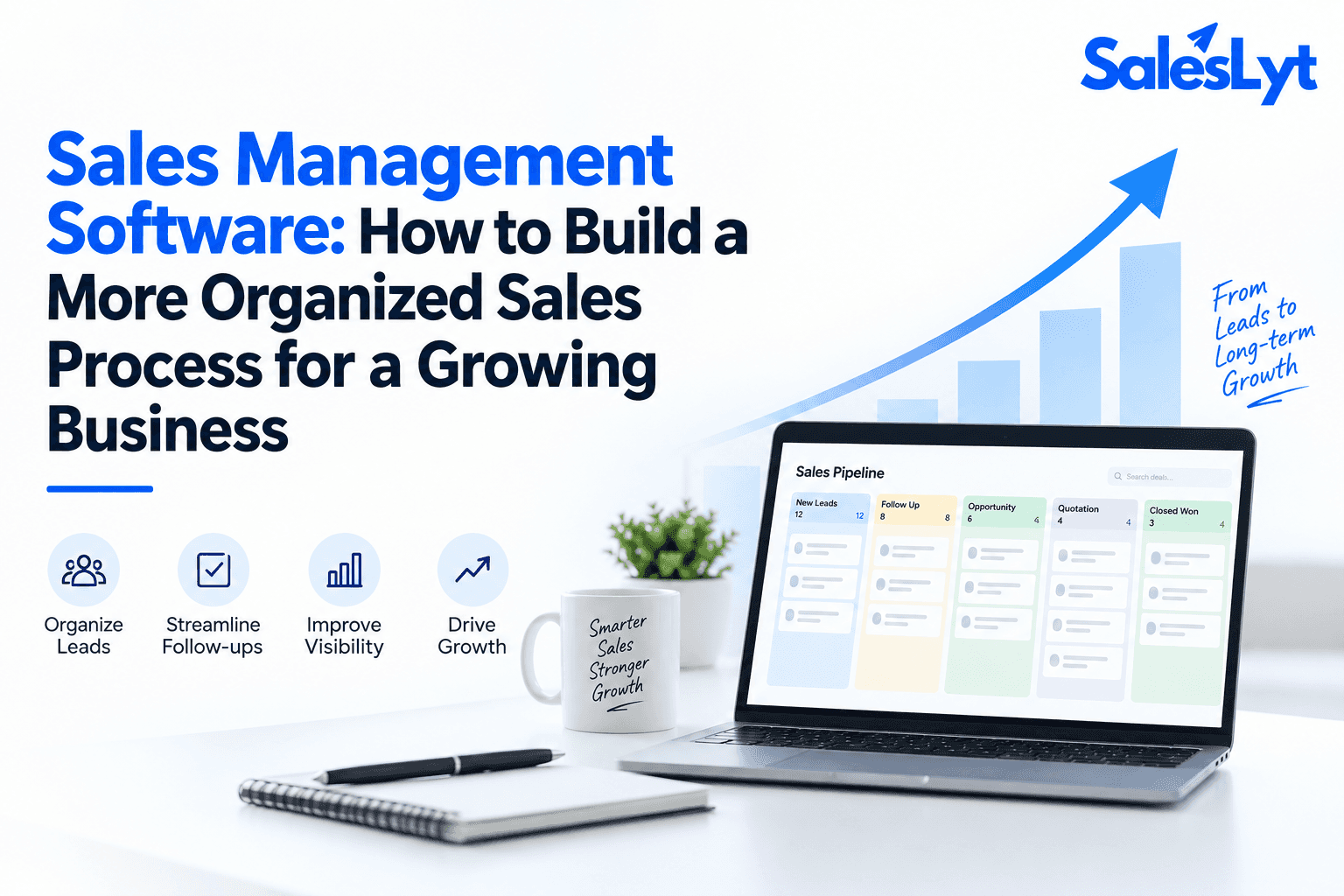
Growing a business usually starts with simple systems.
A spreadsheet for leads. WhatsApp for follow-ups. Email for quotations. Notes for customer discussions. Maybe a separate tool for tasks.
For a while, this works.
But as the number of leads, salespeople, customers, quotations, and follow-ups increases, things become harder to manage. Sales managers start asking questions like:
Which leads need attention today?
Which deals have been inactive for too long?
Did someone follow up with that customer?
Which salesperson is managing the opportunity?
What is actually happening in the sales pipeline?
This is usually the stage when businesses begin searching for CRM software.
Salesforce is one of the most recognised CRM platforms in the world. However, many growing businesses do not necessarily need a large, highly configurable enterprise system from the beginning.
They may instead need a Salesforce alternative that is easier to understand, focused on everyday sales activities, and suitable for a growing team.
That is where platforms like SalesLyt can become relevant.
Why Growing Businesses Look for a Salesforce Alternative
Salesforce is designed to support organisations with a wide range of sales, service, automation, reporting, and integration requirements.
For large organisations, that flexibility can be valuable.
But smaller and growing businesses often have a different challenge.
Their first priority is usually not building a complicated CRM environment. They want their sales team to consistently manage leads, customer discussions, follow-ups, opportunities, quotations, and daily activities.
A growing business may therefore search for a Salesforce alternative when it wants:
A simpler CRM experience
Faster adoption by sales teams
Better visibility of follow-ups
A structured sales pipeline
Easier lead and deal management
Practical sales automation
Clear dashboards for managers
A CRM designed around everyday sales execution
The right CRM should help the team sell more systematically rather than creating another system employees avoid updating.
What Should You Look for in a Salesforce Alternative?
Choosing a CRM should not begin with a long list of features.
It should begin with your sales process.
Think about how a lead moves through your company.
A potential customer makes an enquiry. A salesperson contacts the customer. Requirements are discussed. A quotation may be shared. Follow-ups happen. Negotiations continue. Eventually the opportunity is either won, lost, or delayed.
Your CRM should make this journey easier to manage.
Here are some of the most important areas to evaluate.
1. Simple Lead Management
Every sales opportunity begins somewhere.
It may come from your website, an advertisement, a referral, an exhibition, a phone call, social media, or an existing customer.
Without a proper system, leads can easily get scattered across spreadsheets, inboxes, notebooks, and messaging applications.
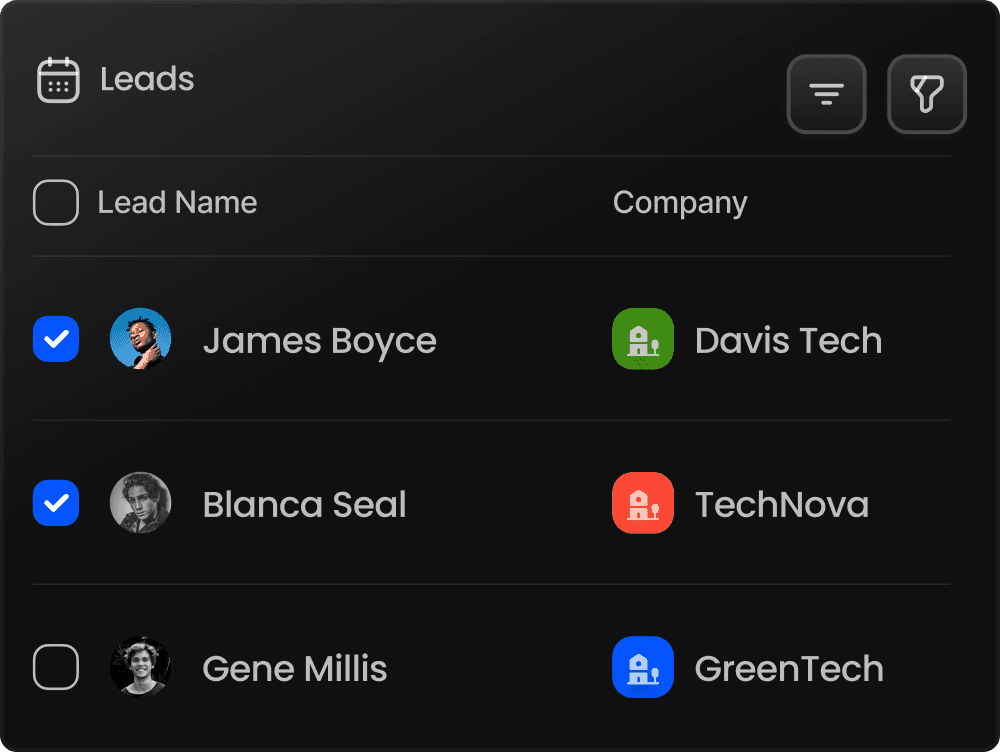
A good Salesforce alternative should give your sales team one place to record and manage leads.
With SalesLyt, businesses can organise sales information so that teams have better visibility into what needs attention.
Instead of depending entirely on individual memory, the organisation starts building a repeatable sales system.
2. Better Follow-Up Management
One of the biggest problems in B2B sales is not always a lack of leads.
It is missed follow-ups.
A salesperson speaks with a prospect and plans to call again next week. Another customer asks for a revised quotation. Someone else says, “Contact me next month.”
When the team handles many conversations at the same time, important follow-ups can easily be forgotten.
Businesses asking how to improve sales process should first examine how reliably their team manages follow-ups.
A CRM should help salespeople see upcoming activities and understand which opportunities require action.
SalesLyt is designed to help businesses create a more organised approach to follow-ups, activities, leads, and opportunities.
3. A Clear B2B Sales Process
B2B sales rarely happen after one conversation.
A typical B2B sales process may include:
Lead → Qualification → Requirement Discussion → Proposal → Follow-Up → Negotiation → Closing
Depending on the industry, this process can take days, weeks, or even months.
Without proper visibility, management may know the total number of enquiries but still have very little understanding of where those enquiries currently stand.
A structured CRM can help teams identify whether an opportunity is new, under discussion, awaiting quotation, under negotiation, or close to conversion.
This gives managers a clearer picture of the sales pipeline.
4. Easier Deal Management
Many businesses struggle with how to manage customer deals when several employees are handling multiple prospects simultaneously.
Imagine a sales executive managing 40 active opportunities.
Some customers require quotations.
Some are waiting for technical information.
Some need a follow-up call.
Others may have stopped responding temporarily.
Managing all of this manually creates unnecessary risk.
A CRM should help the salesperson understand:
What happened previously
What stage the deal is in
What needs to happen next
When the customer should be contacted again
Which opportunities deserve immediate attention
This is especially important for growing companies where sales activity is increasing every month.
5. Visibility for Sales Managers
Business owners and sales managers should not have to call every salesperson just to understand the pipeline.
A good CRM gives management a central view of sales activity.
Managers should be able to see leads, opportunities, follow-ups, sales activity, and pipeline progress without depending on separate reports from every employee.
This becomes increasingly important as the team grows.
The CRM gradually becomes the organisation's shared sales system rather than an individual salesperson's personal record.
6. CRM for Indian MSMEs
For many growing companies, the search is not simply for the biggest CRM available.
They may be searching specifically for the best CRM for MSME in India.
Indian MSMEs often operate with lean teams. Salespeople may handle prospecting, customer meetings, quotations, follow-ups, dealer relationships, and collections simultaneously.
Because of this, the CRM needs to be practical.
A complicated system with features the team rarely uses may not solve the actual problem.
Businesses evaluating CRM software for MSME businesses in India should therefore consider ease of use, implementation effort, everyday sales requirements, reporting needs, scalability, and how comfortable employees are using the software regularly.
7. Support for Manufacturing and B2B Businesses
CRM requirements can also vary by industry.
Manufacturing companies, industrial suppliers, distributors, traders, service companies, and other B2B businesses often have longer sales cycles.
A customer may request product information, specifications, pricing, quotations, revisions, approvals, and repeated follow-ups before placing an order.
This makes sales visibility especially important.
Instead of simply storing contact information, the CRM needs to help the team understand the complete opportunity journey.
SalesLyt is built with growing B2B sales teams in mind, including businesses where relationship management and follow-up discipline play an important role.
Salesforce Alternative vs Zoho CRM Alternative: Focus on Your Needs
Companies researching Salesforce often also search for a Zoho CRM alternative.
But the objective should not be to choose software based only on brand comparisons.
Different CRM platforms are designed for different types of businesses and operational requirements.
The better approach is to ask:
Does the CRM match the way our sales team actually works?
Before choosing any platform, evaluate your own requirements.
How many people will use the CRM?
How many leads do you receive?
How long is your average sales cycle?
Do quotations play an important role?
Do managers need visibility into field sales activity?
Are follow-ups currently being missed?
Which reports are genuinely useful to management?
Once these questions are clear, comparing CRM platforms becomes much easier.
How SalesLyt Helps Growing Sales Teams
SalesLyt is designed to help growing businesses bring their sales activities into a more structured system.
Instead of managing different parts of the customer journey in separate places, teams can organise leads, activities, follow-ups, opportunities, customer information, quotations, and sales processes more systematically.
The goal is straightforward:
Give the sales team clarity about what needs to happen next.
For management, this means better visibility.
For sales executives, it means fewer scattered records.
For the business, it means creating a sales process that does not depend entirely on memory.
As the company grows, this structure becomes increasingly valuable.
A CRM Should Improve the Process, Not Complicate It
Technology alone cannot fix a weak sales process.
However, the right CRM can make a good process easier to follow.
If your team currently depends heavily on spreadsheets, personal reminders, WhatsApp messages, and individual memory, introducing a structured CRM can help create greater consistency.
Start with a few simple questions:
Where are your leads stored?
How are follow-ups scheduled?
How do managers review the pipeline?
How are customer conversations recorded?
What happens when a salesperson is unavailable?
How quickly can you understand the status of every important opportunity?
If answering these questions requires checking several different places, your sales system may need improvement.
Is SalesLyt the Right Salesforce Alternative for Your Business?
There is no single CRM that fits every organisation.
Large enterprises and growing MSMEs may have very different requirements.
The important thing is to choose a system that supports your sales process today while also giving your team room to grow.
If your priority is structured lead management, better follow-ups, clearer deal visibility, organised customer information, and a more manageable B2B sales process, SalesLyt is worth exploring as a Salesforce alternative.
Growing businesses do not always need more complexity.
Sometimes they simply need a better system.
SalesLyt helps growing B2B teams bring leads, follow-ups, opportunities, quotations, and sales activity together so the entire team can work with greater clarity.
Visit SalesLyt at saleslyt.com and explore how a more organised sales process can help your team manage opportunities more effectively.

Conclusion
Choosing a CRM should be based on how well it supports your real sales process, not just on how many features it offers.
For growing B2B businesses, the important priorities are usually simple: manage leads properly, never miss follow-ups, keep customer deals organised, understand the sales pipeline, and give managers better visibility into sales activity.
SalesLyt is designed to help growing teams bring these activities into one structured system. It helps businesses manage leads, opportunities, follow-ups, quotations, customer information, and sales activities without making the process unnecessarily complicated.
If you are searching for a Salesforce alternative that focuses on practical sales management for growing businesses and MSMEs, SalesLyt is worth exploring.
Visit https://saleslyt.com/ to learn more about SalesLyt and build a more organised B2B sales process.