Every sales team has a pipeline, even if they don't call it one.
A new enquiry arrives. Someone makes the first call. The prospect shows interest. A proposal is sent. Negotiations begin. Eventually, the opportunity is either won, lost, or left waiting for another follow-up.
When you're dealing with ten prospects, keeping track of this process may be easy. When you're dealing with hundreds of leads across several salespeople, things change quickly.
That's where a sales pipeline tool or sales pipeline tracker becomes useful.
The terms are often used interchangeably, but there can be an important difference between simply tracking where deals stand and actively managing how they move forward. Understanding that difference can help you choose the right system for your business.
What Is a Sales Pipeline Tracker?
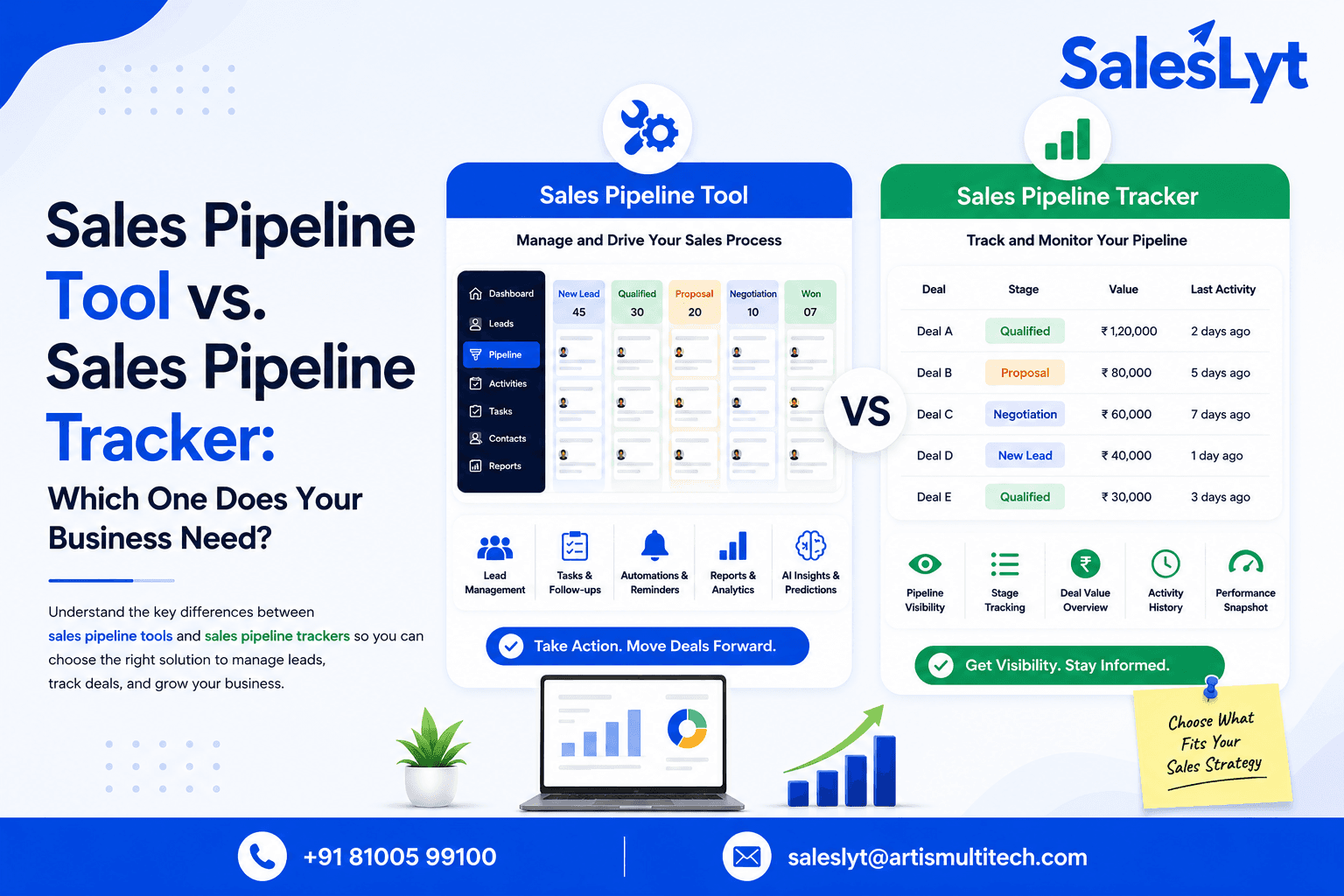
A sales pipeline tracker gives you visibility into the current status of your sales opportunities.
Think of it as a map of your active deals.
A typical pipeline might look like:
New Lead → Contacted → Qualified → Proposal → Negotiation → Won
Instead of opening spreadsheets, checking messages, or asking individual salespeople for updates, managers can see where opportunities are sitting in the sales process.
This makes the tracker especially useful for answering questions such as:
How many deals are currently open?
Which stage contains the most opportunities?
Which salesperson owns a particular deal?
What is the potential value of the pipeline?
Which deals have been sitting at the same stage for too long?
For a small team moving away from spreadsheets, this visibility alone can be a major improvement.
What Is a Sales Pipeline Tool?
A sales pipeline tool usually goes further than simply showing the status of deals.
It helps the team manage the activities required to move those opportunities forward.
For example, a salesperson may be able to update an opportunity, schedule the next follow-up, review previous conversations, assign a task, record a customer visit, or see which deals need attention.
In other words, a tracker tells you where the deal is.
A pipeline tool helps you understand what needs to happen next.
This becomes increasingly valuable as your sales pipeline management process grows more complex.
Sales Pipeline Tool vs. Sales Pipeline Tracker
The easiest way to understand the difference is through an example.
Suppose your company has 60 active opportunities.
A pipeline tracker might show:
12 New Leads
15 Contacted
14 Qualified
10 Proposals Sent
6 Negotiations
3 Deals Won
Useful? Absolutely.
But imagine that four of those proposals haven't received a follow-up for seven days.
Knowing that they are in the "Proposal" stage doesn't necessarily help the salesperson take action.
A more complete pipeline tool could connect the opportunity with activities, follow-ups, reminders, customer information and sales history. Now the team doesn't just see the pipeline. It can work from it.
That's the practical difference.
Where Does Lead Management Fit In?
A sales pipeline starts with leads, so your pipeline shouldn't operate separately from your lead management software.
When someone submits an enquiry or your sales team identifies a prospect, the information should move naturally from lead capture to qualification and then into the sales pipeline.
Effective sales lead management software keeps that journey connected.
This becomes particularly important when several people handle different stages of the sales process. One person might qualify the lead, another may conduct a meeting, and a manager may become involved during negotiation.
Good lead management software for small business gives everyone enough context to understand what has already happened without rebuilding the customer story from scratch.
Why Growing Businesses Need More Than a Spreadsheet
Spreadsheets are useful. For an early-stage company with a handful of customers, they may even be enough.
The problems begin when the sales process becomes collaborative.
Someone forgets to update a row. Another salesperson creates a separate spreadsheet. Follow-up dates are stored in personal calendars. Customer discussions remain inside WhatsApp or email. Managers start requesting updates before every sales review.
At this stage, adopting CRM software for businesses can create a much clearer system.
Rather than storing isolated information, a CRM connects customers, leads, opportunities and sales activities.
The result isn't simply better organization. It's better visibility.
What Should Small Businesses Look For?
For a smaller company, complexity can be just as damaging as a lack of features.
The best CRM for small business should be capable enough to support growth without making employees spend unnecessary time managing the software.
An easy CRM for small business should make everyday actions straightforward: adding a lead, updating an opportunity, checking follow-ups and reviewing the pipeline.
The same principle applies to sales management software for small business. Managers need useful information without turning salespeople into full-time data-entry operators.
When comparing options, ask whether the software fits the way your team actually sells.
What About Startups and Agencies?
Different businesses use pipelines differently.
The best CRM for startups, for example, should be flexible enough to accommodate a sales process that may change as the company discovers what works.
A good sales CRM for startups should also be able to grow with the team. What begins as simple lead tracking may eventually require performance reporting, automation, multiple users and more structured workflows.
Agencies face another challenge.
A sales CRM for agencies may need to manage many prospects, decision-makers, proposals and follow-ups simultaneously. Visibility becomes particularly important because a missed conversation can mean losing a valuable client opportunity.
The right pipeline system should therefore reflect your business model rather than forcing every company into exactly the same process.
How AI Is Changing Pipeline Management
Traditional pipeline systems depend heavily on people reviewing information and deciding what deserves attention.
AI can add another layer.
Modern AI sales management software can analyse sales information and help teams identify patterns, prioritize opportunities, assess performance or recommend actions.
Similarly, AI-powered sales software can help turn CRM data into useful insights rather than leaving managers to interpret every number manually.
This doesn't mean AI replaces the salesperson.
A salesperson still needs to understand the customer's needs, build trust and manage the relationship. AI is more useful when it reduces the effort required to understand what's happening across a large number of leads and opportunities.
Don't Forget Sales Performance
Pipeline management isn't only about individual deals. It can also reveal how effectively the overall sales process is working.
That's why sales performance management software becomes valuable as teams grow.
Managers can look beyond the final number and ask better questions.
Are leads being followed up quickly? Where are opportunities slowing down? Are too many deals being lost at a particular stage? Is the team generating activity without creating enough progress?
Those insights can help businesses improve the process rather than simply putting more leads into the top of the funnel.
How SalesLyt Approaches the Sales Pipeline
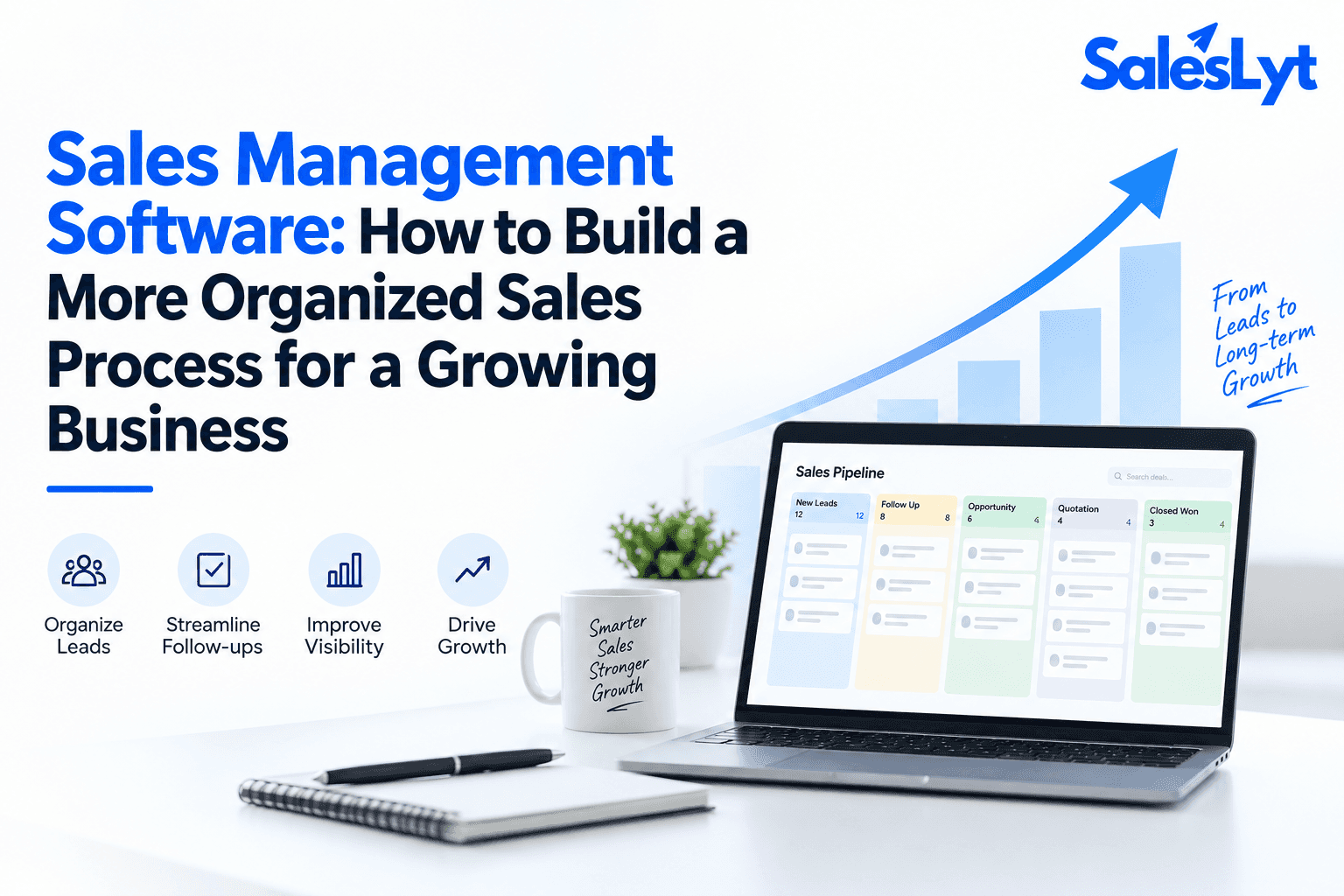
SalesLyt is designed to connect pipeline visibility with the broader sales workflow.
Instead of treating the pipeline as an isolated board, SalesLyt brings together lead tracking, follow-ups, sales activities and pipeline management. Its current feature set also includes AI-powered insights and prediction, AI performance scoring, customizable dashboards, manager review and performance capabilities, geo-tagging, and integrated quotation and invoice management.
For growing teams, this approach matters because a sales opportunity rarely exists on its own.
There are calls, visits, customer requirements, tasks, follow-ups, quotations and decisions surrounding every deal.
Keeping that information connected gives the salesperson more context and gives the manager better visibility.
So, Which One Does Your Business Need?
If your main problem is that you can't see where deals currently stand, a basic sales pipeline tracker may be enough to start.
If your challenge is actually managing those deals — coordinating activities, tracking leads, planning follow-ups, reviewing performance and moving opportunities forward — a more complete sales pipeline tool makes more sense.
And if your business is growing, consider the bigger picture.
Your pipeline doesn't exist separately from your leads, customers, team performance and sales activities. Eventually, you'll probably want those pieces working together.
Conclusion
The real question isn't whether a pipeline tool is better than a pipeline tracker.
It's how much control your sales team needs.
Tracking gives you visibility. Management gives you the ability to act on that visibility.
For a small team, seeing every opportunity clearly may solve the immediate problem. As the business grows, however, connecting those opportunities with leads, activities, follow-ups, performance insights and customer information becomes far more valuable.
The right system should help your team spend less time asking, "What's happening with this deal?" and more time deciding, "What should we do next?"
SalesLyt is built around that connected approach, helping growing sales teams bring leads, pipelines, follow-ups, activities and AI-powered insights into one sales workflow.
Want better visibility and control over your sales pipeline? Explore SalesLyt and see how a connected CRM can help your team move opportunities forward.