Manufacturing sales rarely happen in a single conversation.
A prospect may first call with an enquiry, then ask for technical details, request a quotation, negotiate pricing, arrange a plant visit and finally take several days or weeks to confirm the order. During this process, sales executives, managers and office teams may all handle different parts of the same opportunity.
That is exactly where many manufacturing businesses struggle.
When leads are stored in spreadsheets, quotations are sent through email, field visits are recorded separately and follow-ups depend on personal reminders, important opportunities can easily be delayed or forgotten.
A well-organised CRM for manufacturing companies India can bring these activities into one sales system and help teams manage the complete journey from enquiry to order.
Why Manufacturing Sales Need a Different Approach
A manufacturing sales process is often more complex than a simple retail transaction.
A typical enquiry may involve:
Product specifications
Quantity requirements
Pricing discussions
Sample approvals
Site or factory visits
Multiple decision-makers
Quotation revisions
Payment terms
Delivery schedules
Repeated follow-ups
For this reason, manufacturers need more than a basic contact database.
They need visibility.
A sales manager should be able to see which leads are new, which customers have received quotations, which opportunities are waiting for approval and which sales executives need to follow up.
Without that visibility, the team spends too much time asking questions like:
“Did we send the quotation?”
“Who visited this customer?”
“When is the next follow-up?”
“Why has this deal been inactive for two weeks?”
A CRM helps answer these questions quickly.
1. Keep Every Manufacturing Lead in One Place
Manufacturing businesses receive leads from many different sources.
They may come through the company website, trade exhibitions, referrals, distributors, phone calls, WhatsApp enquiries, sales representatives or existing customers.
The problem begins when these leads are managed in different places.
One executive may maintain an Excel sheet while another keeps customer details in a phone. Someone else may rely on WhatsApp messages.
As the number of enquiries grows, the chances of missing follow-ups also increase.
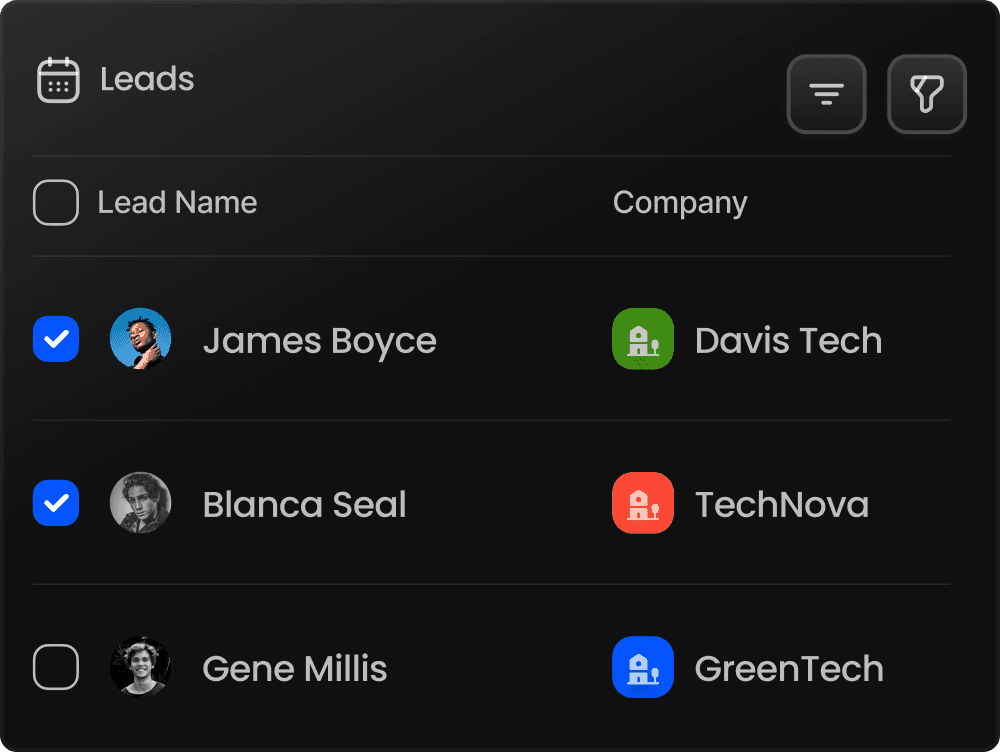
A CRM allows businesses to maintain a central lead database containing information such as:
Company name
Contact person
Phone and email
Product requirement
Lead source
Territory
Assigned salesperson
Expected order value
Last interaction
Next follow-up date
This creates a single source of information for the sales team.
It is especially useful for businesses searching for CRM software for MSME businesses in India, where sales teams are often small and every opportunity matters.
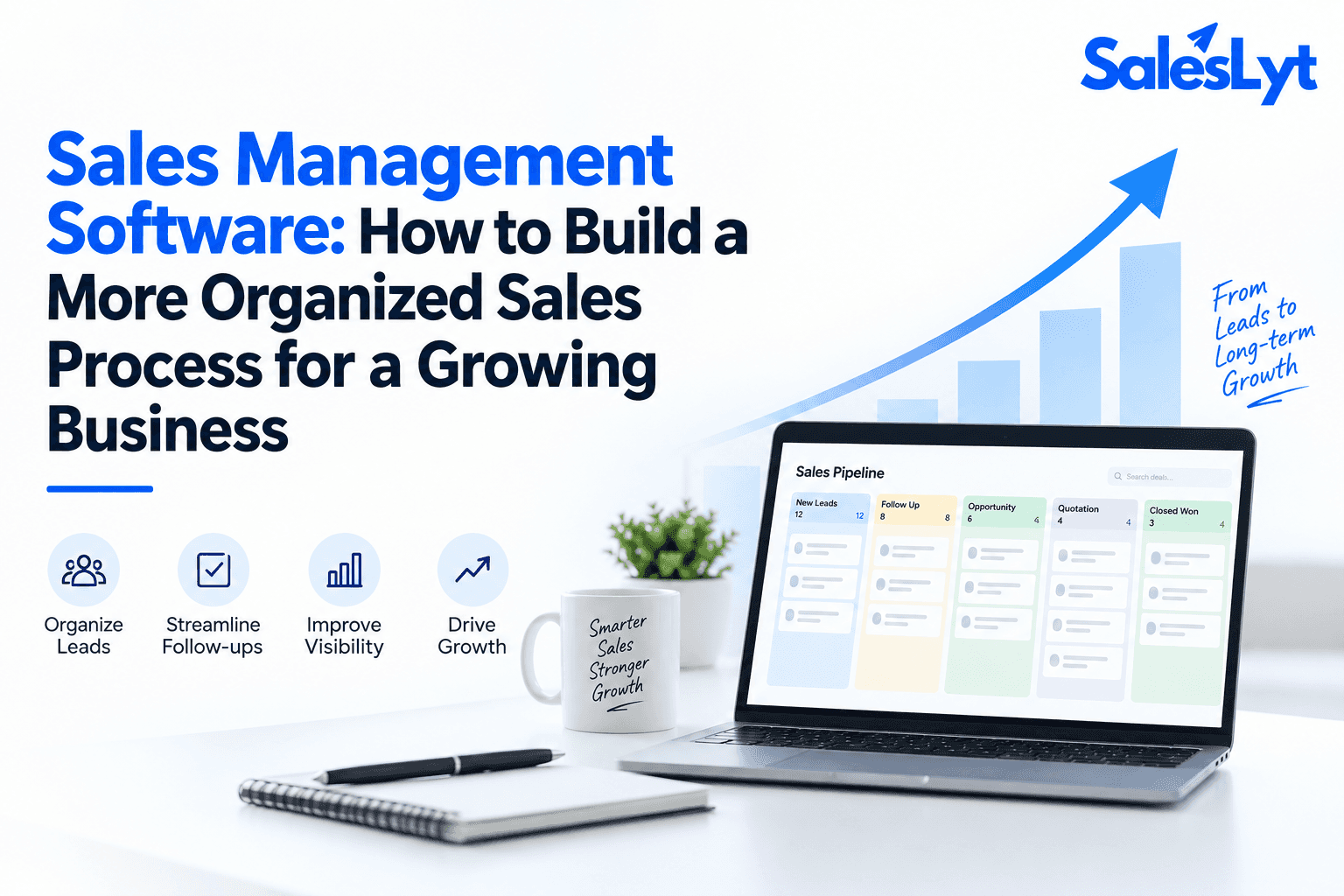
2. Track Leads Through a Clear Sales Pipeline
Not every manufacturing enquiry is at the same stage.
One prospect may only be collecting information while another is ready to negotiate the final price.
A structured pipeline helps teams understand exactly where each deal stands.
For example, a manufacturing company could use stages such as:
New Enquiry → Contacted → Requirement Confirmed → Quotation Sent → Negotiation → Order Expected → Won/Lost
This simple structure improves the overall B2B sales process because everyone can see the current status of each opportunity.
Sales managers can also identify bottlenecks.
If many opportunities remain in the “Quotation Sent” stage for several weeks, the team can investigate whether pricing, response time or follow-up quality is creating the delay.
Instead of managing sales based on assumptions, managers can make decisions using actual pipeline activity.
3. Manage Quotations Alongside Customer Opportunities
For many manufacturers, quotations are one of the most important parts of the sales cycle.
A customer may request different quantities, specifications or pricing options before making a decision.
There may also be multiple revisions before the final quotation is accepted.
When quotation information is disconnected from the sales pipeline, the team can lose track of important details.
A CRM-based approach makes it easier to connect the quotation with the corresponding customer and opportunity.
For example, the salesperson can quickly check:
When the quotation was sent
Which products were included
The quoted value
Whether a revised quotation is required
When the customer should be contacted again
This gives both executives and managers better visibility into active commercial discussions.
4. Organise Field Sales Visits
Manufacturing sales often involve face-to-face interaction.
Sales representatives may visit factories, distributors, industrial areas or customer offices throughout the week.
Managing these field activities manually can be difficult.
A manager may know that a salesperson visited a customer, but not know what was discussed or what should happen next.
A CRM with field-sales tracking can help executives record visit details such as:
Customer visited
Date and time
Purpose of visit
Discussion summary
Customer requirement
Next action
Follow-up date
This creates continuity.
If another team member needs to handle the account later, they can understand the previous conversation instead of starting from the beginning.
This functionality is also highly valuable for companies looking for CRM for industrial suppliers India, where regular dealer, distributor and client visits are common.
5. Never Depend on Memory for Follow-Ups
A salesperson may handle dozens of active opportunities at the same time.
Remembering every follow-up manually becomes difficult.
And in manufacturing sales, a missed follow-up does not always mean the customer will call again.
They may simply move to another supplier.
A CRM can help teams schedule the next action immediately after every call, meeting or visit.
For example:
“Call procurement manager on Tuesday.”
“Follow up on revised quotation Friday.”
“Visit customer after sample approval.”
This small habit can make a major difference.
Instead of beginning each morning by searching through old messages, salespeople can open their task list and see exactly which customers require attention.
6. Improve Coordination Between Salespeople and Managers
One common challenge in growing manufacturing companies is that sales information often stays with individual executives.
Managers then need to call or message team members repeatedly to understand what is happening.
A central CRM reduces this dependency.
Managers can review:
New leads
Active opportunities
Sales activities
Upcoming follow-ups
Customer visits
Pipeline value
Deal progress
This makes sales reviews more productive.
Instead of spending the entire meeting collecting updates, the team can focus on important opportunities and decide what actions are required to move them forward.
7. Identify Deals That Are Becoming Inactive
A deal does not always disappear suddenly.
Sometimes it simply becomes quiet.
The quotation has been sent, but nobody has followed up for ten days. A customer asked for revised pricing, but no next action was scheduled.
These inactive opportunities are difficult to notice when the team manages sales through spreadsheets.
A CRM can make inactivity more visible.
Managers can identify opportunities with no recent activity and ask the salesperson to follow up before the lead becomes cold.
This is one practical way for manufacturing businesses to understand how to improve sales process performance without simply trying to generate more leads.
Sometimes the biggest opportunity is already inside the existing pipeline.
8. Build Better Customer History
Manufacturing businesses often work with the same customers repeatedly.
A buyer who purchases one product today may need another product six months later.
Maintaining proper customer history allows the sales team to understand previous discussions, quotations and transactions before beginning a new conversation.
A CRM can help keep records of:
Previous enquiries
Calls and meetings
Sales visits
Quotations
Opportunities
Follow-ups
Notes
This history becomes especially valuable when employees change or customer accounts are reassigned.
The relationship remains with the business instead of being stored only in one salesperson's memory.
9. Use Sales Data to Make Better Decisions
As manufacturing companies grow, sales decisions should not depend only on intuition.
CRM data can help managers understand questions such as:
Which lead sources generate better opportunities?
Which sales executives have the strongest pipeline?
How many quotations are currently pending?
Which sales stage has the highest drop-off?
Which territories are producing more opportunities?
How many deals are expected to close this month?
These insights help management identify problems earlier and allocate sales effort more effectively.
How SalesLyt Can Support Manufacturing Sales Teams
SalesLyt is designed to help B2B businesses organise sales activities in one structured system.
Manufacturing companies can use SalesLyt to manage leads, customer interactions, field visits, follow-ups, opportunities and pipeline activity without depending on disconnected spreadsheets or manual reminders.
For a sales executive, this means having a clearer view of what needs attention today.
For a manager, it means having better visibility into what the team is doing and which opportunities require intervention.
For the business owner, it creates a more organised and measurable sales process.
The goal is not to add more administrative work.
The goal is to make existing sales activity easier to track and manage.
Choosing the Right CRM for Manufacturing Companies India
When evaluating a CRM, manufacturers should avoid choosing a system simply because it has hundreds of features.
Start with the actual sales workflow.
Ask whether the CRM can help your team:
Capture enquiries quickly
Assign leads to the right salesperson
Track opportunities through different stages
Record customer visits
Schedule follow-ups
Manage quotation-related activity
Maintain customer history
Monitor pipeline performance
Give managers clear visibility
A CRM that matches the way your sales team already works will usually be easier to adopt than an unnecessarily complicated system.
Final Thoughts
Manufacturing sales involve many moving parts.
Leads need to be tracked, quotations need follow-ups, field executives need visibility and managers need a clear picture of the pipeline.
When these activities are spread across spreadsheets, notebooks, phones and messaging apps, maintaining control becomes difficult as the business grows.
A structured CRM for manufacturing companies India can bring these activities together and help businesses create a more consistent sales process.
SalesLyt helps manufacturing and B2B teams organise leads, customer interactions, field visits, follow-ups and opportunities so that fewer sales conversations are lost between enquiry and order.
For manufacturers looking to improve sales visibility without making the process unnecessarily complicated, moving from scattered sales records to one organised CRM can be an important next step.
Conclusion
Managing manufacturing sales becomes much easier when leads, quotations, follow-ups, and field visits are handled in one structured system. A well-designed CRM helps manufacturing companies improve visibility, reduce delays, and strengthen their sales process. For growing businesses in India, SalesLyt can help bring more control, better follow-up discipline, and smoother sales operations.