A busy sales team is not always a productive sales team.
Salespeople can spend an entire day making calls, updating spreadsheets, checking emails, following up with prospects, attending meetings, and preparing reports—and still finish the day without moving enough opportunities closer to a sale.
For growing businesses, the problem is often not effort. It is visibility, consistency, and process.
This is where sales performance management software can make a real difference. Instead of relying on scattered reports or end-of-month reviews, businesses can use technology to understand what their sales teams are doing, where opportunities are getting stuck, and which activities are actually contributing to revenue.
When combined with modern CRM software for businesses, performance management becomes part of the daily sales process rather than something managers look at only after results are in.
What Is Sales Performance Management Software?
Sales performance management software helps businesses track, measure, and improve the performance of their sales teams.
It brings sales activities, targets, pipeline information, follow-ups, customer interactions, and performance metrics into a more organized system. Managers can use this information to identify problems early, coach team members, and make decisions based on actual data.
This is different from simply measuring how many deals a salesperson closes.
Good performance management also looks at the activities behind those results. Are leads being contacted on time? Are follow-ups happening? Are opportunities progressing through the pipeline? Is one salesperson carrying too many stalled deals?
Understanding these details helps managers improve the process instead of simply asking employees to “sell more.”
1. Bring Your Sales Data into One Place
Productivity suffers when information is scattered.
One salesperson may maintain an Excel sheet. Another keeps notes on a phone. Customer conversations may sit inside emails or messaging apps, while managers maintain a separate report for pipeline updates.
The result is unnecessary administrative work and limited visibility.
Using CRM software for businesses creates a central place for leads, customers, opportunities, activities, and sales information.
Salespeople spend less time searching for information, while managers get a clearer picture of what is happening across the team.
This becomes especially important as a company grows. Processes that work with three salespeople often become difficult to manage with ten, twenty, or more.
2. Organize Leads Instead of Simply Collecting Them
Generating leads is only the beginning.
Once enquiries start arriving, businesses need a reliable process for managing them. Without one, promising prospects can easily be forgotten.
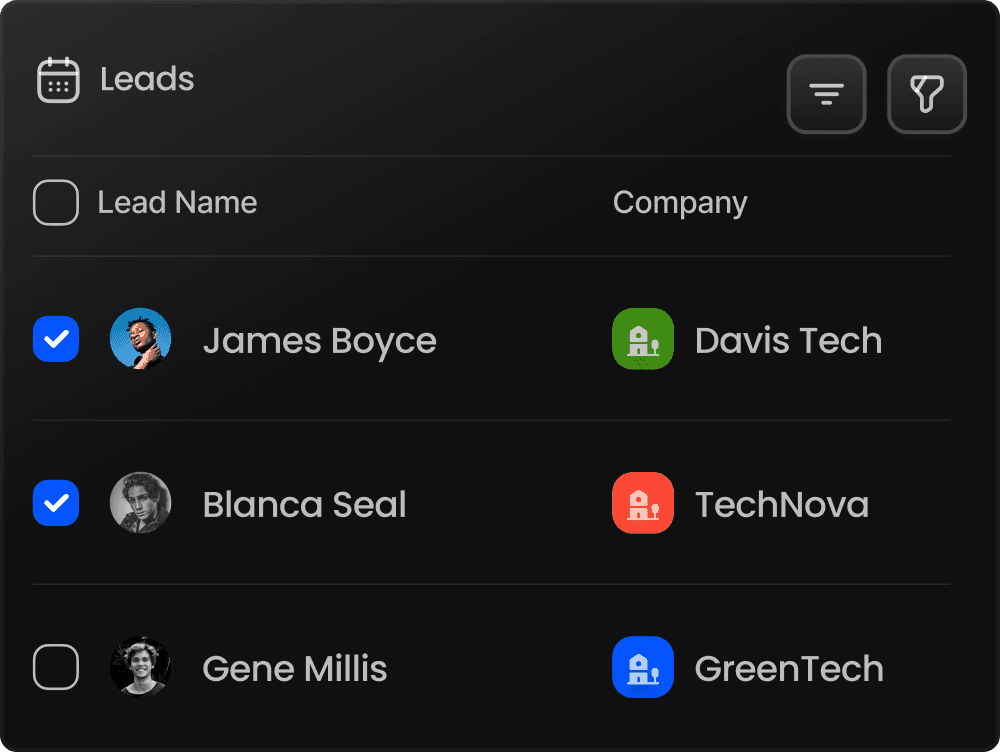
Modern lead management software allows sales teams to organize prospects, record activities, track progress, and maintain a clear history of interactions.
Similarly, sales lead management software can help create accountability. Instead of wondering who is handling a particular prospect, managers can see ownership and activity more clearly.
For smaller organizations, lead management software for small business can be particularly useful because it reduces the need for multiple spreadsheets and manual tracking systems.
The goal is straightforward: every valuable lead should have an owner, a status, and a next action.
3. Create a Pipeline Everyone Can Understand
A salesperson may say, “This deal looks good.”
A manager needs more than that.
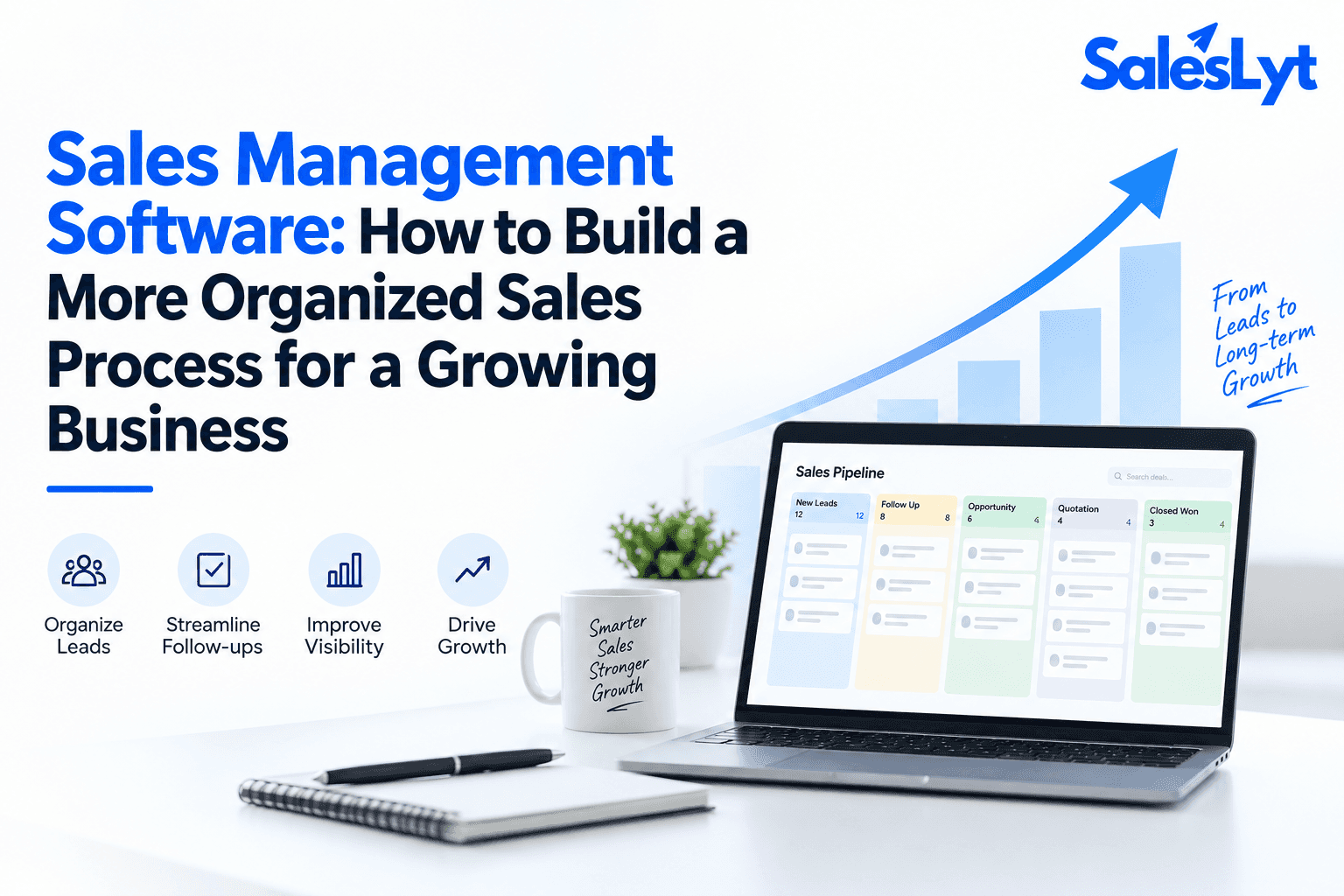
Effective sales pipeline management gives the team a structured way to understand how opportunities are moving from initial interest toward a final decision.
A visual sales pipeline tool makes it easier to identify active opportunities and understand which stage each deal has reached.
Meanwhile, a sales pipeline tracker can help managers spot deals that have remained in the same stage for too long.
That visibility changes sales meetings. Instead of spending the entire meeting collecting updates, managers can focus on decisions: Which opportunities need attention? What is blocking the next step? Where can the manager help?
4. Automate Repetitive Sales Activities
Administrative work quietly consumes a large portion of a salesperson's day.
Creating reminders, assigning tasks, checking which prospect needs a follow-up, updating records, and preparing routine reports all take time.
Automation helps reduce that burden.
A modern CRM can support reminders, follow-ups, task assignments, and other recurring activities. SalesLyt, for example, highlights automated reminders, follow-ups, email sends, and task assignments as ways to increase team productivity.
This allows salespeople to spend more time having meaningful conversations with prospects and customers.
For companies evaluating sales management software for small business, automation should therefore be a major consideration—not because every activity should be automated, but because repetitive administration should not dominate the working day.
5. Use AI to Prioritize Sales Effort
Not every opportunity deserves the same amount of attention.
A salesperson may have dozens of active leads, but some are more likely to progress than others. Deciding where to focus manually becomes increasingly difficult as lead volume grows.
This is where AI sales management software is becoming valuable.
Instead of simply storing information, AI-enabled systems can analyze sales data and provide insights that help teams prioritize their effort.
SalesLyt, for example, offers AI-powered insights and predictions designed to help users understand deal outcomes and make data-driven decisions. It also provides AI performance scoring for sales visits, calls, and leads.
The broader advantage of AI-powered sales software is not replacing salespeople. It is helping them make better decisions about where their time may have the greatest impact.
6. Measure Activities That Actually Matter
More activity does not automatically mean better performance.
One salesperson could make 100 calls with little progress, while another makes 30 highly relevant calls that move several opportunities forward.
Managers therefore need context.
Good sales performance management software should help businesses monitor meaningful KPIs, employee activity, tasks, workflows, pipeline movement, and outcomes.
SalesLyt includes manager review and performance capabilities with KPI dashboards, task monitoring, workflows, approvals, and productivity insights.
When managers have this visibility, coaching becomes more specific. Instead of saying, “You need to improve,” they can identify the exact area requiring attention.
7. Make Follow-Ups Consistent
Sales opportunities rarely close after one conversation.
A prospect might request a quotation, ask for more information, delay a decision, or simply become busy.
Without a structured follow-up process, these opportunities gradually disappear.
Your CRM should make the next action visible. When follow-ups become part of the system rather than something stored in an employee's memory, sales execution becomes more consistent.
This is one reason businesses searching for the best CRM for small business should look beyond basic contact storage.
An easy CRM for small business should make everyday follow-up easier, not introduce additional complexity.
8. Connect Sales Activities with Business Outcomes
Sales productivity should eventually contribute to business results.
For many B2B companies, the journey continues beyond the opportunity stage into quotations, invoices, payments, and customer management.
Keeping those processes completely separate can create information gaps.
SalesLyt addresses this by combining CRM, quotation, invoice, and payment tracking capabilities within the sales lifecycle.
A connected approach helps teams understand more than whether a deal is “won.” They can maintain better visibility as the relationship progresses toward actual business.
9. Give Managers Real-Time Visibility
Managers should not have to wait until Friday afternoon for someone to prepare a spreadsheet explaining what happened during the week.
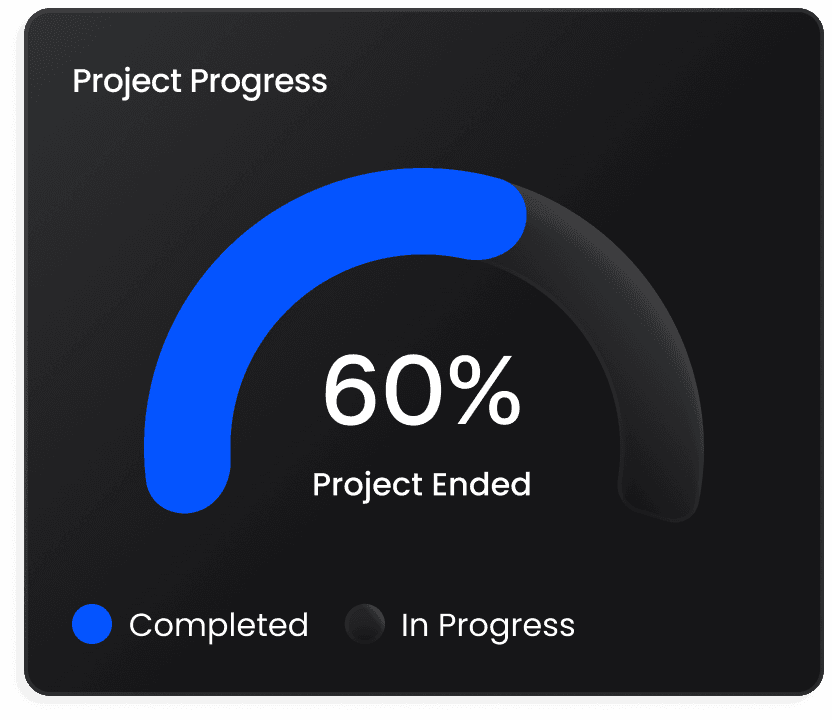
Dashboards can provide a much faster view of sales performance.
SalesLyt's analytics capabilities include real-time reports, visualizations, performance metrics, and customizable dashboards.
This gives managers an opportunity to respond earlier when something changes.
If pipeline movement slows, follow-ups drop, or particular team members need assistance, management can investigate before the problem appears in the monthly revenue number.
10. Choose Software That Can Grow with Your Team
The right platform depends on the stage and structure of the business.
A company looking for the best CRM for startups may prioritize simplicity, affordability, lead tracking, and fast adoption. As the organization grows, the same company may need stronger analytics, automation, access controls, and performance management.
That's why a sales CRM for startups should support growth rather than simply solve today's problems.
Different business models may also have different requirements. A sales CRM for agencies, for example, needs to help teams manage multiple prospects, client relationships, follow-ups, and opportunities efficiently.
The best system is not necessarily the one with the largest number of features. It is the one that employees can actually use and managers can rely on.
How SalesLyt Supports Sales Team Productivity
SalesLyt is designed for startups, agencies, sales teams, and growing businesses that want to bring sales execution and performance visibility into a connected platform.
Its current capabilities include AI-powered insights and predictions, AI performance scoring, geo-tagging, smoother sales pipelines, analytics dashboards, automated tasks and follow-ups, manager performance monitoring, customizable dashboards, and integrated CRM, quotation, invoice, and payment management.
Together, these capabilities address an important productivity problem: salespeople need to know what to do next, while managers need to understand whether those actions are producing progress.
Conclusion
Improving sales productivity does not mean asking employees to make more calls, send more emails, or work longer hours.
It means creating a sales process in which the right information is available, important activities are visible, repetitive work is reduced, opportunities are properly tracked, and managers can identify problems before they affect results.
That's the real value of sales performance management software.
Whether your company is considering CRM software for businesses, AI sales management software, the best CRM for startups, or sales management software for small business, look beyond the feature checklist.
Ask whether the platform can help your salespeople spend less time managing information and more time moving meaningful opportunities forward.
When technology makes the sales process clearer rather than more complicated, productivity becomes easier to improve—and easier to sustain.

Conclusion
Improving sales productivity is not about pushing your team to make more calls or work longer hours. It is about creating a smarter, more organized sales process where leads, follow-ups, opportunities, tasks, and performance data are easy to manage.
The right sales performance management software gives managers better visibility into team activities while helping salespeople focus on opportunities that matter most. When combined with CRM software for businesses, sales pipeline management, automation, analytics, and AI-powered sales software, teams can reduce repetitive work, improve follow-up consistency, and make better data-driven decisions.
As your business grows, choose a platform that is simple enough for your team to use every day and powerful enough to scale with your sales operations. With better visibility, smarter automation, and clear performance insights, your sales team can spend less time managing information and more time building relationships, progressing opportunities, and closing deals.